
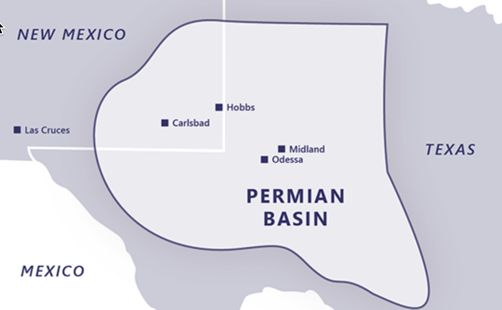
The Permian Basin has been declared “late-cycle” more times than most analysts can count. But if you listen closely to what the largest public operators actually said on their Q4 2025 earnings calls, that narrative starts to fall apart. Across the basin, companies aren’t talking about depletion or retreat — they’re talking about optimization. Activity is being paced, not pulled back; capital is being reduced because efficiency is compounding, not because returns are deteriorating. The Permian of 2026 is less about drilling harder and more about extracting value smarter — and the signals coming from management teams suggest this basin is entering its most disciplined, durable phase yet.
1. The Permian is no longer a growth race — it’s the industry’s cash engine
Across Oxy, Exxon, Chevron, Diamondback, Devon, Conoco, EOG, APA, SM, Ovintiv, and Matador, the language is unmistakable:
- Flat to modest growth by design
- Returns > volumes
- Cash flow > headline barrels
No one is talking about “outgrowing peers.”
Everyone is talking about holding output with less capital.
This isn’t fear. It’s confidence.
2. Fewer rigs, fewer frac crews — manufacturing maturity has arrived
Multiple operators independently confirmed the same reality:
- Rigs down
- Frac spreads down
- Production flat to up
That only happens when:
- Pad density is optimized
- Base production carries more weight
- Completion efficiency is compounding
This is no longer shale as a short-cycle lever.
It’s repeatable industrial manufacturing.
3. Cost deflation is structural, not cyclical
This is one of the strongest shared signals:
- Well costs down 15–20%+ since 2023
- Longer laterals now standard (2–3+ miles)
- Continuous pumping, simul-fracs, cube design normalized
- AI showing up in lift optimization, downtime reduction, frac control
Nobody framed these gains as temporary.
Everyone framed them as locked in.
4. Inventory anxiety is being actively pushed back — with data
Nearly every operator directly addressed the “peak Permian” narrative:
- Secondary benches performing closer to Tier 1
- Expanded landing zones offsetting degradation
- Vertical inventory depth increasing, not shrinking
- Inventory life commonly framed as 10–20+ years at current pace
The key nuance:
Quality will step down eventually — but cost compression + recovery gains are extending economic life faster than depletion is shortening it.
5. The Permian is becoming a recovery story, not just a drilling story
A major shift vs. earlier shale cycles:
- Enhanced oil recovery (Oxy)
- Chemical and surfactant uplift (Chevron, Ovintiv)
- Base decline flattening via uptime + AI (Devon, APA)
- Re-optimization of already-produced wells (Exxon)
This is critical:
More value is now coming from the base than the bit.
6. Gas is quietly re-entering the strategy conversation
Multiple operators tied Permian strategy to:
- 2027–2030 gas takeaway
- Gulf Coast pricing access
- In-basin power demand (data centers)
- Microgrids and electrification
The Permian is increasingly framed as:
A power + hydrocarbons system, not just an oil province.
7. “Yellow light” is the dominant posture — not red, not green
This phrase (explicitly used by Diamondback) fits nearly everyone:
- Base case = flat
- Upside = macro-driven
- Downside = cushioned by efficiency
Optionality is the real asset.
The Big Picture (Executive-Level Read)
The Permian in 2026 is being run like a long-life industrial asset, not a shale sprint:
- ✔ Durable
- ✔ Capital-light
- ✔ Technology-dense
- ✔ Recovery-focused
- ✔ Cash-maximizing
No one is acting like the basin is tired.
No one is acting like it needs saving.
They’re acting like it’s finally fully understood.
Taken together, the Q4 2025 earnings calls make one thing clear: the Permian Basin is not being managed as a short-cycle growth lever anymore. It’s being run as a long-life, capital-efficient system designed to generate durable cash flow across price cycles. Fewer rigs, flatter production, and lower capital intensity are not signs of fatigue — they are signs of maturity.
What matters most going forward isn’t how fast the Permian can grow, but how reliably it can perform. And based on what operators are actually doing — extending inventory through longer laterals and stacked pay, compressing costs structurally, improving recovery from both new wells and the base, and preserving optionality for the next macro turn — the basin is positioned to remain the industry’s most resilient asset. The Permian’s next chapter isn’t about chasing barrels. It’s about proving that shale, when fully optimized, can be both disciplined and durable.

Author: phinds