
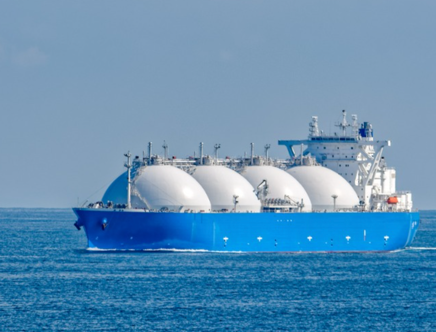
The global liquefied natural gas (LNG) market is entering a period of heightened ucertainty as rising demand collides with geopolitical disruptions, supply constraints, and an unprecedented wave of new export capacity. While analysts had widely expected the LNG market to move into oversupply by 2026, recent events in the Middle East — particularly the damage to Qatar’s LNG infrastructure — have dramatically altered near-term market dynamics.
According to Enverus Intelligence Research (EIR), the outage in Qatar has shifted the global LNG market into a structural supply deficit, with shortages expected to persist through the remainder of the decade.

Qatar Outage Reshapes Global LNG Markets
Qatar remains one of the world’s largest and lowest-cost LNG exporters. However, recent attacks on LNG infrastructure at Ras Laffan have removed approximately 17% of the country’s export capacity from the market.
EIR forecasts that the disruption will create an estimated global gas supply deficit of approximately 8 Bcf/d in 2026, reversing prior expectations for a balanced or oversupplied market. Roughly 2 Bcf/d of Qatari export capacity is expected to remain offline until closer to 2030 due to lasting facility damage and delayed expansion timelines.
The outage has intensified competition between Europe and Asia for spot LNG cargoes while placing renewed focus on energy security and supply diversification.
“The resulting competition for marginal LNG cargoes is expected to keep global natural gas prices elevated while increasing the strategic value of supply diversification and Pacific-facing export infrastructure,” said Josephine Mills, senior analyst at Enverus Intelligence Research.
Pacific LNG Projects Gain Strategic Importance
The disruption in Qatar is strengthening the outlook for LNG export projects positioned outside traditional geopolitical chokepoints.
Pacific-facing LNG developments in Canada and Mexico are increasingly viewed as strategically attractive due to their ability to serve Asian markets while avoiding shipping risks associated with the Strait of Hormuz and the Suez Canal.
Projects such as LNG Canada Phase 2 and the proposed Ksi Lisims LNG project in British Columbia could benefit from stronger buyer demand as importers prioritize secure and diversified supply chains.
Canada, in particular, is emerging as a key long-term LNG supplier. Industry forecasts suggest the country could develop at least 45 million tonnes per annum (mtpa) of LNG liquefaction capacity by the early 2030s.
Massive Global LNG Capacity Still Coming
Despite the near-term deficit, the long-term outlook still points toward substantial supply growth.
The United States continues to dominate LNG production and exports following the shale boom, with more than 83 bcm of new LNG capacity reaching final investment decisions in 2025 alone. Additional capacity growth is also expected from Mozambique, Argentina, and Canada over the next decade.
Analysts believe this incoming wave of supply could eventually place downward pressure on LNG prices by 2028–2029 once delayed projects begin operations and Qatari capacity gradually recovers.
LNG Demand Growth Faces Uncertainty
While LNG demand is expected to grow, particularly from Asia, transportation, and data center development, the long-term demand picture is becoming increasingly complicated.
Several Asian countries are responding to high LNG prices by increasing coal-fired generation or accelerating renewable energy investments. Markets such as India, Japan, and South Korea are expected to offset part of the LNG shortfall through fuel switching due to their existing coal generation capacity.
Meanwhile, countries like Pakistan have already sharply reduced LNG imports by expanding solar energy deployment.
This creates uncertainty around whether the market will be able to absorb the large amount of LNG supply expected later this decade.
Energy Security Now Driving LNG Strategy
The recent disruptions have reinforced the importance of operational resilience, flexible contracting structures, and diversified supply chains in the LNG industry.
As governments and buyers reassess energy security strategies, exporters are expected to focus more heavily on:
- Flexible LNG contracts
- Modular and floating LNG projects
- Lower-cost production models
- Geographic diversification of export routes
The LNG market is increasingly becoming a balancing act between rising energy demand, geopolitical risk, and the global transition toward lower-carbon energy systems.
While the anticipated LNG glut may have been delayed, the long-term challenge for producers remains unchanged: ensuring enough demand exists to absorb the enormous supply wave currently under development.

Author: phinds