
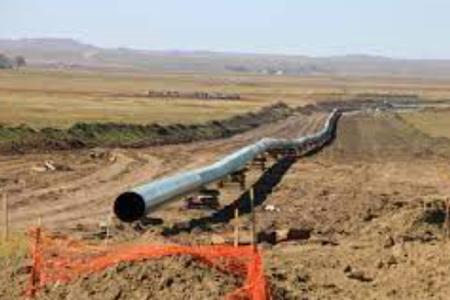
Gulf South Pipeline Company, LLC has taken another step in expanding Gulf Coast natural gas infrastructure after receiving a Texas Commission on Environmental Quality (TCEQ) air permit for its Cleveland Compressor Station in San Jacinto County, Texas. While the county has limited current drilling activity, the permit signals investment in interstate pipeline capacity rather than upstream production, highlighting the continued buildout of infrastructure needed to move growing volumes of natural gas to premium Gulf Coast markets.
Company Overview
Gulf South Pipeline Company, LLC is a wholly owned subsidiary of Boardwalk Pipelines, LP, which is owned by Loews Corporation. The company operates approximately 7,200 miles of interstate natural gas pipelines and more than 120 Bcf of underground natural gas storage across Texas, Louisiana, Mississippi, Alabama, and Florida.
Its pipeline network connects major producing regions—including the Haynesville Shale and East Texas gas fields—with critical demand centers such as LNG export terminals, electric utilities, industrial facilities, and interstate pipeline hubs. As U.S. LNG exports continue to grow, Gulf South has become an increasingly important transportation provider linking abundant natural gas supply with domestic and international markets.
Air Permit Overview
On June 26, 2026, the Texas Commission on Environmental Quality approved Project No. 411441, issuing Permit No. 184534 under the state’s Permit by Rule (PBR) New Registration program for the Cleveland Compressor Station.
Permit Highlights
- Operator: Gulf South Pipeline Company, LLC
- Facility: Cleveland Compressor Station
- Project Number: 411441
- Permit Number: 184534
- Permit Type: Permit by Rule (PBR) – New Registration
- Status: Issued / Complete
- Approval Date: June 26, 2026
- County: San Jacinto County, Texas
- TCEQ Region: Region 10 – Beaumont
The permit authorizes emissions associated with compressor station operations, including:
- Engines and turbines (30 TAC §§106.511 and 106.512)
- Oil and gas production facilities (30 TAC §106.352)
- Routine maintenance, startup, and shutdown activities (30 TAC §106.359)
The same-day approval indicates the project qualified under Texas’ streamlined air permitting process for qualifying facilities.
Why Build a Compressor Station in San Jacinto County?
At first glance, the project appears unusual because San Jacinto County is not an active drilling hotspot compared with the Permian Basin, Eagle Ford, or Haynesville core acreage. However, compressor stations on interstate pipelines are built based on transportation requirements—not drilling locations.
Unlike gathering compressors located near producing wells, transmission compressor stations maintain pipeline pressure, allowing natural gas to travel efficiently over hundreds of miles. As gas moves through a pipeline, pressure gradually declines due to friction and elevation changes. Compressor stations restore that pressure, increasing throughput and maintaining reliable deliveries.
San Jacinto County occupies a strategic position within Gulf South’s East Texas pipeline corridor. The county lies between major East Texas and Haynesville gas supply areas and the rapidly expanding Gulf Coast demand centers that include LNG export terminals, petrochemical facilities, power generation, and industrial customers.
The Cleveland Compressor Station is expected to support Gulf South’s broader Texas Gateway Project, which is designed to increase natural gas transportation capacity from East Texas toward Southwest Louisiana and the Gulf Coast. Rather than serving new drilling in San Jacinto County, the facility strengthens one of the nation’s most important natural gas transportation corridors.
Market Intelligence Insight
The Cleveland Compressor Station air permit represents more than a routine regulatory approval—it provides an early indication that Gulf South Pipeline is advancing infrastructure investments aligned with long-term Gulf Coast natural gas demand. As LNG export capacity, industrial development, and electric power generation continue to expand, interstate pipeline operators are investing in compression and system enhancements to move larger gas volumes from producing basins to high-value markets.
For companies supplying compressors, rotating equipment, emissions controls, automation systems, valves, instrumentation, maintenance services, and pipeline construction, projects such as the Cleveland Compressor Station can serve as leading indicators of future capital spending across the Gulf Coast midstream sector. While upstream drilling activity in San Jacinto County remains limited, this permit demonstrates that the region’s strategic value lies in its role as a transportation corridor connecting East Texas natural gas supplies with some of North America’s fastest-growing energy demand centers.

Author: phinds