
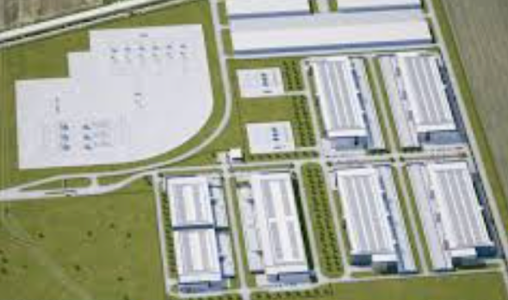
The latest Texas Commission on Environmental Quality (TCEQ) air permit filings suggest that Deaf Smith County is rapidly becoming one of the most strategically important energy development locations in Texas. The proposed Roman Energy Center, developed by IP Roman III Gas, LLC, is another indicator that developers are investing in the Texas Panhandle to support the state’s growing electricity demand driven by AI, data centers, industrial expansion, and renewable energy integration.
On June 15, 2026, IP Roman III Gas submitted three initial air permit applications for the Roman Energy Center, including a Construction Permit, a Prevention of Significant Deterioration (PSD) permit, and a Greenhouse Gas PSD permit. The project is currently progressing through TCEQ’s expedited permitting process, with engineering review underway following administrative approval on June 24.

The permitting timeline demonstrates an accelerated development schedule. Within days of filing, the project had completed compliance history review, initiated air modeling protocols, finalized its first public notice, and advanced into technical review. The developer has also committed $95,000 in permitting fees, including a $20,000 expedited permitting surcharge, highlighting the importance of maintaining an aggressive project schedule.
Why Developers Are Choosing Deaf Smith County
Deaf Smith County offers several competitive advantages that are transforming it into a premier destination for utility-scale energy infrastructure.
Established Transmission Network
Located within the ERCOT market, the county benefits from extensive high-voltage transmission infrastructure originally developed through Texas’ Competitive Renewable Energy Zone (CREZ) initiative. This network allows new generation facilities to efficiently deliver electricity to major demand centers across the state.
Renewable Energy Leadership
The Texas Panhandle has become one of North America’s strongest renewable energy regions. Existing utility-scale wind farms have created an established energy corridor, making the region an attractive location for new power generation, battery storage, and grid-supporting infrastructure.
Meeting AI and Data Center Demand
Perhaps the largest catalyst is the rapid increase in electricity demand from hyperscale data centers and artificial intelligence infrastructure. Developers are increasingly targeting the Texas Panhandle because of its abundant land, existing transmission capacity, and ability to support large industrial power loads. New generation projects like Roman Energy Center could play an important role in supplying reliable electricity to these emerging facilities.
Available Land and Faster Development
Compared with many other parts of Texas, Deaf Smith County provides large development sites with fewer land-use conflicts, established industrial zoning, and an environment well suited for large infrastructure investments.
Roman Energy Center Signals Continued Investment
Although TCEQ filings identify the facility simply as a Power Generation Facility, the project’s location, expedited permitting timeline, and comprehensive air permitting package suggest it represents another major investment in Texas’ expanding energy infrastructure.
Current permit activity includes:
- Construction Permit #184403 (Pending)
- PSD Permit #PSDTX1712 (Pending)
- Greenhouse Gas PSD Permit #GHGPSDTX276 (Pending)
The project is located approximately 17 miles northeast of Hereford, Texas, near County Road MM in Deaf Smith County.
Market Intelligence Perspective
Roman Energy Center is more than a standalone permitting event—it reflects a broader shift in where energy infrastructure investment is occurring. As electricity demand continues to rise from AI computing, industrial growth, and electrification, counties with strong transmission networks and available development land are becoming increasingly valuable.
For engineering firms, environmental consultants, EPC contractors, equipment suppliers, and industrial service providers, projects moving through expedited permitting often represent the earliest opportunity to identify future construction activity.
Deaf Smith County is positioning itself as one of Texas’ next major energy development corridors, and the Roman Energy Center is another strong signal that investment in large-scale power infrastructure is accelerating across the region.


Author: phinds