
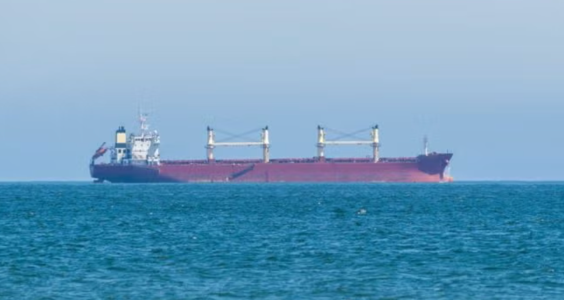
The Strait of Hormuz remains a live flashpoint for global oil markets, with Iran-Oman shipping talks nearing completion but full reopening still tied to unresolved U.S.-Iran demands.
For oilfield service companies supporting U.S. shale, the key issue is not just what happens to tanker rates or Middle East exports. It is how prolonged disruption could influence U.S. drilling economics, operator cash flow, production growth, takeaway demand, and ultimately service activity across the Permian, Eagle Ford, Bakken, DJ Basin, and other shale regions.
Background
The Strait of Hormuz is the world’s most critical oil chokepoint, with roughly one-fifth of global oil and LNG shipments transiting the waterway.
A partial or full closure directly affects tanker rates, crude availability, LNG supply, pipeline economics, refinery feedstocks, and global crude pricing.
Iran and Oman are reportedly close to finalizing a shipping agreement that would establish new Hormuz transit routes. However, Iran has warned that the corridor will not fully reopen until the U.S. meets broader conditions, including sanctions relief and compensation.
A missile strike on an ADNOC-affiliated tanker while transiting the strait reinforces that geopolitical risk remains embedded in global crude logistics.
The disruption has already reshuffled energy-sector economics. Tanker operators and midstream companies have benefited from rerouting and higher transportation rates, while the interruption was estimated to have removed roughly 20% of global LNG supply and contributed to more than 1.3 billion barrels of lost oil supply.
For U.S. shale, the important question is what sustained higher oil and gas prices could mean for upstream capital spending.
Why This Matters to U.S. Oilfield Service Companies
Higher crude prices can improve operator cash flow and increase the economic inventory of shale drilling locations.
If elevated prices persist, operators may have more flexibility to:
- Add drilling rigs.
- Increase frac crew utilization.
- Accelerate DUC completions.
- Expand gathering and takeaway infrastructure.
- Increase artificial lift and production optimization spending.
- Increase demand for water, chemicals, proppant, trucking, rental equipment, tubulars, drilling tools, directional drilling, wireline, cementing, and other field services.
The impact will not necessarily appear immediately.
Public shale operators remain highly focused on capital discipline, shareholder returns, and maintaining efficient production programs. A short-lived oil-price spike may therefore generate additional free cash flow without producing a major increase in drilling activity.
The more important signal for OFS companies is whether elevated commodity prices become sustained enough to change 2026 and 2027 operator capital budgets.
Watch the Permian Basin Closely
The Permian remains the most important U.S. shale market because of its production scale, inventory depth, infrastructure network, and proximity to Gulf Coast refining and export infrastructure.
A prolonged Hormuz disruption increases the strategic value of North American barrels.
That could support additional utilization across:
- Drilling contractors
- Directional drilling and MWD/LWD
- Frac and pressure pumping
- Sand and proppant logistics
- Water transfer and produced-water management
- Cementing
- Wireline and coiled tubing
- Production chemicals
- Artificial lift
- Midstream gathering
- Pipeline construction
- Compression
- Storage
- Crude trucking
- Gulf Coast export infrastructure
Permian service companies should therefore watch not only WTI prices but also operator rig additions, completion schedules, well permitting, frac-spread utilization, and pipeline capacity.
Tanker Rates Are an Upstream Signal Too
Scorpio Tankers reported its strongest quarter in company history, with adjusted EBITDA above $300 million, a net cash position of $1.3 billion, and product tanker rates above $30,000 per day.
Management reported Hormuz tanker flows increasing to approximately 12.6 million barrels per day following a mid-June memorandum of understanding, although Red Sea security issues continue to create rerouting risk.
International Seaways reported record Q2 2026 free cash flow, with net income of approximately $295 million compared with $62 million a year earlier. Average spot earnings were roughly $51,500 per day across its crude and product tanker fleet.
These numbers matter to OFS companies because they demonstrate how quickly transportation constraints can change the economics of global crude supply.
When international barrels become more expensive or difficult to move, reliable U.S. shale production becomes more strategically valuable.
Midstream Activity Could Strengthen
Delek Logistics Partners reaffirmed full-year 2026 adjusted EBITDA guidance of $520 million to $560 million while reporting record Permian crude gathering volumes above 157,000 barrels per day.
Management cited higher crude prices associated with Middle East conflict as a demand driver for its pipeline platform.
That is an important signal for service companies working in:
- Pipeline construction
- Integrity
- Pigging
- Compression
- Measurement
- Electrical and instrumentation
- Facility construction
- Civil work
- Automation
- Tank construction
- Environmental services
More shale production ultimately requires additional gathering, processing, transportation, storage, and export capacity.
LNG Could Be Another Major Driver
The Hormuz disruption was estimated to have removed roughly 20% of global LNG supply.
That strengthens the strategic importance of U.S. natural gas production and Gulf Coast LNG exports.
For OFS companies servicing the Haynesville, Permian, Eagle Ford, and other gas-producing regions, sustained LNG demand could support additional drilling and infrastructure investment.
Watch for changes in:
- Haynesville rig counts
- LNG feedgas demand
- Gulf Coast pipeline expansions
- Natural gas gathering projects
- Compression additions
- New processing capacity
- Operator drilling guidance
The Biggest Risk: Normalization
The biggest risk for OFS companies is assuming that geopolitical pricing automatically translates into a new drilling cycle.
If Hormuz traffic normalizes and geopolitical tensions ease, crude risk premiums and tanker rates could decline rapidly.
FactSet projections indicate energy-sector earnings growth could turn negative in 2027 as production growth and commodity-price normalization compress margins.
That means operators may remain cautious about committing to large permanent increases in drilling activity.
What OFS Sales Teams Should Monitor
For companies selling into U.S. shale, the most useful indicators are not geopolitical headlines alone.
Watch:
WTI and Brent prices
Sustained pricing matters more than temporary spikes.
Rig counts
Increasing rigs provide one of the earliest signs that operators are responding.
Well permits
Permitting growth can identify operators preparing future drilling programs.
Wells drilled and completions
This shows where capital is actually being deployed.
Frac-spread utilization
Higher utilization can signal tightening completion-service capacity.
Operator capital budgets
2027 guidance will be particularly important if elevated commodity prices continue.
Pipeline and gathering projects
Infrastructure investment frequently follows sustained production growth.
LNG feedgas demand
Strong LNG exports can pull additional natural gas development into U.S. shale basins.
Bottom Line
The Strait of Hormuz may be thousands of miles from the Permian Basin, but disruptions there can directly influence the economics of U.S. shale.
A prolonged disruption could strengthen crude and natural gas pricing, increase the strategic value of North American production, improve operator cash flow, and eventually support higher drilling, completion, production, and infrastructure spending.
For OFS companies, the opportunity is not simply “higher oil prices.”
The opportunity is identifying which operators respond first, which basins receive incremental capital, and where additional wells, rigs, facilities, pipelines, and production infrastructure begin appearing.
Those are the signals that ultimately turn geopolitical disruption into oilfield service demand.

Author: phinds