
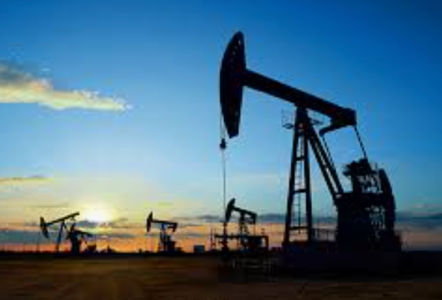
The next barrel may already be in the ground.
As the United States strengthens its position as the world’s “Safe Barrel” of oil and energy, operators face a familiar challenge with a new sense of urgency: how do you grow or sustain production while maintaining capital discipline and controlling lease operating expense (LOE) per BOE?
Increasingly, the answer is not simply drilling another well.
Across U.S. oil and gas, operators are putting more attention—and increasingly more technology—into the enormous production base they already own. Workovers, artificial-lift optimization, production chemicals, automation, AI, enhanced recovery and other technologies are being combined to reduce downtime, slow decline rates and unlock incremental barrels from existing wells.
The strategy can be described as Maintenance Plus: maintain the existing production base, but continuously look for relatively low-cost, short-cycle opportunities to make that base perform better.
Why Existing Production Is Becoming More Valuable
Every operator has to contend with decline.
Without intervention—and eventually new drilling—production from an oil and gas asset naturally falls. Historically, drilling and completions programs have provided the new production required to offset that decline.
Maintenance Plus doesn’t eliminate drilling. Instead, it changes the equation by asking:
How much more production can we generate from the wells, equipment and infrastructure we already have before spending the next drilling dollar?
The economics can be compelling.
LOE per BOE is essentially operating expense divided by production. If an operator can increase production without increasing operating costs proportionally, the cost per barrel falls. That makes incremental production from an existing well particularly attractive because much of the underlying operating-cost structure is already being incurred.
That concept is showing up in different forms across several major U.S. operators.
Chord Energy: “Leaning Into the Plus”
Chord Energy provides perhaps the clearest example of a formal Maintenance Plus strategy.
The company has described operating a “maintenance-plus program” for more than five years, built around maintaining a large, resilient, relatively low-decline production base while supporting volumes with an efficient drilling and completions program.
But the interesting part is the “Plus.”
Chord has been investing incremental dollars into relatively low-cost, short-cycle opportunities within its existing production base. Those initiatives include accelerating workovers, chemical treatments, debottlenecking surface constraints, improving ESP uptime, optimizing artificial lift with AI and using computer optimization to determine where workover rigs should be deployed next.
Importantly, Maintenance Plus isn’t limited to repairing wells that have stopped producing.
Chord has distinguished normal workovers—such as ESP failures, tubing problems or rod repairs—from interventions on wells that are still producing but are believed to be operating below their potential.
That turns production operations into an investment opportunity.
Instead of asking only, “Which wells need to be repaired?”, the question becomes:
“Which producing wells offer the highest-return opportunity for incremental investment?”
There is a cost associated with that strategy. Chord increased its 2026 LOE guidance to $10.30/BOE in part because of additional production-enhancement initiatives and higher workover costs.
In other words, higher LOE isn’t necessarily bad if those incremental operating dollars generate attractive incremental barrels.
Permian Resources: Workovers Become Short-Cycle Investments
Permian Resources provides another example of operators treating their existing production base as an investment portfolio.
When oil prices increased, the company increased its workover rig count by 50%, improving well run times and accelerating incremental oil production.
Management characterized incremental workovers as particularly attractive investments during volatile commodity markets because they can generate additional oil and cash flow almost immediately. That creates shorter payback periods and allows capital to be recycled quickly.
Permian is also experimenting with surfactant treatments on late-life wells, frequently around ESP failures.
Results vary by well, which is exactly why identifying the right candidates matters. Across several pads, some treated wells reportedly increased production by more than 100 barrels per day while others showed almost no uplift. Despite that variability, the overall program generated sub-one-year payouts, including unsuccessful wells.
Permian is also attacking LOE from another direction: water.
Management identified water disposal as its largest LOE cost, making produced-water recycling one of its biggest opportunities to reduce operating expenses.
Maintenance Plus, therefore, isn’t simply about increasing the numerator—production.
It’s also about attacking the cost structure underneath every barrel.
Devon: AI Takes Control of Artificial Lift
The next evolution of Maintenance Plus is increasingly digital.
Devon Energy is applying closed-loop AI directly to artificial lift and base production.
Its system is autonomously optimizing approximately 1,000 wells, 24 hours a day, seven days a week, responding to changing well conditions to keep production optimized. Management says the technology is improving production trends while providing a potential path toward reducing the company’s overall decline rate.
And the opportunity is much larger.
Devon has identified more than 2,000 additional Permian wells that could use its automated closed-loop gas-lift technology and has begun deploying the system across legacy Coterra wells.
This represents an important change in production optimization.
Historically, the ability to optimize thousands of individual wells was constrained by people, time and field resources. AI allows an operator to continuously analyze a much larger population of wells and make—or recommend—adjustments at a scale that would be difficult to accomplish manually.
Diamondback: Becoming a “Pump by Exception” Company
Diamondback Energy offers another glimpse of what the future production operation may look like.
Diamondback reported LOE below $6/BOE, but management made an important distinction: the improvement wasn’t primarily the result of dramatically lower operating dollars.
Total operating expense was roughly flat quarter-over-quarter.
Instead, production exceeded expectations.
More barrels spread across approximately the same operating-cost base improved the per-BOE economics.
Diamondback is simultaneously moving toward what management calls a “pump by exception” model.
Instead of field personnel routinely checking every well and artificial-lift system, sensors, automation and AI continuously monitor production.
A normally operating well may require no human intervention.
An abnormal well becomes an exception. The system identifies the problem or optimization opportunity, alerts the appropriate people and helps prioritize field resources.
Those exceptions could include unusual pump performance, excessive downtime, falling production, changing pressures, artificial-lift inefficiencies or signs of equipment failure.
The resulting workflow looks something like this:
AI/automation → identify underperforming wells → prioritize field resources → optimize artificial lift → reduce downtime → increase production → lower decline → reduce capital required to maintain production.
Diamondback management explicitly connected AI and automation with the potential to either shallow the production decline or make the production base cheaper to maintain. Even a one-percentage-point improvement in decline can have a meaningful impact on the amount of capital required to sustain production.
Oxy: Maintenance Plus Moves Into the Reservoir
Occidental Petroleum takes the same underlying concept considerably deeper.
Rather than focusing primarily on workovers, downtime and artificial lift, Oxy is applying advanced recovery techniques to change how much hydrocarbons can ultimately be recovered from existing assets.
Oxy expects advanced-recovery projects to help reduce its overall base decline from approximately 25% to 20% by 2030.
The company has been testing CO2 enhanced oil recovery in unconventional Permian reservoirs for roughly a decade. Management said its Midland and Delaware pilots have generated more than 45% uplift in estimated ultimate recovery (EUR).
Oxy has also identified surfactants and combinations of surfactants and CO2 as potential recovery technologies.
This expands the Maintenance Plus concept from optimizing equipment and operations to improving reservoir recovery itself.
EOG: Finding the Barrels That Were Passed By
EOG Resources adds another dimension: revisiting resources that previous generations of development left behind.
EOG has described much of the remaining Lower 48 opportunity as effectively “bypass pay.”
These are hydrocarbons that were known or encountered previously but weren’t economically produced or fully developed at the time.
The resource hasn’t necessarily changed.
The technology and economics have.
Modern horizontal drilling, completions, reservoir modeling, artificial lift and other technologies can potentially make previously overlooked intervals commercially attractive.
That broadens the definition of the existing production opportunity even further. Operators aren’t limited to optimizing today’s producing wells. They can revisit the geology surrounding decades of existing development with technologies that didn’t exist when those assets were originally evaluated.
The Production Base Is Becoming an Investment Portfolio
Taken together, these strategies point toward a significant shift in how mature oil and gas assets can be managed.
The traditional model can be simplified as:
Production declines → drill new wells → replace declining production.
Maintenance Plus adds another layer:
Production declines → identify underperforming assets → prioritize high-return interventions → increase uptime and recovery → slow decline → reduce the amount of new capital required to sustain production.
That creates opportunities across an increasingly broad production-technology ecosystem:
- Workovers and well servicing
- Artificial lift and ESP optimization
- Production chemicals and surfactants
- Water recycling and disposal optimization
- Automation and remote monitoring
- AI-driven production optimization
- Predictive maintenance
- Surface debottlenecking
- Enhanced oil recovery
- Reservoir modeling and analytics
The common denominator is the ability to identify which existing assets deserve the next incremental dollar.
AI Could Be the Force Multiplier
The biggest constraint on Maintenance Plus may ultimately be scale.
An operator with thousands—or tens of thousands—of producing wells has an enormous number of potential optimization decisions.
Which well should receive a workover?
Which pump is operating inefficiently?
Which well is experiencing abnormal downtime?
Where should the next workover rig go?
Which chemical treatment has the highest probability of generating an economic response?
Which producing well is declining faster than expected?
Historically, answering those questions required significant engineering and field resources.
AI and automation can increasingly monitor the entire production base continuously and direct human resources toward the highest-value exceptions.
That could turn Maintenance Plus from a collection of individual production projects into a systematic operating model.
The Next Barrel
The U.S. oil and gas industry has spent decades improving the economics of drilling the next well.
The next phase may involve applying the same intensity to the wells already producing.
Chord is investing in short-cycle base-production opportunities. Permian Resources is accelerating workovers and testing chemical treatments. Devon is autonomously optimizing artificial lift. Diamondback is moving toward pump-by-exception operations. Oxy is pursuing advanced recovery, while EOG sees opportunities in resources previous development effectively passed by.
Different technologies. Different operating models.
But the economic objective is remarkably similar:
Increase production. Reduce downtime. Slow decline. Control LOE per BOE. And reduce the amount of capital required to sustain the production base.
As operators become more disciplined about where they deploy capital, Maintenance Plus could become an increasingly important part of U.S. production strategy.
Because the industry’s next high-return barrel may not require drilling the next well.
It may already be in the ground.

Author: phinds