
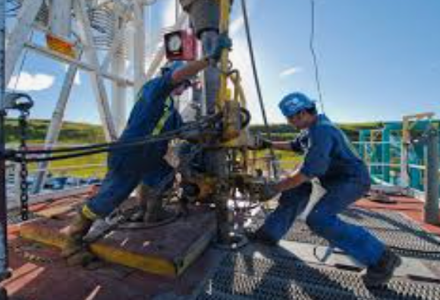
New well permits from emerging, mature and previously dormant operators show how America’s “Safe Barrel” is expanding beyond major shale producers, combining targeted drilling with Maintenance Plus strategies to unlock more production from existing assets. The group is notable because it is not dominated by large shale growth operators. Instead, it is a cross-section of smaller independents, mature-field operators, redevelopment companies, infrastructure/storage operators, and a handful of emerging development accounts. That mix is important when thinking about the U.S. as the “safe barrel” of global oil and gas supply.

What types of companies are showing up?
| Operator Type | Examples | What the permit/activity means |
|---|---|---|
| Next Tier / emerging developers | Ensign Natural Resources II, Rising Star Energy Partners II, Staghorn Petroleum, HPX | Smaller companies are committing capital to targeted drilling where economics and existing infrastructure support development. |
| Mature-field / Steady State operators | Red Oak, Siroky Oil Management, Texxol, WESCO, C & H Oil | New permits are being layered onto large inventories of existing wells rather than replacing them with aggressive growth programs. |
| Dormant / reactivation candidates | Gulfstar, Encore Operating Kentucky | Previously quiet operators returning to permitting can signal asset reactivation, redevelopment or renewed economics. |
| Specialty / infrastructure operators | UCG Storage, ICG Tygart Valley | Well activity is increasingly broader than conventional E&P—storage integrity, remediation, P&A and infrastructure reliability matter. |
| Technology / new-resource developers | Cordillera | Advanced drilling technology is opening opportunities outside traditional oil and gas development, including geothermal. |
| Large undeveloped-resource holders | Australis TMS | Higher prices and improved technology can make previously marginal inventories worth revisiting. |
The bigger message: the U.S. “Safe Barrel” is becoming broader
These companies reinforce an important shift in U.S. oil and gas. The safe barrel is not simply the Permian majors drilling thousands of new wells. It increasingly comes from a very large installed base of wells, infrastructure, acreage and technical expertise that can be brought into production or optimized relatively quickly.
Several things stand out.
1. Capital is moving back into assets that previously sat on the sidelines. Rising Star, Staghorn, HPX, Ensign and potentially Australis show that companies are prepared to redevelop mature fields or restart underdeveloped acreage when economics improve. That gives the U.S. considerable supply optionality.
2. Existing wells are becoming strategically more important. WESCO, Texxol, Red Oak and Siroky collectively represent hundreds of mature wells. For these operators, adding production does not necessarily require a large drilling program. Workovers, artificial lift, chemicals, compression, automation and production optimization can generate incremental barrels faster and often with less capital.
3. The industry has a deep bench beneath the public shale majors. Many of these companies would barely register in national rig-count discussions. Yet collectively, hundreds of small and midsized operators control enormous inventories of wells and acreage. When commodity prices strengthen, this second and third tier can respond.
4. “Maintenance Plus” becomes part of energy security. Keeping existing wells online, reducing downtime, slowing declines and reactivating marginal wells becomes increasingly valuable when the objective is dependable domestic production. The safe barrel therefore includes both new drilling and better management of the existing barrel.
5. Infrastructure is part of the safe-barrel equation. UCG Storage illustrates that reliability does not end at the wellhead. Storage wells, compression, pipelines and related infrastructure have to remain dependable if U.S. natural gas is going to support LNG exports, industrial demand, power generation and growing electricity demand.
What this says about the current U.S. market
The underlying theme is selective expansion rather than indiscriminate drilling growth.
The operators showing new permit activity range from companies restarting mature properties to newly capitalized companies acquiring assets and beginning development. At the same time, many maintain substantial inventories of mature producing wells.
That produces what I would describe as a two-engine U.S. production model:
Engine 1 — Targeted Development: Ensign II, Rising Star, Staghorn, HPX and similar Next Tier operators selectively drill economic opportunities.
Engine 2 — Maintenance Plus: WESCO, Texxol, Red Oak, Siroky and hundreds of comparable operators work to keep existing production online and extract more from installed assets.
This second engine is easy to underestimate. If the U.S. is increasingly viewed as the world’s safe barrel of oil and energy, the ability to respond isn’t only because it has enormous shale inventories. It is because it also has hundreds of thousands of existing wells, established infrastructure, mature service capacity and operators capable of rapidly putting capital back into existing assets.
For OFS companies, that suggests the opportunity is broader than following the rig count. New permits identify where development capital is returning, while the existing well inventory identifies where recurring Maintenance Plus spending will occur. The strongest accounts may therefore be operators where those two trends overlap—companies beginning to drill again while simultaneously managing a substantial mature production base.
Operator Detail
Australis TMS Inc. holds a major position in the oil-rich Tuscaloosa Marine Shale across Mississippi and Louisiana, with 47,200 net core acres and interests in 47 producing wells, although those wells are now non-operated following the sale of 90% of its working interest to EQV. Australis is a Next Tier account worth monitoring because its US$47.25 million farm-in program could use modern drilling and completion technology to restart development and unlock a substantial inventory of undeveloped TMS locations.
C & H Oil, LLC is a small private oil and gas operator based in Greensburg, Kentucky, associated primarily with conventional oil and gas activity; public records confirm it as a Kentucky operator, although a reliable current active-well count is not readily available. The company is best classified as a Steady State account, with the strongest OFS opportunities likely tied to workovers, artificial lift, production maintenance and other services designed to economically extend the life of mature wells.
Cordillera, LLC is a Houston-based emerging geothermal developer working with Quaise on Utah acreage where advanced millimeter-wave drilling technology could be used to access deep geothermal resources; I found no current producing wells operated under the exact Cordillera, LLC name. With its Utah agreement specifically contemplating exploration wells and eventual commercial production, Cordillera is best viewed as a Next Tier account to monitor for future drilling and well-construction opportunities rather than an existing production-maintenance account.
Ensign Natural Resources II LLC is an NGP-backed Houston E&P that has re-entered the Eagle Ford in a major way, acquiring approximately 43,000 net South Texas acres from ConocoPhillips for about $1.2 billion; a definitive transferred well count is not yet publicly available following the recent transaction. Ensign II should be classified as a high-priority Next Tier account because development is already beginning to show up in the data, including five Texas drilling permits in the latest reported week, creating opportunities across drilling, completions, artificial lift, chemicals, automation and production services.
Gulfstar Energy Group, LLC is a small Western Kentucky oil and gas operator that historically managed approximately 20 wells, controlled roughly 9,000 acres and operated a 16-mile natural-gas gathering pipeline, with historical production totaling about 111,000 barrels of oil and 1.23 Bcf of gas. Current data shows zero producing wells and production ending in 2024, making Gulfstar best classified as a Dormant/Legacy account where the primary sales triggers would be well reactivation, workovers, plugging activity or renewed permitting.
Encore Operating Kentucky LLC is a Bowling Green-based subsidiary of Encore Energy that has historically operated dozens of conventional Kentucky wells while also pursuing horizontal Berea Sandstone development in Lawrence County; aggregated operator data currently reports 0 producing wells, although individual property records show production extending into 2024. I would classify Encore as a Dormant/Watch account, with new Lawrence County drilling permits or well reactivations representing the key signals that could move it back into the Next Tier category and create opportunities for drilling, workover, artificial-lift and production services.
HPX, LLC is an Oklahoma operator (No. 25162) currently working with Harvard Petroleum Company on new Cherokee horizontal development in Roger Mills County, including a proposed 1,280-acre unit; I could not verify a reliable current producing-well count under the HPX name. HPX is a strong Next Tier account to monitor because August 2026 pooling and location-exception filings show the project advancing toward a new horizontal well, potentially creating near-term opportunities across drilling, completions and production services.
ICG Tygart Valley, LLC is a West Virginia coal-mining subsidiary of Core Natural Resources that operates the Leer Mine near Grafton; oil and gas records show 0 currently producing wells but dozens of historical/legacy wells associated with its properties and approximately 1.1 Bcf of historical gas production. Rather than a conventional E&P opportunity, ICG Tygart Valley is best viewed as a specialty OFS account where legacy wells intersecting coal-mining operations can generate demand for plugging, cementing, remediation and well-safety services.
Red Oak Operating, LLC is a Magnolia, Arkansas-based independent operator with approximately 141 associated wells concentrated primarily in the mature conventional oil fields of Columbia and Lafayette counties; recent records indicate that a subset of these wells remains active and producing despite conflicting aggregated well-status data. Red Oak is best classified as a Steady State/Maintenance Plus account, where its large inventory of mature, relatively low-volume wells creates potential opportunities for workovers, artificial lift, chemicals, pump services, production optimization and eventual plugging and abandonment.
Rising Star Energy Partners II, LLC is a newly active Dallas-based Texas operator focused on redevelopment of the mature La Rosa oil field in Refugio County; while current databases report 0 producing wells, the company has a small legacy well portfolio and appears to have filed at least eight new drilling permits during 2026. Rising Star II should therefore be classified as a high-priority Next Tier/Active Development account, as its rapid permitting of new Rooke B.D. wells—including another permit in August 2026—indicates an emerging drilling program with opportunities across drilling, completions and production services.
Siroky Oil Management is a Pratt, Kansas-based conventional oil and gas operator with approximately 132 associated wells across six producing counties, with recent data indicating roughly 17 currently producing wells and cumulative production of about 909,000 barrels of oil and 7.36 Bcf of gas. With a large mature well inventory relative to its producing-well count, Siroky is a strong Steady State/Maintenance Plus account where workovers, artificial lift, well reactivation, production chemicals, water handling and eventual P&A represent the more likely OFS opportunities.
Texxol Operating Company, Inc. is a Fort Worth-based Texas operator with approximately 276 wells across 15 counties, including roughly 170–180 producing wells concentrated heavily in Wise, Jack, Palo Pinto and Eastland counties, with significant natural-gas and Barnett Shale exposure. With no wells shown as spudded in the past 24 months despite its large producing inventory, Texxol is a strong Steady State/Maintenance Plus account where workovers, artificial lift, chemicals, automation, compression and production optimization are likely more important opportunities than new-well drilling
Staghorn Petroleum is a Tulsa-based independent E&P focused on Oklahoma’s Anadarko Basin, with a sizeable legacy well portfolio and a strategy centered on acquiring assets and horizontally redeveloping existing oil and gas fields; third-party data reports approximately 300,000 barrels of historical oil and 3.67 Bcf of gas under the original Staghorn entity. Staghorn is a high-priority Next Tier account because a new Grady County horizontal well began producing in April 2026 and additional Grady and Caddo County regulatory filings in July and August 2026 indicate that its development program is continuing.
UCG Storage, Inc. is an Atmos Energy subsidiary focused on underground natural-gas storage, with approximately 28 associated wells and four identified storage fields—Buffalo, Fredonia, Liberty North and Liberty South—concentrated in Wilson and Montgomery counties, Kansas. Rather than a conventional drilling target, UCG is best classified as a Specialty Natural Gas Storage account where the stronger OFS opportunities are storage-well workovers and integrity, compression, automation, corrosion control, pipeline maintenance and other services required to keep critical gas-storage infrastructure reliable.
WESCO Operating, Inc. is a Casper, Wyoming-based Kirkwood Companies subsidiary that operates approximately 500 oil and gas wells across 39 fields in Wyoming, Utah, Montana, North Dakota, Colorado and Nevada, producing roughly 3,400 BOE/d; third-party data currently identifies about 205 producing wells. With a large, geographically diverse inventory of mature wells, WESCO is a strong Steady State/Maintenance Plus account where workovers, artificial lift, chemicals, water management, automation and production optimization could represent significant recurring OFS opportunities.

Author: phinds