
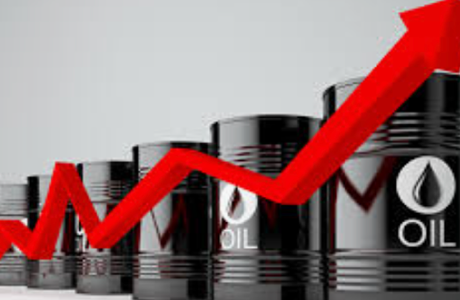
Oil Briefly Tops $100 as Middle East Conflict Threatens Global Energy Flows
Brent crude briefly moved above $100 per barrel on September 9, 2026, as escalating military activity across the Middle East renewed concerns about the security of regional oil exports. Brent reached an intraday high of $100.19 before trading at $99.93 by 08:02 GMT, up 2.05%, while West Texas Intermediate (WTI) increased 1.6% to $94.52 per barrel.

The increase followed attacks involving Iran, the United States and the Iranian-backed Houthi movement. U.S. forces destroyed five Iranian oil tankers after Iran’s Islamic Revolutionary Guard Corps targeted a U.S. naval vessel. Iran subsequently reported attacks against a U.S. military base in Jordan and ten ships near the Strait of Hormuz, including eight oil tankers. An liquefied natural gas (LNG) tanker was also reportedly damaged near Khor Fakkan in the United Arab Emirates.
The incidents have placed renewed attention on the Strait of Hormuz, one of the world’s most important energy shipping corridors. Threats involving tankers, ports or export infrastructure could increase freight costs, insurance premiums and delivery uncertainty even when physical production volumes remain unchanged. Brent has risen approximately 25% since early August, reflecting a growing geopolitical risk premium and reduced confidence that the conflict will reach a lasting resolution soon.
Operators, refiners and suppliers should prepare for continued price volatility and possible changes in crude purchasing, transportation and inventory strategies. The immediate impact is primarily geopolitical and logistical; the report did not identify a specific production outage, financial transaction or resolution timeline.
Industry Impact
Higher geopolitical risk reinforces the strategic value of North American production as a “Safe Barrel”—oil produced under comparatively stable political, regulatory and transportation conditions. U.S. shale cannot immediately replace every disrupted Middle Eastern barrel, but its established infrastructure and relatively short investment cycle could support faster supply responses if elevated prices persist. This may improve drilling economics, strengthen operator cash flow and encourage selective increases in completions, maintenance and production optimization.
OFS Sales Strategy
Oilfield service (OFS) companies should prioritize financially strong operators with permitted wells, drilled-but-uncompleted inventory and mature producing assets capable of delivering near-term volumes. Sales campaigns should emphasize rapid deployment, reduced downtime and measurable production gains through well completions, workovers, artificial-lift optimization, chemicals, automation and equipment availability. Suppliers should also monitor inventory requirements because operators may accelerate activity if prices remain elevated.
Two-Sentence Summary
Brent briefly surpassed $100 per barrel as escalating attacks on tankers, military assets and shipping routes raised concerns about Middle Eastern energy exports. The disruption risk strengthens the value of the U.S. “Safe Barrel” and could create selective opportunities for OFS companies supporting fast-cycle drilling and production optimization.

Author: phinds