
How LNG Blanket Authorisation Could Strengthen US Leadership in Safe Energy Supply
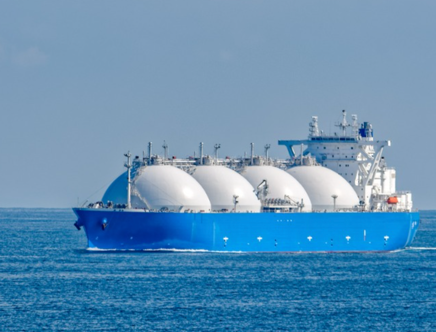
America’s energy advantage depends on connecting production to customers through infrastructure that works reliably. FERC’s proposed LNG blanket authorisation programme could strengthen that advantage by making qualifying improvements and expansions easier to deliver.
For the “safe barrel” strategy, the opportunity extends beyond oil. The same promise applies to natural gas and LNG: dependable supply, competitive delivery and infrastructure operated to clear safety standards. If adopted and implemented effectively, the proposal could help the United States strengthen its position as a trusted energy supplier.

What FERC Is Proposing
On October 15, 2026, FERC unanimously proposed a programme allowing eligible LNG activities to proceed without individual authorisation orders under Sections 3 and 7 of the Natural Gas Act. It draws on the longstanding blanket certificate model for interstate natural gas pipelines.
The proposed framework has three tiers:
- Automatic authorisation: Qualifying component work that stays within approved capacity, physical limits and equipment design limits.
- 60-day prior notice: Qualifying changes that may increase capacity within the existing plant footprint.
- 90-day prior notice: Certain new LNG facilities, including liquefaction trains, tanks and marine berths, subject to eligibility restrictions.
This remains a proposed rule. Public comments are due 60 days after publication in the Federal Register. The notice periods are procedural windows, rather than guarantees that every project will be approved or built within that time.
Source: FERC announcement, October 15, 2026.
Why This Supports the Safe Barrel Strategy
A safe barrel of energy should represent supply that buyers can depend on. That requires reliable equipment, sufficient transportation capacity, access to export markets and confidence that infrastructure can adapt as demand changes.
More predictable authorisation could improve that proposition in three ways. It could reduce uncertainty around qualifying investments, help operators implement reliability improvements sooner and make incremental capacity additions easier to plan.
The greatest benefit may come from improving existing assets. A terminal that can replace equipment, address constraints and make eligible upgrades efficiently has more opportunities to maintain dependable service. That matters to overseas buyers choosing suppliers for long-term energy needs.
Project Examples Show Why the Entire Supply Chain Matters
LNG demand connects gathering, processing, pipelines and export terminals. Export opportunities create value only when infrastructure can move production to customers.
Lake Charles LNG Shows the Importance of Project Economics
Energy Transfer’s Lake Charles LNG project previously secured a 20-year Chevron purchase agreement for 2 million tonnes per year. That example illustrates how LNG developers seek long-term customers to support investment.
Its subsequent history adds an essential lesson. Energy Transfer announced on December 18, 2025, that it was suspending development to prioritise natural gas pipeline projects it considered more attractive on risk and return. The company also left open discussions with potential third-party developers.
Lake Charles therefore illustrates both the opportunity and the limits of permitting reform. Clearer authorisation can help qualifying work, but developers still need competitive construction costs, financing and acceptable returns. Blanket authorisation would not automatically restart this project or establish its eligibility.
Source: Energy Transfer suspension announcement.
Enterprise and Nederland Illustrate the Value of Export Connections
Enterprise’s Neches River export development and Morgan’s Point terminal expansion, alongside Energy Transfer’s Nederland terminal expansion, illustrate investment in connections to global markets. These examples concern LPG, ethane and related products, rather than LNG.
Their strategic relevance is the connection between inland infrastructure and overseas customers. Gathering and processing capacity becomes more valuable when pipelines, storage and marine terminals provide a dependable route to market.
These projects illustrate the broader safe energy supply strategy; they are not examples of facilities automatically covered by FERC’s LNG proposal.
ONEOK and MPLX Illustrate the Advantages of Established Industrial Sites
The proposed ONEOK and MPLX LPG terminal in Texas City illustrates the advantages of a brownfield location near existing industrial infrastructure.
The parallel with LNG is the potential value of expanding around established assets. Existing connections and industrial settings can offer practical advantages, although every project has its own engineering and permitting requirements.
FERC’s proposed 90-day LNG category reflects a bounded approach to expansion. It would permit certain additions beyond existing footprints only under specified conditions, including limits involving previously disturbed or developed land and previously evaluated facility designs.
Source: FERC technical presentation.
Safety Performance Must Support the Promise
The proposal includes environmental and engineering conditions, notification requirements and opportunities to protest prior-notice projects. FERC also describes requirements involving pipeline safety authorities, the Coast Guard and emergency response coordination, as applicable.
Those safeguards matter to the commercial argument. Faster authorisation strengthens the safe energy proposition when projects deliver reliable operations and credible protection for workers and communities.
For operators and service providers, that means continued attention to equipment integrity, controls, inspection, maintenance and emergency readiness. Permitting efficiency creates an opportunity; execution determines the result.
An Opportunity for the Energy Supply Chain
For oilfield and midstream service companies, the opportunity could extend from terminal equipment and automation to upstream gathering, compression and processing, where additional gas demand supports investment. Each opportunity will depend on project decisions and the infrastructure needed to serve it.
From wellhead to water, energy leadership depends on a connected system. FERC’s proposal could make the LNG portion of that system more adaptable and predictable.
If adopted, blanket authorisation could help strengthen America’s position as a trusted energy supplier by supporting timely improvements to the infrastructure customers depend on. The safe barrel promise will ultimately be earned through dependable delivery, disciplined investment and safe operations.

Author: phinds