
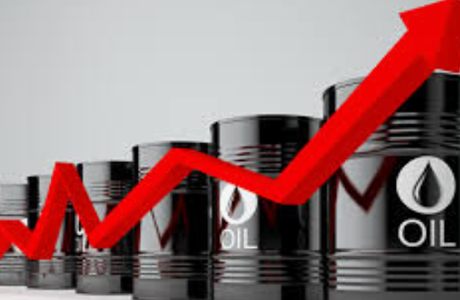
Crude prices moved slightly higher on November 16 as unverified reports of tanker incidents in the Strait of Hormuz renewed concerns about export security. Brent reached $95.89 per barrel, up $0.05, while U.S. West Texas Intermediate (WTI) rose $0.09 to $88.65 at 07:57 GMT. Both benchmarks recovered from earlier losses as traders weighed shipping risks against a weaker supply-demand outlook.
Iranian authorities reported that two tankers struck mines, following reports of fires involving six other tankers over Sunday and Monday. Reuters could not independently confirm those accounts. Shipments through Hormuz have reportedly recovered near levels preceding the conflict involving the United States, Israel and Iran, but security concerns and reduced vessel availability continue to support elevated tanker rates.
Meanwhile, the International Energy Agency (IEA) expects fourth-quarter global oil supply to average 105 million barrels per day, exceeding demand by 1.7 million barrels per day—reversing its previous deficit forecast. China’s October refinery throughput declined 2% month over month and 8.1% year over year, adding evidence of softer crude processing demand.
For operators and suppliers, the distinction between shipping disruption and underlying consumption matters. Transportation risks can support prices and increase freight costs without generating additional drilling commitments. Confirmed capital budgets, rig deployments and project awards remain stronger indicators of oilfield services (OFS) demand than a modest daily price movement.
Industry Impact
The developments reinforce the U.S. position as a “Safe Barrel” source: established production, extensive infrastructure and export access that does not require passage through Hormuz. That provides supply diversification for international buyers. However, North American producers remain exposed to global pricing, and a sustained surplus could constrain spending despite the strategic value of U.S. supply.
Sales Strategy
Prioritize operators with funded drilling programs and producing assets requiring maintenance, artificial lift, chemicals and uptime support. Build proposals around measurable cost savings and production reliability, and qualify opportunities using approved budgets and procurement schedules.
Two-Sentence Summary
Oil prices edged higher as unverified Hormuz tanker reports renewed shipping concerns despite an IEA forecast for a fourth-quarter surplus of 1.7 million barrels per day. For North American suppliers, U.S. supply security strengthens its strategic position, while sales opportunities depend on confirmed operator spending and production needs.

Author: phinds