
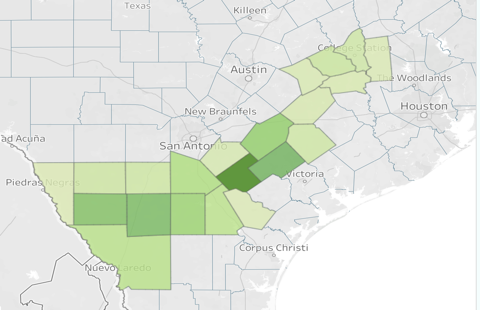
ConocoPhillips is expanding its use of far-field diverters to improve completion efficiency and reduce interference between wells. In its Q3 2026 earnings call, management said the technology has substantially mitigated frac hits in the Eagle Ford, supporting deployment across its program and increased use in the Bakken.
Far-field diverters help control fracture growth away from the wellbore. Pumped during hydraulic fracturing, these materials temporarily restrict selected fracture pathways, redirecting treatment fluid and helping prevent fractures from extending into neighboring wells.

Why They Work in the Eagle Ford
The technology addresses a specific challenge: completing new “child” wells near older producing “parent” wells. Production from a parent well lowers reservoir pressure and changes the surrounding stresses. Fractures from a nearby child well can preferentially grow toward this depleted area, creating communication between the wells—a frac hit that can hurt production and completion efficiency. Eagle Ford research documents this behavior and the use of far-field diversion to limit it.
By restricting these pathways, diverters can help direct more of the treatment into the intended reservoir while protecting existing production. Their effectiveness depends on well spacing, depletion and treatment design, but Eagle Ford field testing has demonstrated reduced frac interference and improved parent and child well performance.
For operators developing closely spaced wells, the opportunity is clear: make each completion more effective while preserving the value of wells already producing. ConocoPhillips’ expansion of the technology shows how managing interactions between wells is becoming an important part of development efficiency.


Author: phinds