
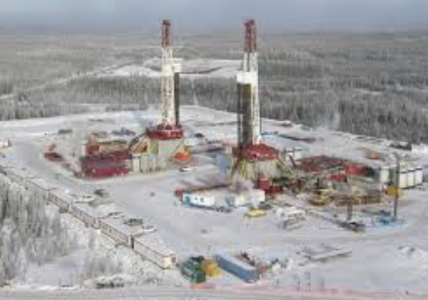
Occidental Petroleum plans to drop three rigs at the end of 2026 while bringing more wells online—a signal that rig count alone is becoming a less complete measure of oilfield activity and production capability.
“We’re actually dropping 3 rigs at the end of this year, adding 15 more wells online,” CEO Richard Jackson said during Oxy’s third-quarter earnings call.

Management did not identify which basins would lose the rigs or specify the comparison period for the additional wells. But the message was clear: Oxy is working to deliver more production capability for each dollar invested through better well designs, lower development costs, and improved performance from existing operations.
For 2027, Oxy’s preliminary capital plan of approximately $5.9 billion targets relatively flat companywide production. Within that portfolio, management expects modest growth in Permian production, both on an oil and BOE basis. The company is therefore describing an efficiency-led strategy that combines fewer rigs with more productive development and better management of its producing assets.
Designing the Development Unit
A central part of Oxy’s approach is designing development around the drilling spacing unit, or DSU—the acreage designated for a group of wells.
Instead of evaluating only how much an individual well can produce, a DSU-level approach asks a broader question: How should the wells be arranged and developed to recover more resource economically from the whole area?
Oxy emphasizes that the answer varies by location. Jackson attributed its unconventional performance to the “detailed, customized subsurface work we do for every drill spacing unit and well.”
Management reported that its 2025 and 2026 unconventional wells performed at least 10% above the industry average in every basin on a six-month cumulative oil-per-lateral-foot basis.
That is an early production measure, rather than proof of ultimate recovery. Nevertheless, it supports Oxy’s argument that detailed subsurface engineering is translating into stronger well performance.
In practical terms, customized DSU design can involve decisions about well spacing, the number of wells targeting each bench, and whether different benches should be developed together or in phases. Oxy explicitly described choosing between multibench co-development and phased bench development, while aligning the subsurface approach with technology, infrastructure, and operating considerations.
More Wells per Bench, More Recovery per DSU
One of the call’s most significant statements concerned the Delaware Basin.
Jackson said that, in some areas, increasing the number of wells per bench could maintain the same individual well performance while delivering up to 2.5 times the recovery per DSU.
The distinction between well performance and DSU recovery matters.
An individual well can perform strongly while leaving resource elsewhere in the development unit insufficiently accessed. If additional wells can reach more of that resource without materially reducing neighboring well performance, total recovery from the unit can increase.
The challenge is finding the right density. Wells placed too close together can compete for the same reservoir volume or interfere with one another. Wells placed too far apart can leave recoverable resource behind. Oxy’s statement suggests that its engineering work has identified selected areas where more wells can improve resource recovery without sacrificing individual well performance.
An illustrative example shows the arithmetic:
Development measure Original design Higher-density design Wells within the DSU 4 10 Recovery per well 1 million barrels 1 million barrels Total recovery per DSU 4 million barrels 10 million barrels Total recovery relative to original design 1.0× 2.5×
These figures illustrate the concept; they are not Oxy’s disclosed well counts or recovery volumes. Oxy did not provide the underlying spacing, bench count, or well configuration behind its reported result.
The company also limited the claim to some Delaware areas. It should not be interpreted as a 2.5-times recovery opportunity across its entire acreage position.
Higher recovery also requires an economic assessment. Additional wells cost money. The objective is to increase the value recovered from the DSU after accounting for drilling, completions, facilities, operating costs, and production timing.
How Can Fewer Rigs Support More Wells?
There is no inherent contradiction between fewer rigs and more wells coming online. Rig count measures drilling equipment at work; wells online measure the output of a broader development process that also includes completions, facilities, and production connections.
Oxy did not provide a detailed operational bridge connecting the three-rig reduction to the additional 15 wells. It did, however, identify several sources of improving capital efficiency.
In the Barnett formation within the Midland Basin, Jackson said Oxy had achieved more 10,000-foot laterals, helping lower drilling costs. He reported drilling, completion, and equipment costs—including hookup—of less than $750 per foot.
Across the business, management said it remained on track for more than a 7% improvement in new-well costs in 2026.
These results support a broader shift in how development performance should be measured: footage delivered, wells brought online, production performance, and capital required are increasingly important alongside the number of rigs employed.
Improving the Wells Already Producing
Oxy’s production strategy extends beyond new drilling.
Approximately 9,000 artificial-lift wells, representing 68% of its artificial-lift population, were under AI surveillance at the time of the call. Management reported that this supported up to 7% annual production uplift and a 22% reduction in failure frequency compared with 2023.
Jackson also said approximately half of the surveillance population was autonomous, with systems capable of optimizing gas lift across networks of connected wells.
This creates another path to stronger production performance: identify problems earlier, reduce failures, and improve the operation of existing wells.
Alongside recovery projects, these efforts support Oxy’s longer-term objective of reducing its overall base decline from approximately 25% to 20% by 2030. A lower decline rate would reduce the amount of replacement production needed to sustain company volumes.
An Industrial Model Built on Customized Engineering
Oxy’s approach fits an important part of the shale industrialization thesis: operators are improving the performance of an interconnected development system.
The evidence includes coordinated multibench development, longer laterals, lower unit costs, and production optimization across connected wells. However, Oxy’s emphasis on customized DSU design also shows that industrialization continues to depend on reservoir-specific engineering.
The repeatable element is the process of learning, designing, executing, and improving. The physical well configuration can change from one DSU to another.
For oilfield service companies, this changes the commercial signal. A lower rig count can coexist with more wells coming online and continued demand for completions, production equipment, infrastructure, artificial lift, and optimization services. Oxy did not disclose enough detail to quantify those opportunities, but its strategy reinforces the need to track the full development and production cycle.
Oxy’s three-rig reduction illustrates why rig count needs to be read alongside development productivity. Its stated direction is to recover more value from each development unit and sustain production with greater capital efficiency.
Source: Oxy’s supplied Q3 2026 earnings-call transcript, particularly pages 3, 5–6, 9, 13, 17–18, and 21. Explanations of spacing economics and the numerical DSU example are researcher interpretation.

Author: phinds