
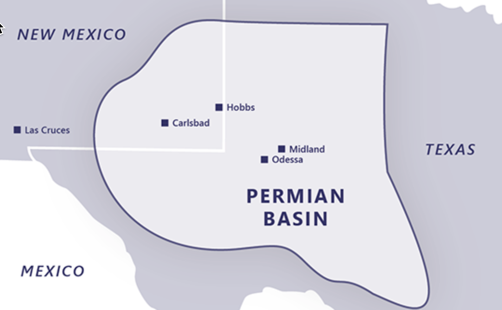
Riley Exploration Permian’s Q3 2026 earnings call offered a practical look at how an operator builds a factory-style development program. At Red Lake in New Mexico, Riley is bringing together four elements: a planned steady rig cadence, larger multiwell pads, development across three stacked intervals, and a full-time frac crew. The pieces are at different stages, but the operating logic is clear. Drill wells in batches, complete them in sequence, and bring each pad online when the wells and infrastructure are ready.

A two-rig plan gives each core asset a development cadence
Riley plans to run two rigs throughout 2027, subject to commodity prices and market conditions. Management expects one rig to work at Champions in Texas and the other to move to New Mexico around late in the first quarter. The move is timed to give Riley a head start on completing its inventory of drilled but uncompleted wells at Red Lake before the rig takes on larger pads.
Riley had already drilled 54 gross operated wells, completed 40, and turned 35 to sales through the first nine months of 2026. Those figures show an established development program. The two-rig plan would give each core asset a more consistent drilling schedule, while completion crews and facilities teams work through wells at different stages.
Larger pads bring three intervals into one development plan
COO John Suter described larger pads with six to eight wells. At Red Lake, Riley plans to build on its Paddock and Blinebry development by adding the shallower San Andres. Co-developing the intervals gives Riley a way to drill multiple targets from the same surface location and use infrastructure it already controls. Suter estimated that avoiding a rig move can save $100,000 to $150,000 per move.
Zipper fracturing fits that pad design. The crew alternates frac stages between wells on the same pad, using the time when one well is being prepared to stimulate another. Suter linked the approach to staying on the pad and placing frac energy in the intended interval. Riley plans six San Andres wells in 2027 and expects to refine its completion design as it learns how the reservoir responds at Red Lake.
A full-time frac crew keeps completions moving
Riley secured a full-time frac crew after WaterBridge added water handling capacity and Targa brought its new high-pressure gas line into service. By the November earnings call, Riley had fractured roughly 10 of 24 New Mexico wells in its backlog. Drillout and flowback still lay ahead before those wells could make a meaningful contribution to production.
That sequence explains why steady field activity can produce uneven production additions. On a six- to eight-well pad, Riley can keep crews working through the wells while first sales wait for the pad’s frac and drillout work to finish. Gas takeaway and water disposal capacity help determine when that next batch can move through the system.
Red Lake illustrates what shale industrialization looks like in practice. Rigs feed a pipeline of multiwell pads, a dedicated frac crew works through that inventory, and shared infrastructure supports bringing wells online in batches. Riley is using that repeatable process to expand development while continuing to learn how best to complete the San Andres.

Author: phinds