
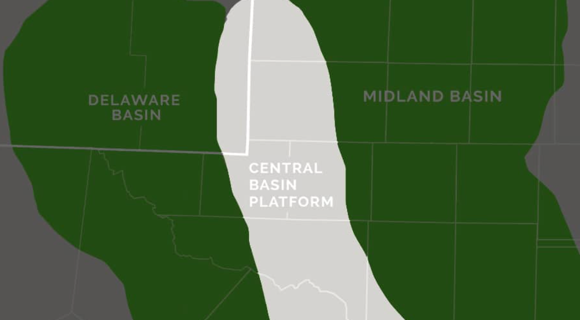
Covalence Investment Partners acquired Elevation Resources’ producing Permian oil and gas assets in October 2026, adding approximately 23,700 net acres on the Central Basin Platform and an established base of low-decline Barnett production. The next month, nine Texas air permit transfer records offered a facility-level view of the handover. Every record was in Andrews County, Texas, where Elevation helped develop the Permian Barnett oil play.

Nine air permit records trace the Andrews County handover
The Texas Commission on Environmental Quality (TCEQ) received all nine change-of-ownership records on November 19, 2026. The transfer file lists Elevation Resources LLC as the previous owner and Covalence Operating Company LLC as the new operator. All nine records are classified as Permit by Rule (PBR) and marked Complete.
The records cover nine distinct TCEQ regulated entities across eight site names. Two entities share the UL 9-46 CTB Facility name. Other sites include UL 1-15 CTB Facility, UL 1 26 CTB Facility, and University 1-20 Tank Battery. The mix of sites shows how the acquisition extended from producing acreage to the surface facilities that support day-to-day operations.
What the acquisition means for oilfield service companies
The ownership transfer gives suppliers a concrete reason to update their account and facility records. For vendors already serving the Andrews County properties, the named sites provide a starting point for confirming who handles field operations, purchasing, and air compliance under Covalence. For prospective vendors, the existing tank batteries make facility maintenance, emissions monitoring, and production optimization relevant outreach topics. Demand for specific services and any new drilling plans remain unconfirmed.
The acquisition announcement establishes the scale of Covalence’s Permian investment. The air permit records show where the operating transition took shape on the ground, with all nine records concentrated in one county. The Barnett association comes from the acquired asset footprint, since the air permit records do not identify the producing formation at each facility.


Author: phinds