Devon’s AI Strategy — The Impact on OFS

Devon’s AI strategy signals that operators are no longer buying tools or services — they’re building AI-driven operating systems that internalize decision-making and compress execution cycles. For OFS companies, this shifts value away from human-intensive services toward clean data, seamless integration, and outcome-based partnerships, while eroding pricing power for stand-alone or non-integrated offerings.

read more

Where Drilling Engineers Sit, Who They Work For, and What the Role Looks Like in the U.S. Today

U.S. drilling engineers are increasingly centralized in hubs like Houston and Midland, supporting large, consolidated operators running factory-style drilling programs at scale. As shale matures, the role has shifted from experimental well design to disciplined, repeatable execution—where engineers manage more wells, more capital, and more risk than ever before.

read more

Why Major Operators Like Chevron U.S.A. and Oxy Employ So Many Drilling Engineers

Major operators like Chevron U.S.A. and Oxy employ large drilling-engineering teams because drilling at scale is an industrial system requiring deep specialization, continuous optimization, and rigorous risk management. What looks like excess headcount is actually the technical backbone that enables factory drilling, capital discipline, and safe execution across massive multi-basin portfolios.

read more

TAQA North, the Progress Area in Alberta, and Why a Quiet Facility Permit May Signal More Drilling Ahead

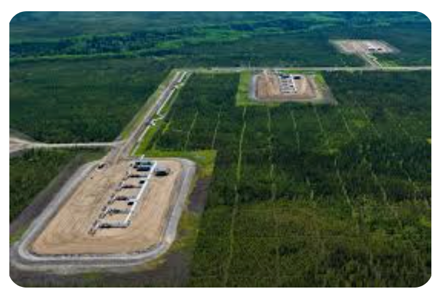
TAQA North Ltd.’s newly permitted water disposal facility in the Progress area is a classic infrastructure-first signal, not a reaction to current drilling. In the Deep Basin, operators like TAQA typically build water handling capacity ahead of phased programs, making this permit a credible early indicator of additional drilling or field activity to come.

read more

What ARC Resources Said About the Issues with it’s Attachie BC Play

ARC said it is intentionally slowing development at Attachie after early Upper Montney pads underperformed expectations, emphasizing the issue is completion effectiveness—not geology or resource quality. Management remains confident in the asset’s long-term potential but is prioritizing capital discipline and learning before scaling, with flexibility to reallocate capital to higher-confidence assets like Kakwa.

read more

Three Power Projects Redefining the U.S. Energy Mix in 2026

In 2026, three landmark U.S. power projects—SunZia Wind, Project Matador, and Hell’s Kitchen Geothermal—will showcase the future of energy development, combining massive scale, transmission, and always-on power to meet surging electricity demand. Together, they illustrate how renewables, natural gas, nuclear, and geothermal are converging to support AI data centers, grid reliability, and domestic energy security.

read more

Rig Upgrade: Why Precision Drilling Is Leaning In — Not Pulling Back

Precision Drilling Corporation framed rig upgrades as its highest-return use of capital, emphasizing that nearly all upgrades are contract-backed or supported by upfront customer payments, locking in returns before spending occurs. Management made clear that as wells get longer and more complex in gas-weighted and heavy-oil basins, rig upgrades are no longer optional — they are essential to staying competitive and capturing durable cash flow.

read more

Why Canada’s Montney Oil Is One of the Best Oil Plays in North America

The Alberta Montney oil window has emerged as one of the best oil plays in North America, delivering top-tier returns driven by oil-weighted rock quality, WTI-linked condensate pricing, and low-cost, repeatable development. With multi-decade inventory depth and built-in growth optionality that doesn’t depend on higher gas prices, the Montney now competes head-to-head with the very best U.S. shale plays.

read more

Manufacturing the Midland:How Diamondback Turns Tier 1 Permian Inventory into Repeatable Capital Efficiency

Diamondback’s Tier 1 Permian programs reflect section-scale factory development, concentrating 10–15 uniform horizontal wells per unit with dual-rig batch execution and centralized infrastructure. The consistent 8–9 month permit-to-facility cadence — with air permitting following drilling — confirms a mature, capital-efficient manufacturing model rather than exploratory or stacked-bench experimentation.

read more

Small Trades, Big Signal: Why Permian “Blocking & Tackling” Will Define the Next Chapter

A recent Texas air-permit transfer from EOG Resources, Inc. to Discovery Natural Resources LLC in Irion County is a clean example of how the Permian Basin is evolving. There’s no headline-grabbing mega-deal here. Instead, it’s the kind of precise, operational move that keeps acreage tight, infrastructure aligned, and development plans uninterrupted.

read more