Three Power Projects Redefining the U.S. Energy Mix in 2026
In 2026, three landmark U.S. power projects—SunZia Wind, Project Matador, and Hell’s Kitchen Geothermal—will showcase the future of energy development, combining massive scale, transmission, and always-on power to meet surging electricity demand. Together, they illustrate how renewables, natural gas, nuclear, and geothermal are converging to support AI data centers, grid reliability, and domestic energy security.

read more

Rig Upgrade: Why Precision Drilling Is Leaning In — Not Pulling Back

Precision Drilling Corporation framed rig upgrades as its highest-return use of capital, emphasizing that nearly all upgrades are contract-backed or supported by upfront customer payments, locking in returns before spending occurs. Management made clear that as wells get longer and more complex in gas-weighted and heavy-oil basins, rig upgrades are no longer optional — they are essential to staying competitive and capturing durable cash flow.

read more

Why Canada’s Montney Oil Is One of the Best Oil Plays in North America

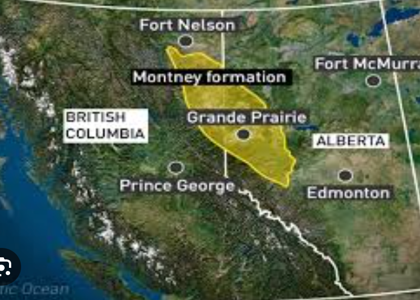
The Alberta Montney oil window has emerged as one of the best oil plays in North America, delivering top-tier returns driven by oil-weighted rock quality, WTI-linked condensate pricing, and low-cost, repeatable development. With multi-decade inventory depth and built-in growth optionality that doesn’t depend on higher gas prices, the Montney now competes head-to-head with the very best U.S. shale plays.

read more

Manufacturing the Midland:How Diamondback Turns Tier 1 Permian Inventory into Repeatable Capital Efficiency

Diamondback’s Tier 1 Permian programs reflect section-scale factory development, concentrating 10–15 uniform horizontal wells per unit with dual-rig batch execution and centralized infrastructure. The consistent 8–9 month permit-to-facility cadence — with air permitting following drilling — confirms a mature, capital-efficient manufacturing model rather than exploratory or stacked-bench experimentation.

read more

Small Trades, Big Signal: Why Permian “Blocking & Tackling” Will Define the Next Chapter

A recent Texas air-permit transfer from EOG Resources, Inc. to Discovery Natural Resources LLC in Irion County is a clean example of how the Permian Basin is evolving. There’s no headline-grabbing mega-deal here. Instead, it’s the kind of precise, operational move that keeps acreage tight, infrastructure aligned, and development plans uninterrupted.

read more

Diamondback Energy – A Midland Basin Factory Model in Motion

Diamondback’s MERCHANT EAST development in Reagan County reflects a disciplined Midland Basin factory model, with standardized horizontal Spraberry wells drilled across two contiguous sections using dual rigs and a tightly sequenced batch approach. From first permit to facility air approval, the 271-day cycle highlights a repeatable permit → drill → complete → centralize workflow designed for efficient, full-stack co-development and rapid transition to production.

read more

A New Milestone in the Delaware Basin: Targa’s Rooster Compressor Station in Ward County

Targa Delaware’s newly approved Rooster Compressor Station in Ward County reflects rising associated gas volumes and increasing system pressure needs in the Delaware Basin. With 125 wells drilled in 2025 led by operators like APA, Crescent, and Continental, midstream infrastructure expansion is keeping pace with sustained, gas-intensive development in the Permian’s western core.

read more

Oklahoma Drilling Update:H&P and Cactus dominate Drilling Contractors

Oklahoma drilling remains in a steady-state holding pattern, with rig counts flat at 46 and operators maintaining disciplined, program-driven activity rather than expanding alongside national gains. YTD spud data shows activity concentrated among a few operators, with H&P and Cactus dominating contractor exposure and repeat rig utilization signaling continuity over acceleration.

read more

ConocoPhillips: Capital Discipline in the Lower 48 Is an Engineering Story, Not a Rig Count Story

ConocoPhillips’ Lower 48 capital discipline is being driven by engineering, not activity cuts, with longer laterals emerging as a structural cost lever that lowers cost of supply by 25% moving from 1-mile to 2-mile wells and another 10–15% at 3–4 miles. By coring up acreage, standardizing execution, and concentrating activity on a small number of high-utilization rigs, COP is delivering more production for less capital while holding output steady and reducing Lower 48 capex year over year.

read more