Chevron’s Blueprint:Rig Efficiency, Not Rig Count, Is the New Cost Lever in U.S. Shale
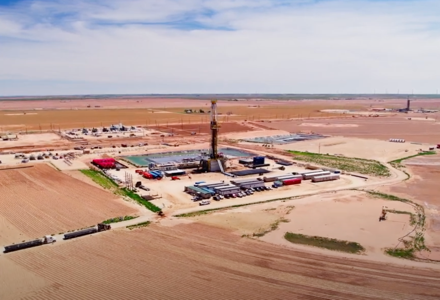
Chevron’s Q4 2025 results show that rig efficiency — not rig count — is now the primary driver of capital efficiency in U.S. shale, allowing the company to hold Permian production flat while materially improving cash margins. By concentrating rigs in its core Permian basins and extracting more output per rig through factory-style development, Chevron is turning shale into a cash-flow engine rather than a growth engine, regardless of commodity prices.

read more

Why the Oilfield Services Recovery Is a 2027 Story — Not 2026

The oilfield services sector is not broken or early-cycle—it is in a disciplined holding pattern where demand growth is inevitable, but capacity has not yet tightened enough to drive a true upcycle. Structural forces tied to LNG, power demand, and deferred investment point to 2027 as the economic inflection point, with pricing power and utilization tightening into 2028.

read more

Baker Hughes:Why the Oilfield Services Upcycle Likely Starts in 2027

The oilfield services upcycle is unlikely to begin before 2027 because global markets must first absorb spare capacity, convert LNG and power infrastructure investments into sustained drilling demand, and force deferred upstream projects back onto the table. When that tightening occurs, the inflection will be driven by utilization and pricing power — not rig count — marking a true economic upcycle rather than a short-term activity bounce.

read more

Patterson-UTI:Why Multi-Year Growth in Drilling Is No Longer Optional

Patterson-UTI said the U.S. industry will require multi-year growth in drilling and completions to meet rising natural gas demand from LNG exports and power generation, as current activity levels are already beginning to pressure production. While near-term drilling may remain flat, they expect incremental rig demand to emerge in the second half of 2026 and beyond, with growth concentrated in high-spec rigs needed for deeper, more complex wells.

read more

Helmerich & Payne, Inc.: U.S. Rig Demand Is Moderating — Not Breaking

U.S. rig demand has moderated by design, not distress, with Helmerich & Payne forecasting a 132–148 rig full-year range that reflects operator discipline, inventory preservation, and a lack of urgency to grow volumes. The takeaway is a stable but selective shale market where fewer rigs are needed, yet each rig must handle harder, more complex wells—concentrating work with high-spec, performance-driven contractors.

read more

Ovintiv Closes $2.7B NuVista Energy Acquisition – Western Canada

Ovintiv Inc. closed its $2.7B acquisition of NuVista Energy Ltd., adding ~140,000 net acres and ~930 high-return Montney locations that are expected to deliver ~100 MBOE/d in 2026 with significant infrastructure and cost synergies. Combined with the planned Anadarko divestiture, the deal sharpens Ovintiv’s focus on the Montney and Permian, extends inventory life, and supports debt reduction through ~$100MM/year in synergies.

read more

Bonterra Doubles Down on Bonanza Play in Western Canada with Facility Upgrade

Bonterra is reinforcing its Bonanza-area strategy post-acquisition by pairing active Charlie Lake drilling with targeted facility upgrades that expand compression and gas handling capacity at an existing battery. The combination of 8 wells drilled in 2025–2026 and infrastructure readiness positions Bonanza for capital-efficient, repeatable growth without adding regulatory or surface complexity.

read more

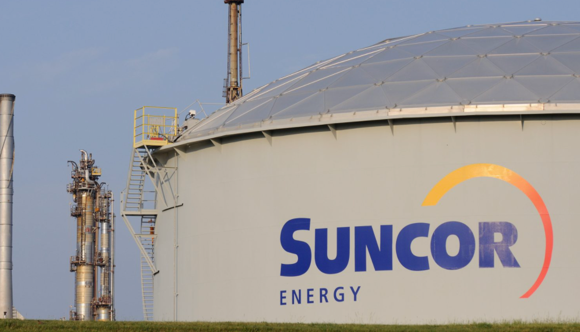
Why Oil Prices and Geopolitics Matter Less to Suncor Canadian Oilsands Than Ever

Suncor explained that oil prices and geopolitics now have a limited impact on its business because its fully integrated model — from oil sands to upgrading, refining, and marketing — naturally offsets price volatility across the value chain. With a low-$40 WTI breakeven, record utilization, and strong downstream cash flow, Suncor generates stable free cash flow and shareholder returns even when oil prices fall or geopolitical headlines intensify.

read more

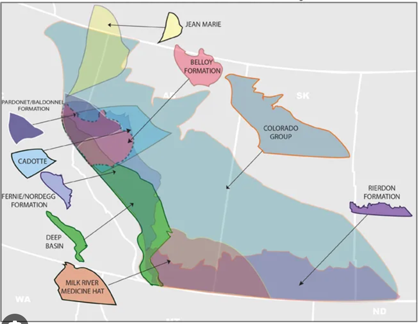
Why the Canadian Deep Basin Still Matters

The Canada Deep Basin has evolved into a low-decline, infrastructure-backed cash engine where operators prioritize optimization, cost compression, and free cash flow over volume growth. For companies like Whitecap and Tourmaline, it provides inventory depth and strategic flexibility—supporting steady production and margins while higher-return growth capital flows elsewhere.

read more

Brazos Midstream’s Sundance II: From August 2025 Announcement to Early-2026 Execution

Brazos Midstream’s Sundance II project moved from a high-profile August 2025 state-backed announcement to on-the-ground execution in early 2026, with new interconnect infrastructure quietly registered in Martin County. The combination shows Brazos isn’t just adding processing capacity — it’s building the connective plumbing needed to reliably move growing Permian associated gas volumes for the long term.

read more