
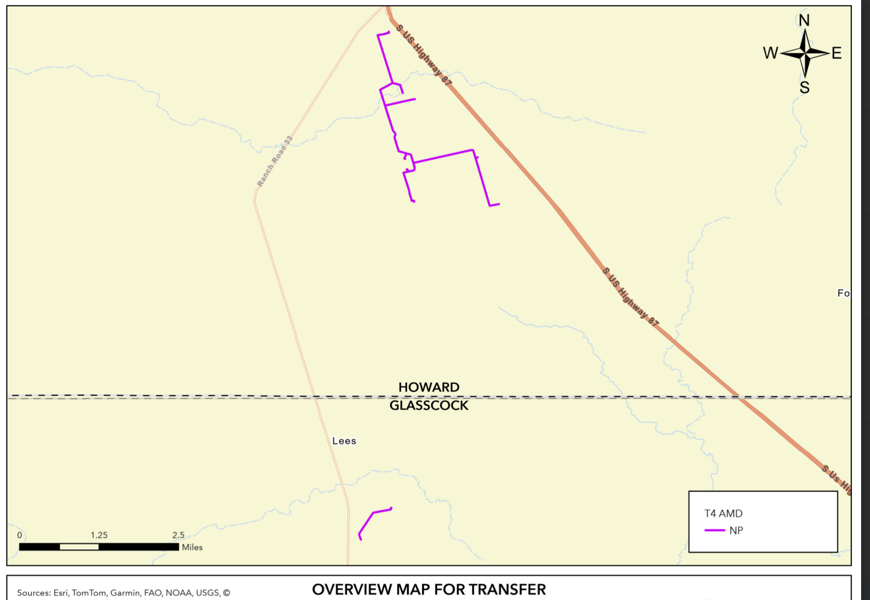
Civitas Permian Operating has taken another deliberate step to strengthen its Midland Basin operating footprint, acquiring approximately 13 miles of natural gas pipeline infrastructure from Oxy-affiliated Oxyrock Operating in Howard and Glasscock Counties. While the transaction may look incremental on paper, it is strategically important—because in today’s Permian, control of gas infrastructure is control of development pace, cost structure, and execution certainty.
Why this pipeline transfer matters to Civitas
In the modern Permian Basin, drilling success is no longer defined solely by lateral length or completion intensity. Midstream readiness—especially gas takeaway, compression, and routing flexibility—has become a gating factor for efficient development.
By acquiring this pipeline system, Civitas gains:
- Direct control over produced gas handling in a core operating corridor
- Reduced reliance on third-party scheduling and tariffs
- Greater flexibility to bring pads online faster, especially during high turn-in-line periods
- Optionality for future compression upgrades or system optimization
This is exactly the type of infrastructure ownership that supports pad-based development and multi-bench co-development—both of which Civitas has emphasized operationally.
The data backs it up: Civitas’ 2025 drilling activity
Civitas’ 2025 drilling program is already concentrated in Glasscock County, based on the wells-drilled dataset for 2025:
- 12 wells drilled in 2025
- All activity located in Glasscock County
- No Howard County wells yet in 2025—but Howard remains within the permitted pipeline footprint, signaling forward-looking infrastructure positioning
This matters because Glasscock County is not speculative for Civitas—it is active, drilled, and producing. Owning the gas pipeline in the same geography as current drilling activity is a textbook example of aligning surface, subsurface, and midstream execution.
What Civitas said about the Permian and Midland Basin
On its Q2 2025 earnings call, Civitas management was explicit: the Permian—especially the Midland Basin—is now the company’s primary growth engine.
Key takeaways from the call include:
- Essentially all oil growth in Q2 came from the Midland Basin, underscoring its importance within Civitas’ portfolio Civitas Resources, Inc Q32025 T…
- Continued drilling efficiency gains, with average drilled footage exceeding 1,850 feet per day per well in the Midland Civitas Resources, Inc Q32025 T…
- Ongoing pad development and co-development, including projects targeting the Middle Spraberry and Wolfcamp benches
- Wolfcamp D success in Glasscock County, reinforcing confidence in multi-bench development in exactly the area covered by the pipeline transfer Civitas Resources, Inc Q32025 T…
Management also emphasized that Permian returns currently exceed those in the DJ Basin, which explains why capital, drilling activity, and infrastructure investment continue to tilt toward the Midland.
In that context, acquiring gas pipeline infrastructure is not a side move—it is enabling infrastructure for Civitas’ highest-return basin.
Infrastructure as a competitive advantage
Civitas’ leadership also highlighted ongoing work on facility optimization and midstream integration, noting that improving facilities and infrastructure is a lever for lowering costs and improving uptime.
Owning this pipeline supports that strategy by:
- Improving flow assurance during peak completion and tie-in periods
- Reducing downtime caused by gas handling constraints
- Supporting future pad expansions without incremental third-party negotiations
This is Permian 2.0 execution—less about acreage grabs, more about operational control.
Why Oxy was willing to sell: non-core asset divestment
From Occidental’s side, the transaction fits neatly into a broader portfolio strategy.
On its Q3 2025 earnings call, Oxy was clear that it is simplifying its portfolio and divesting non-core assets as it transitions into what management described as a harvesting phase Occidental Petroleum Corporatio….
Key signals from Oxy:
- The sale of OxyChem was framed as the final major portfolio reshaping move
- Management stated plainly that no further large divestments or acquisitions are planned
- Oxy is now focused on execution, free cash flow, and returns, not asset sprawl Occidental Petroleum Corporatio…
Within that framework, field-level infrastructure that no longer fits a core development plan becomes expendable—especially when another operator is actively drilling in the same corridor.
The bigger picture
This pipeline transfer is a clean example of how the Permian is evolving:
- Majors simplify and rationalize
- Independents like Civitas consolidate and operationalize
- Infrastructure moves to the operator best positioned to use it immediately
For Civitas, the takeaway is simple:
this is infrastructure aligned with active drilling, not idle optionality.
And in a basin where execution speed and gas handling matter more every year, that alignment can be the difference between average performance and outperformance.