
The Western Canada heavy oil industry is often misunderstood through the lens of traditional upstream oil and gas cycles. While many markets fluctuate with commodity prices, exploration success, and capital shifts, heavy oil in Western Canada operates under a fundamentally different model — one defined by stability, repeatability, and long-term capital discipline.
Using a dataset of steady-state operators ranked by drilling consistency, rig activity, and permit inventory, a clear picture emerges: this is not a growth-driven frontier market. It is a mature, industrialized system built for sustained output and operational efficiency.
A Concentrated Market Dominated by Core Operators
The Western Canada heavy oil landscape is highly concentrated. A relatively small group of operators — including Cenovus, Canadian Natural Resources (CNRL), Suncor, Imperial, CNOOC (Nexen), Strathcona, and Baytex — account for the majority of drilling and development activity.
These companies are not simply participants in the market; they are long-term asset managers overseeing multi-decade reserves. Their operations are deeply integrated, often spanning upstream production, midstream infrastructure, and downstream refining.
This concentration creates a unique dynamic: success in this market is less about broad prospecting and more about strategic account penetration.
Drilling as a Manufacturing Process
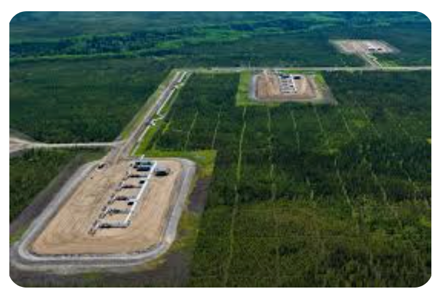
Unlike conventional oil and gas plays where drilling programs can be episodic, heavy oil development in Western Canada follows a manufacturing-style approach.
Operators deploy rigs continuously to support:
- Pad development
- Steam-assisted gravity drainage (SAGD) cycles
- Reservoir maintenance and optimization
With over 100 active rigs and nearly 1,000 wells drilled year-to-date, the data shows a consistent level of execution. Historical drilling levels remain steady year-over-year, reinforcing the idea that these operators are not reacting to short-term price signals, but executing long-term development plans.
This creates one of the most predictable drilling environments in North America.
Market Structure: Concentrated + Controlled
Key stats from your dataset:
- 16 operators = 100% “Steady State” classification
- 112 active rigs
- 976 wells drilled (2026 YTD)
- 1,727 wells drilled (2025)
- 725 permits (12 months)
- 237 permits (last 60 days)
Permits: The Clearest Signal of What Comes Next
Permit activity provides one of the strongest indicators of near-term drilling intent.
Recent data shows hundreds of permits issued over the past 12 months, with a significant portion concentrated in the last 60 days. These permits represent active inventory that has not yet been drilled — effectively a forward-looking backlog of work.
For service companies and suppliers, this is critical. While rig counts show current activity, permits reveal what is about to happen.
Operators with high permit issuance combined with active rigs represent the most immediate sales opportunities.
Capital Discipline Over Production Growth
Heavy oil operators in Western Canada are not aggressively pursuing production growth. Instead, their strategy is centered on:
- Maintaining stable output
- Reducing cost per barrel
- Improving operational efficiency
This approach is driven by the realities of heavy oil production, including higher operating costs, infrastructure dependencies, and environmental considerations.
As a result, capital allocation is deliberate and programmatic. Projects are developed in phases, and drilling programs are designed to sustain production rather than rapidly expand it.
What This Means for Sales and Business Development
For companies targeting this market, traditional upstream sales strategies often fall short. The Western Canada heavy oil sector demands a more focused, account-based approach.
1. Key Account Strategy is Essential
With a limited number of dominant operators, success depends on building deep relationships within a small group of companies. Multi-threading accounts and understanding asset-level operations is far more valuable than expanding top-of-funnel activity.
2. Timing is Predictable — If You Use the Right Signals
Three key indicators define timing:
- Permits (last 60 days): Imminent activity
- Rig count: Active execution
- Wells drilled: Program scale
Together, these metrics provide a clear view of when and where to engage.
3. Messaging Must Align with Operational Reality
Heavy oil operators are not looking for exploration upside. They are focused on operational performance.
Effective messaging emphasizes:
- Cost reduction
- Reliability and uptime
- Efficiency improvements
- Support for continuous drilling programs
4. Procurement is Structured and Long-Term
Large operators rely on established procurement processes and preferred vendor systems. While this can lengthen sales cycles, it also creates long-term revenue opportunities once relationships are established.
A Market Defined by Predictability
Perhaps the most important takeaway is this: the Western Canada heavy oil industry is one of the most predictable oil and gas markets globally.
It behaves less like a traditional upstream sector and more like an industrial production system. Operators execute consistent drilling programs, maintain steady rig activity, and manage multi-year permit inventories.
For those who understand this dynamic, the opportunity is clear. Success does not come from chasing volatility — it comes from aligning with consistency.
Final Thoughts
The steady-state nature of Western Canada’s heavy oil market represents a significant advantage for informed operators, service providers, and investors.
By focusing on the right accounts, leveraging forward-looking indicators like permit activity, and aligning solutions with operational priorities, companies can position themselves to win in a market where stability — not uncertainty — defines success.
In an industry often characterized by cycles, Western Canada heavy oil stands apart as a model of disciplined, repeatable development.

Author: phinds