
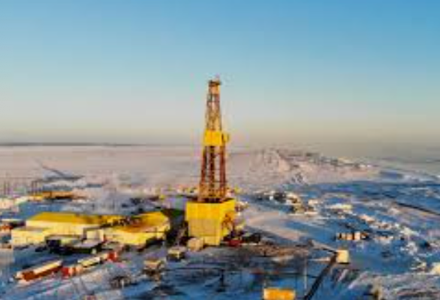
In Western Canada, the first 90 days of the year often set the tone for drilling activity.
Winter access, frozen ground conditions, and capital programs aligned to calendar-year budgets mean a disproportionate share of wells are drilled early — particularly across Alberta, Saskatchewan, and the Montney.
Using Activity Date data — which reflects wells actually drilled, not permits issued — we compared drilling results from the first part of 2024, 2025, and 2026 to evaluate how the current year is shaping up.
The results are clear:
2026 is off to one of the strongest drilling starts of the past three years.
📊 Top 5 Operators: Drilling Momentum Is Accelerating
| Account | 2024 | 2025 | 2026 | YoY 25 vs 24 | YoY 26 vs 25 |
|---|---|---|---|---|---|
| Cenovus Energy Inc. | 75 | 81 | 114 | +6 | +33 |
| Canadian Natural Resources (CNRL) | 24 | 33 | 78 | +9 | +45 |
| Whitecap Resources Inc. | 28 | 28 | 34 | 0 | +6 |
| Teine Energy Ltd | 25 | 26 | 36 | +1 | +10 |
| Suncor Energy Inc. | 19 | 24 | 43 | +5 | +19 |
What stands out
- Cenovus leads all operators, increasing drilling activity by 33 wells year-over-year.
- CNRL posted the strongest growth rate, more than doubling drilling compared with early 2025.
- Major oil sands and conventional producers are not holding flat — they are expanding activity.
- The growth is broad-based, not isolated to a single operator.
This pattern signals confidence in long-cycle development and stable capital deployment — not short-term price chasing.
🗺️ Provincial View: Alberta Driving the Recovery
| Province | 2024 | 2025 | 2026 | YoY 25 vs 24 | YoY 26 vs 25 |
|---|---|---|---|---|---|
| Alberta | 317 | 344 | 517 | +27 | +173 |
| Saskatchewan | 140 | 162 | 169 | +22 | +7 |
| British Columbia | 17 | 12 | 10 | −5 | −2 |
Key takeaways
- Alberta drilling is up more than 50% year-over-year in the opening months of 2026.
- Saskatchewan remains stable, continuing a steady development cadence.
- British Columbia continues to see structural decline tied to regulatory and infrastructure constraints.
The surge in Alberta alone accounts for the majority of Western Canada’s early-year drilling growth.
📍 Board Field Centres: Activity Concentration Is Increasing
| Board Field Centre | 2024 | 2025 | 2026 | YoY 26 vs 25 |
|---|---|---|---|---|
| Bonnyville | 125 | 124 | 164 | +40 |
| Kindersley | 57 | 70 | 84 | +14 |
| Grande Prairie | 41 | 50 | 70 | +20 |
| Estevan | 57 | 57 | 46 | −11 |
| Fort McMurray | 0 | 35 | 123 | +88 |
What the geography shows
- Bonnyville remains the most active drilling center in Western Canada.
- Grande Prairie continues to strengthen, reinforcing the Montney’s role as a core growth engine.
- Fort McMurray’s resurgence is one of the most notable shifts, reflecting renewed thermal and oil sands development.
- Activity is becoming more concentrated in top-performing regions rather than spread thinly.
🔍 Why This Matters
This analysis is based on Activity Date, meaning:
- These wells have been physically drilled
- They are not future plans or unexecuted permits
- They represent deployed capital and contracted services
That distinction is critical.
While permit counts can fluctuate, drilling execution tells the real story of operator confidence.
🧠 What the Early Data Is Signaling
Across operators, provinces, and field centres, the message is consistent:
- ✔ More wells drilled
- ✔ Higher year-over-year growth
- ✔ Concentration in proven core areas
- ✔ Increased commitment from large-cap operators
If early-year drilling is a leading indicator — as it historically has been — 2026 is tracking toward one of the strongest Western Canada drilling years since the post-2020 recovery began.
📌 Bottom Line
2026 is not starting cautiously — it is starting aggressively.
With Alberta activity surging, major operators expanding programs, and drilling concentrated in the Montney, oil sands, and established conventional hubs, Western Canada enters 2026 with clear operational momentum.
For oilfield service companies, suppliers, and midstream operators, the data points to:
- Strong first-half demand
- Sustained equipment utilization
- Continued investment in core Western Canadian basins
The first 90 days matter — and so far, 2026 is outperforming both 2024 and 2025.