
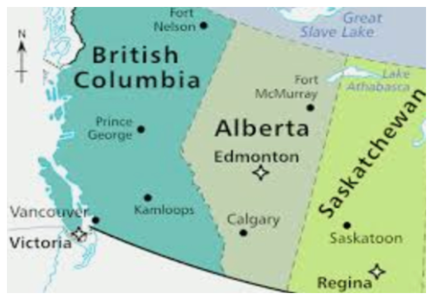
The Canada Oil Companies Directory is a compiled directory of oil & gas companies operating in Western Canada. The Canadian market remains highly concentrated among a relatively small group of active operators. While the file contains 287 companies, most current drilling and permitting activity is being driven by fewer than 20 operators, led by CNRL, Cenovus, Tourmaline, ARC Resources, Whitecap, and Strathcona. From a business development perspective, the greatest near-term revenue opportunities are likely within the 46 Steady State operators and the upper segment of the 85 Next Tier operators, which collectively represent the core of Canada’s active drilling market in 2026.
Purchase Complete Directory – Only $10.00
Operator Activity Summary Report
Q3 2026
| 289 TOTAL OPERATORS | 272 ACTIVE RIGS | 3,474 2026 WELLS DRILLED |
Prepared for oilfield service sales managers, business development teams, executives, and investors.
Dataset Overview
The Q3 2026 Canada operator dataset includes 289 oil and gas operators. Activity is segmented using current drilling, rig deployment, and permit inventory to identify the accounts with the strongest near-term and long-term demand for oilfield services.
| Classification | Operators | % of Total |
| Dormant / Legacy | 152 | 52.6% |
| Next Tier | 83 | 28.7% |
| Steady State | 54 | 18.7% |
| Total | 289 | 100.0% |
Classification Method: Based on drilling activity, rig activity, and permit inventory using the Operator Classification Glossary.
Executive Summary
Canada has a broad operator base, but active development is concentrated in a relatively small group. Steady State operators represent only 18.7% of the dataset, yet they control 84.9% of active rigs, account for 91.9% of wells drilled in 2026, and hold 82.9% of permits issued during the last 12 months. This concentration makes the market highly account-driven: a focused sales strategy aimed at the largest active operators can reach most current service demand.
The Steady State segment has 231 active rigs and has drilled 3,194 wells in 2026. Canadian Natural Resources (CNQ) and Cenovus Energy (CVE) lead rig deployment with 24 and 23 rigs, respectively, while Cenovus leads 2026 well activity among the top-ranked accounts. The top five Steady State operators hold 36.8% of all rigs in the segment, demonstrating a meaningful concentration of capital programs among the largest producers.
The Next Tier segment includes 83 operators, but collectively contributes only 15.1% of active rigs and 8.1% of 2026 wells. This group remains strategically important because it contains regional independents and growth-oriented accounts that can expand quickly when commodity prices, financing, or asset opportunities support increased development. Their 538 permits provide a practical prospecting signal for identifying operators moving toward more sustained activity.
Dormant / Legacy operators make up 52.6% of the operator universe but have no active rigs and no recorded 2026 wells in the dataset. Even so, the segment holds 123 permits from the last 12 months and retains producing assets, facilities, pipelines, and environmental obligations. For oilfield service companies, the largest immediate opportunities are concentrated in drilling, completions, water, facilities, and digital solutions for Steady State operators; the strongest growth opportunities are targeted Next Tier accounts; and the Dormant / Legacy segment supports production optimization, integrity, environmental, and facility maintenance campaigns.
1. Steady State Operators
Definition
Operators consistently drilling within a play or region and maintaining active development programs supported by rig activity, wells drilled, and permit inventory.
Market Characteristics
| Operators | Active Rig Count | Wells Drilled 2026 | Wells Drilled 2025 | Permits Last 12 Months | Permits Last 60 Days |
| 54 | 231 | 3,194 | 4,435 | 3,195 | 801 |
Business Interpretation
Steady State operators form the core of Canadian drilling activity and represent the highest, most predictable demand for field services. Their continuous capital programs create recurring needs across the well lifecycle and support longer-term account planning, preferred-vendor positioning, and multi-year commercial relationships.
- Drilling services and directional drilling
- Completions, stimulation, and pressure pumping
- Water sourcing, transfer, recycling, and disposal
- Production chemicals and artificial lift
- Facility construction and midstream expansion
- Automation, remote operations, and digital oilfield solutions
These companies should be considered Tier 1 strategic accounts.
Largest Steady State Operators
| Operator | Rig Count | Wells Drilled 2026 | Permits Last 12 Months |
| Canadian Natural Resources Limited (CNRL) (CNQ) | 24 | 399 | 508 |
| Cenovus Energy Inc. (CVE) | 23 | 498 | 261 |
| Whitecap Resources Inc. (TSE:WCP) | 15 | 140 | 92 |
| Tourmaline Oil Corp (TSE:TOU) | 13 | 78 | 531 |
| Spur Petroleum Ltd. | 10 | 171 | 60 |
| Saturn Oil + Gas Inc. (SMI) | 10 | 51 | 50 |
| Strathcona Resources, Ltd. (STHRF) | 9 | 180 | 102 |
| Teine Energy Ltd | 9 | 121 | 51 |
| ARC Resources Ltd (Shell) (TSE:ARX) | 8 | 74 | 294 |
| Baytex Energy Corp. (TSE:BTE) | 7 | 117 | 204 |
Key Observation
Canadian drilling activity is highly concentrated among the leading operators. Canadian Natural Resources (CNQ), Cenovus Energy (CVE), Whitecap Resources (WCP), Tourmaline Oil (TOU), and Spur Petroleum collectively operate 85 rigs, equal to 36.8% of Steady State rig activity. The leading ten operators also account for 57.3% of Steady State wells drilled in 2026, reinforcing the value of account-based selling focused on major development programs.
2. Next Tier Operators
Definition
Operators with measurable drilling activity or permit activity but operating at a lower scale than Steady State Operators.
Market Characteristics
| Operators | Active Rig Count | Wells Drilled 2026 | Wells Drilled 2025 | Permits Last 12 Months | Permits Last 60 Days |
| 83 | 41 | 280 | 502 | 538 | 99 |
Business Interpretation
Next Tier operators represent emerging development programs, regional independents, asset optimization campaigns, and potential future Steady State accounts. Their activity is less consistent, so sales timing should be driven by changes in rig count, permit issuance, financing, acreage transactions, and indications that capital programs are expanding.
This segment is ideal for business development prospecting, regional sales campaigns, market share expansion, and new product introductions. Operators with both recent permits and active rigs should receive the highest priority because those signals indicate near-term field activity and a greater probability of service procurement.
Notable Next Tier Operators
| Operator | Rig Count | Wells Drilled 2026 | Permits Last 12 Months |
| Potash Corporation of Saskatchewan Inc | 3 | 5 | 18 |
| Durham Creek Energy Ltd. | 2 | 6 | 1 |
| Mancal Energy Inc | 2 | 4 | 2 |
| Grizzly Resources Ltd | 2 | 4 | 0 |
| Aldon Oils Ltd | 2 | 3 | 3 |
| WESTGATE ENERGY OPERATIONS LTD. | 2 | 3 | 1 |
| RICOCHET OIL CORP. | 1 | 6 | 10 |
| Pemoco Ltd | 1 | 6 | 6 |
| NORTH 40 RESOURCES LTD. | 1 | 6 | 4 |
| ORLEN Upstream Canada Ltd. | 1 | 6 | 4 |
Key Observation
The Next Tier segment has 538 permits in the last 12 months and 99 in the last 60 days. Potash Corporation of Saskatchewan leads current rig deployment in the segment, while Ricochet Oil shows one of the strongest combinations of recent drilling and permit activity among smaller operators. Accounts that sustain permit issuance and add rigs are the most likely candidates to graduate into Steady State status.
3. Dormant / Legacy Operators
Definition
Operators with historical permit activity but limited or no recent drilling activity.
Market Characteristics
| Operators | Active Rig Count | Wells Drilled 2026 | Wells Drilled 2025 | Permits Last 12 Months | Permits Last 60 Days |
| 152 | 0 | 0 | 189 | 123 | 33 |
Business Interpretation
Dormant / Legacy operators are not current drilling-service targets, but they can remain commercially relevant through producing assets, existing facilities, pipeline infrastructure, environmental obligations, and maintenance programs. Sales strategies should be production- and infrastructure-led rather than centered on new-well construction.
- Production optimization and artificial lift
- Automation, SCADA, and remote monitoring
- Mechanical integrity and pipeline integrity management
- Environmental, abandonment, and reclamation services
- Facility debottlenecking, reliability work, and upgrades
Largest Dormant / Legacy Operators by Permit Inventory
| Operator | Permits Last 12 Months |
| Coelacanth Energy Inc. | 20 |
| STORM DEVELOPMENT CORP. | 12 |
| SUEDE ENERGY LTD. | 9 |
| Cygnet Energy Ltd. | 6 |
| Vital Energy (CVE:VUX) | 5 |
| Baccalieu Energy Inc | 5 |
| Hitic Energy Ltd | 5 |
| Pine Cliff Energy (PNE) | 4 |
| BrightSpot International Energy (Canada) Co., Ltd. | 4 |
| ACERTA OPERATING CORPORATION | 3 |
Key Observation
Coelacanth Energy, Storm Development, Suede Energy, and Cygnet Energy hold the largest recent permit inventories within the Dormant / Legacy segment. Although these operators have no active rigs or 2026 wells in the dataset, continuing permit activity may indicate retained inventory, regulatory positioning, asset preparation, or future reactivation potential. These accounts should be monitored for rig additions, financing events, transactions, or permit-to-spud conversion.
Strategic Sales Recommendations
Tier 1 Focus – Steady State Operators
Direct the majority of sales and marketing resources toward the 54 Steady State operators. They control 84.9% of rigs and 82.9% of 12-month permits, making them the primary source of recurring drilling, completions, water, production, facility, midstream, and technology demand. Use strategic account plans, executive sponsorship, multi-service bundling, and geographic coverage aligned with active development areas.
Tier 2 Focus – Next Tier Operators
Use a trigger-based prospecting model for Next Tier operators. Prioritize accounts that add rigs, accelerate 60-day permitting, increase year-over-year well counts, acquire producing or undeveloped assets, or announce expanded capital programs. These signals identify future growth accounts before they become heavily competed Steady State targets.
Tier 3 Focus – Dormant / Legacy Operators
Target this segment with production-focused, maintenance-focused, and infrastructure-focused offerings. Emphasize operating cost reduction, field automation, artificial lift, chemical programs, integrity management, environmental compliance, facility upgrades, and abandonment or reclamation services. Maintain watch lists for operators with meaningful permit inventory that could support future reactivation.
Overall Market Outlook
The Q3 2026 Canadian operator market shows strong drilling intensity at the top and a long tail of low-activity operators. The dataset records 272 active rigs, 3,474 wells drilled in 2026, and 3,856 permits over the last 12 months. With 85.9% of permits from the last 60 days concentrated among Steady State operators, near-term service demand should remain anchored by established capital programs rather than broad-based expansion across the full operator universe.
For business development teams, the implication is clear: concentrate strategic coverage on the largest active public and private operators, build targeted growth campaigns around permit-rich Next Tier accounts, and address Dormant / Legacy operators through production, maintenance, integrity, environmental, and facility solutions. The market rewards disciplined account prioritization because a relatively small number of operators control the overwhelming majority of current drilling and permit activity.
Data Note
All calculations, rankings, operator names, rig counts, well counts, permit counts, and ticker references in this report were calculated directly from the supplied operator-level dataset. Blank numeric fields were treated as zero. Rankings use Rig Count first for Steady State and Next Tier operators and Permits Last 12 Months for Dormant / Legacy operators.
Bonus Market Intel
When you purchase this list you will receive the most recent drilling rig, new well permits and wells drilled YTD reports for Canada, This is a $30 oil & gas market intel bundle you receive at no extra cost.
Here is a summary of the information included in the list.
Email Pattern – Email format used by the company (e.g., {first}.{last}@company.com).
Account Name – Name of the company or entity.
Ticker Symbol – Publicly traded stock ticker symbol (if applicable).
Rig Count – Number of rigs operating in the U.S.
Wells Drilled 2023 – Total wells drilled in 2023.
Wells Drilled 2024 – Total wells drilled in 2024.
Wells Drilled 2025 – Total wells drilled in US 2025.
Street – Street address of the company.
City – City where the company is located.
State/Province – State or province where the company is based.
Postal Code – Zip or postal code of the company.
Website – Company’s official website.
Linkedin Company Page – URL to the company’s LinkedIn page.
OGL URL – Possibly a URL to an Oil & Gas Leads profile.
Google Map – Link to the company’s location on Google Maps.
Phone – Contact phone number.