
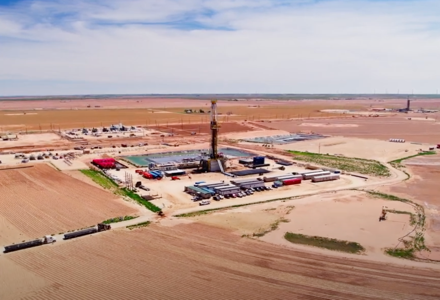
In Permian Basin conversations, the terms “stacked development” and “Cube development” are often used interchangeably. They’re related — but they are not the same thing. Understanding the difference matters, especially when interpreting permits and separating inventory signals from execution strategy.
At a high level, stacked development describes the inventory.
Cube development describes how that inventory is executed.
Full Stacked Development: The Inventory Concept
Full stacked development refers to the presence of multiple productive benches within the same acreage footprint. In the Permian, this typically includes combinations of:
- Upper / Middle / Lower Spraberry
- Wolfcamp A
- Wolfcamp B (and sometimes deeper intervals)
When an operator talks about “full stack,” they’re saying the vertical column is economic. It’s a geological and inventory statement: the rock is there, it works, and it can be developed over time.
An operator can hold stacked inventory for years without ever fully exploiting it.
Cube Development: The Execution Model
Cube development goes a step further. It’s not about whether the benches exist — it’s about how development is planned and carried out.
Cube development means:
- A full section is treated as the development unit
- Multiple benches are planned together, not opportunistically
- Well sequencing, spacing, infrastructure, and technology are coordinated
- The objective is maximizing total recovery, not just adding wells
This is why Exxon Mobil Corporation consistently frames its Permian growth around recovery, technology deployment, and long-cycle development. Cube development turns stacked inventory into a manufacturing system, not a collection of isolated drilling decisions.
How COON-BEND Shows the Difference
The COON-BEND lease in Block 38T2S provides a clean example of this distinction in action.
The COON-BEND lease marks a new section entry within XTO Energy Inc.’s mature Block 38T2S position, expanding inventory inside a proven core block rather than stepping into new acreage. Two permits — COON-BEND 9C and COON-BEND 9D — target stacked Spraberry intervals:
- 9C targets an upper/alternate Spraberry bench
- 9D targets a shallower Spraberry interval
Projected depths remain tightly clustered within XTO’s established Spraberry development range. There is no step-change in depth and no indication of new pay discovery. Instead, the permits confirm stacked but known inventory being deliberately opened within a new section.
That is stacked development at the inventory level.
Because it’s happening as a new section rollout inside a mature block, it also reflects Cube-style execution.
Why the Distinction Matters
This difference explains why two operators can drill the same benches and send very different signals:
- Stacked development alone can be opportunistic, staggered, or reactive
- Cube development is intentional, coordinated, and repeatable
Cube development assumes stacked inventory — but stacked inventory does not automatically mean Cube development.
For example:
- Drilling a single Wolfcamp well years after Spraberry development is stacked, but not Cube
- Planning Spraberry and Wolfcamp benches together as part of a section buildout is Cube development
The Bigger Permian Signal
When Exxon talks about long-term Permian growth, stackable technologies, and maximizing recovery, it’s describing Cube development as a strategy, not just stacked geology. COON-BEND fits squarely into that framework: a measured, section-level expansion using known benches to extend inventory and sustain production inside core acreage.
Bottom Line
Full stacked development describes the vertical inventory. Cube development describes the execution strategy.
COON-BEND shows how stacked Spraberry inventory becomes meaningful only when it’s deployed through a Cube-style, section-based development model — exactly the approach Exxon has said will drive Permian value well into the next decade.

Author: phinds