
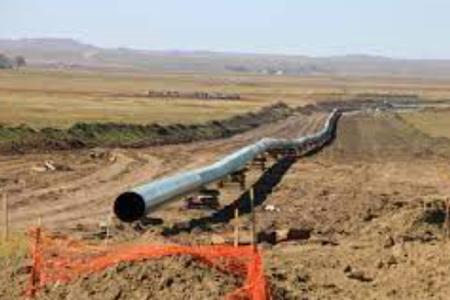
A new report from economists at National Bank of Canada suggests that the time may be right to revive a long-idled piece of Canadian natural gas infrastructure — Line 2 of the Canadian Mainline system, operated by TC Energy.
The pipeline has been inactive since 2013, but analysts argue that shifting energy demand, industrial growth, and geopolitical uncertainty are strengthening the case for reopening it. The move could support Canada’s energy security, strengthen east–west industrial ties, and provide reliable electricity generation as power demand rises across Ontario and Quebec.
Canada’s Mainline System and the Role of Line 2
TC Energy’s Canadian Mainline is one of the country’s most important natural gas transportation networks. The system moves natural gas from Western Canada — primarily Alberta — into the Prairies, Eastern Canada, and parts of the United States.
Line 2 runs through Ontario and Quebec but has been dormant for more than a decade after Eastern Canadian markets began sourcing cheaper gas from the United States, particularly from the Appalachian basin.
Today, however, market conditions are changing.
National Bank economists argue that restarting the line could help restore an east–west natural gas corridor, ensuring Canadian resources help power Canadian industry.
Power Demand in Ontario Is Rising Rapidly
Ontario’s electricity demand is expected to surge over the coming decades. Analysts estimate that electricity consumption in the province could rise approximately 75% by 2050 compared with 2025 levels.
Several factors are driving the increase:
- Growth in electric-vehicle manufacturing
- Expansion of AI and data center infrastructure
- Industrial electrification
- Population growth
Natural gas-fired power plants are expected to play a critical role during this transition.
According to the National Bank report, the natural gas delivered through a reopened Line 2 could generate electricity equivalent to roughly 20% of Ontario’s peak power demand.
A Bridge to New Nuclear Power
Ontario is already planning major nuclear expansions to meet future electricity needs.
Through Ontario Power Generation, the province is developing small modular nuclear reactors (SMRs), with the first unit expected to begin operating before the end of the decade.
Additional large-scale nuclear projects are also under consideration.
However, nuclear projects take years to complete. Natural gas generation offers a reliable and flexible bridge while new nuclear capacity is being built.
Energy Security and East–West Industrial Strategy
The economists frame the proposal within a broader national strategy.
In their view, strengthening an eastbound natural gas corridor would help anchor an Alberta–Ontario–Quebec industrial partnership and reduce reliance on foreign energy sources.
With geopolitical instability affecting global energy markets, infrastructure that connects Canadian resources to Canadian demand is increasingly viewed as a national security and economic resilience priority.
Optimizing Existing Infrastructure
One of the strongest arguments for restarting Line 2 is economic efficiency.
Building new cross-country pipelines is expensive and politically challenging. In contrast, reactivating an existing pipeline corridor could be significantly faster and more cost-effective.
National Bank analysts emphasize that optimizing existing infrastructure — particularly assets already in place but underutilized — is both pragmatic and capital-efficient.
Natural Gas Demand Is Expanding
Natural gas demand across North America continues to grow, driven by power generation, LNG exports, and industrial consumption.
Canada is also pursuing several large natural gas infrastructure projects, including the expansion of LNG Canada and proposals for new liquefied natural gas export facilities on the British Columbia coast.
At the same time, the current tolling agreement for TC Energy’s Mainline system — the structure that determines shipping costs for natural gas — expires at the end of 2026. This creates an opportunity to rethink how the system is utilized.
The Energy “Trilemma”
Energy policy is increasingly shaped by what analysts call the energy trilemma — the need to balance three competing priorities:
- Energy affordability
- Energy reliability and security
- Decarbonization
Natural gas plays a key role in this equation because it can provide reliable electricity generation while supporting economic growth and complementing renewable energy sources.
A Strategic Opportunity for Western Canadian Gas
For producers in Alberta and Western Canada, reopening Line 2 could unlock additional domestic demand and strengthen Canada’s internal energy market.
Rather than relying heavily on exports to the United States, Canadian gas could increasingly supply Canadian industry, electricity generation, and manufacturing growth in Eastern Canada.
The Bottom Line
The proposal to restart Line 2 reflects a broader shift in how Canada is thinking about energy infrastructure.
As electricity demand rises, industrial policy evolves, and global energy security becomes more uncertain, leveraging existing pipelines could become one of the most practical ways to strengthen Canada’s energy system.
If the idea gains traction, the dormant pipeline that once symbolized declining eastbound gas demand could become a cornerstone of Canada’s next phase of energy development.

Author: phinds