
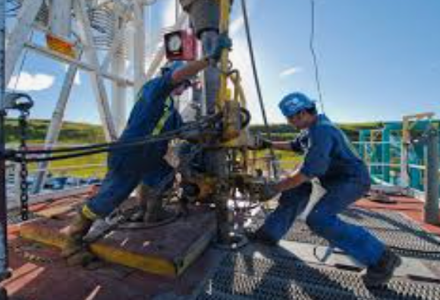
The evolution of shale development didn’t happen overnight. It unfolded in waves—and Wave 2: Industrialization is where the real value was created.
This is the phase where shale shifted from experimentation to execution. From uncertainty to repeatability. From single wells to scalable systems.
And ultimately—from opportunity to dominance.
What Is Industrialization in Shale?
Industrialization is the point where operators stop asking:
“Can we drill this well?”
…and start asking:
“How do we drill thousands of wells faster, cheaper, and more consistently?”
At its core, industrialization transforms drilling into a manufacturing process—built on standardization, scale, and system-level efficiency.
Why This Phase Matters
This is the money phase of shale development.
It’s where:
- Margins are built
- Cost leadership is established
- Inventory becomes economic
Instead of chasing production growth at any cost, operators begin optimizing for capital efficiency and repeatable returns.
The result?
- Lower cost per well
- More drillable locations
- Higher production with fewer rigs
This is exactly why the Permian Basin dominates globally today.
The Core Shift: From Wells to Systems
Industrialization isn’t driven by a single innovation. It’s a system-level transformation built on several key pillars:
1. Pad-Based Development: The Factory Model
The most important shift?
The pad becomes the unit of execution.
- Multi-well pads (4–10+ wells)
- Dedicated rigs per pad
- Batch drilling and completions
- Reduced downtime and rig movement
Drilling becomes continuous—like an assembly line.
2. Standardized Subsurface
Operators reduce variability by:
- Targeting consistent formations
- Locking in landing depths
- Repeating well designs across acreage
Predictable geology enables predictable execution.
3. Scale-Driven Cost Reduction
As operators scale:
- Cost per well declines
- Cost per lateral foot drops
- Infrastructure is shared
The first well is the most expensive.
Every well after gets cheaper.
4. Higher Output with Lower Activity
One of the clearest signals of industrialization:
Less capital + fewer rigs → same or higher production
Operators drill more wells per rig, complete faster, and produce more efficiently.
5. Integrated Development Systems
The focus shifts from individual operations to full-system optimization:
- Drilling + completions + facilities aligned
- Simul-frac and zipper frac scaling
- Centralized water, power, and infrastructure
This is where real efficiency is unlocked.
Case Studies: Industrialization in Action (2025)
OXY: Full Manufacturing Standardization
OXY has fully embraced the factory model:
- More wells per pad
- ~50% more wells per rig
- Simul-frac scaling rapidly
- ~15–16% cost reduction
Even with fewer rigs, production continues to grow.
👉 This is pure industrialization: repeatability + scale + efficiency.
Coterra: System Optimization at Scale
Coterra goes beyond scaling—it optimizes the system:
- Faster drilling cycles (15 → 13 days)
- Continuous drilling cadence
- Microgrids and centralized power
- ~10% cost reduction per foot
Pads are no longer just drilling sites—they are integrated development platforms.
APA: Expanding Inventory Through Efficiency
APA shows the long-term impact of industrialization:
- Lower cost per foot
- Denser pad development
- Increased economic locations
👉 Lower costs don’t just improve margins—they unlock more resource.
The Technology Behind Industrialization
Wave 2 isn’t about a single breakthrough. It’s about integration.
Key components include:
- Pad-based drilling systems (walking rigs, batch operations)
- Advanced directional drilling and automation
- Factory-style completions (simul-frac, standardized designs)
- Centralized infrastructure (water, sand, power)
- Real-time data and operational dashboards
- Integrated service models
The shift is clear:
Wave 1 Wave 2 Experimentation Standardization Custom designs Repeatable systems Fragmented services Integrated execution Post-analysis Real-time optimization
The Big Insight: It’s Not About Technology—It’s About the System
One of the biggest misconceptions is that industrialization is driven by tools like pads or simul-frac.
It’s not.
Industrialization happens when everything works together—
geology, drilling, completions, infrastructure, and data—
in a repeatable, scalable system.
That’s what separates top-tier operators from everyone else.
Final Takeaway
Industrialization turned shale into a manufacturing business.
- Pads became factories
- Wells became repeatable units
- Operations became systems
- Efficiency became structural
And most importantly:
Growth became predictable.
One-Line Summary
Industrialization = Turning shale development into a scalable manufacturing system where standardized wells, pad-based execution, and integrated operations drive lower costs, higher efficiency, and repeatable growth.

Author: phinds