
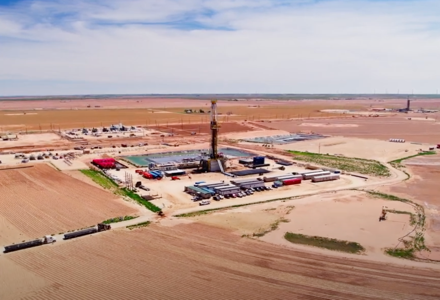
Arrington Oil & Gas Operating LLC is moving forward with a concentrated multi-pad drilling program in Ector County that provides a strong example of modern Permian Basin “Factory” development. Analysis of the Optimus Prime East permits shows multiple surface pads, horizontal wells targeting several projected depths, and development across both Spraberry and deeper Barnett intervals—strong indicators of stacked-reservoir co-development.

Arrington Oil & Gas Operating Overview
Arrington Oil & Gas Operating LLC is a privately held independent exploration and production company based in Midland, Texas, led by David H. Arrington. The company was formed in Texas in 2010 and remains an active Railroad Commission of Texas operator. Public RRC-derived records show Arrington has operated approximately 54 wells historically, with activity across multiple Texas counties.
The company’s recent permitting activity represents a notable shift toward a more concentrated development program. Public permit records show 12 Arrington permits over the last 12 months, with recent activity heavily focused on the Optimus Prime East lease in Ector County.
Rather than evaluating those permits individually, grouping them by their surface and subsurface characteristics provides a much clearer picture of what Arrington appears to be building.
Optimus Prime East: A Factory-Style Development
OilGasLeads’ analysis of the Optimus Prime East permit dataset identifies 8 horizontal wells grouped into 3 surface pads using a 50-meter transitive clustering methodology.
The development pattern is highly concentrated:
1 Lease → 1 Section → 3 Pads → 8 Horizontal Wells
All eight analyzed permits are located on the Optimus Prime East lease in Ector County and share Block 42T2S, Abstract 468 and Section 38. Rather than eight scattered drilling locations, every analyzed well belongs to a multi-well surface pad.
That concentration is one of the strongest characteristics of a Factory-style development: multiple wells are being developed as part of a coordinated project where pads, drilling activity and potentially future production infrastructure can be planned together.
Recent public permit records reinforce the broader scale of the program. Arrington’s Optimus Prime East permitting has included H110, H120, H130 and H140 well groups, with approvals extending through August 2026.
Multiple Pads, Multiple Depths
The subsurface profile makes the project particularly interesting.
The eight wells analyzed are all horizontal, but their projected depths range from approximately 8,800 feet to 12,000 feet. Combined, the analyzed permits represent approximately 78,500 feet of projected drilling depth, with an average projected depth of roughly 9,813 feet.
The three identified pads show different depth profiles:
- Pad 1: 3 wells ranging from approximately 9,200 to 12,000 feet
- Pad 2: 3 wells ranging from 8,800 to 10,500 feet
- Pad 3: 2 wells ranging from 8,800 to 9,600 feet
Public permit records also show other Optimus Prime East wells at similar depth increments, including wells permitted around 9,200, 10,000, 10,500 and 12,200 feet.
This is important because Arrington does not appear to be simply repeating the same horizontal well design eight times.
Evidence of Stacked Reservoir Development
The analyzed permit data assigns seven wells to the Spraberry (Trend Area) and one deeper well to Peart (Barnett).
Pad 1 provides the clearest subsurface signal. Wells from the same surface pad are associated with both Spraberry and Barnett targets, while projected depths extend across approximately 2,800 feet.
Pads 2 and 3 are identified as Spraberry wells but also contain meaningful differences in projected depth. This suggests Arrington may be targeting different landing intervals or benches within the broader reservoir system.
Regulatory field names and projected depths alone cannot establish the exact geological landing zone of every lateral. However, when they are combined with the project’s surface configuration, the development pattern strongly supports a stacked-reservoir interpretation.
Arrington is effectively concentrating numerous horizontal wellbores into a small surface footprint while accessing reservoir opportunities at substantially different depths.
Is Optimus Prime East a Co-Development Project?
The available data indicates a high probability that it is.
Co-development generally involves developing multiple reservoir intervals as part of a coordinated drilling program rather than developing one zone first and returning years later for another.
Optimus Prime East exhibits several characteristics consistent with that approach:
Same section + same lease + multiple pads + multiple horizontal wells + multiple projected depths + multiple field targets.
Most importantly, the wells are not geographically scattered. Arrington has concentrated the analyzed development into three multi-well pads within the same section, while projected depths span roughly 3,200 vertical feet.
This allows the operator to potentially coordinate drilling, completions, surface infrastructure and production operations across multiple reservoir targets.
Why Factory Development Matters to Oilfield Service Companies
For oilfield service companies, identifying a Factory project is much more valuable than simply identifying a new well permit.
A single permit can represent a single job. A multi-pad, stacked-reservoir development can represent an extended sequence of drilling, completion, construction and production opportunities.
Optimus Prime East potentially creates demand across the entire well lifecycle, including drilling rigs, directional drilling, mud, bits, casing, cementing, frac services, wireline, water management, flowback, production equipment, artificial lift, automation, electrical, pipeline and facility construction.
The clustered development also creates opportunities beyond drilling. Multiple wells flowing from common pads can require coordinated tank batteries, gathering systems, compression, produced-water infrastructure, automation and emissions-management equipment.
For sales teams, the key is therefore not simply that Arrington has new permits.
The more important intelligence is that those permits appear to belong to a larger development program.
The Bigger Picture
Optimus Prime East can be classified with high confidence as a Factory-style, multi-pad development with strong evidence of stacked-reservoir co-development.
The analyzed project consists of 8 horizontal wells across 3 surface pads within a single Ector County section, with projected depths ranging from approximately 8,800 to 12,000 feet and targets that include the Spraberry and deeper Barnett.
For OFS companies, that changes the sales conversation. Arrington should not be viewed as an operator permitting eight individual wells—it should be viewed as an operator developing a coordinated multi-pad project where winning an early position could create opportunities across multiple wells, reservoir targets and phases of infrastructure development.


Author: phinds