
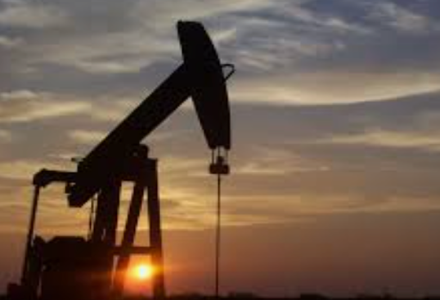
Artificial lift is often discussed as an individual piece of equipment—such as a rod pump, electric submersible pump, gas-lift system or plunger lift. However, the companies most closely connected to artificial-lift optimization show that the strongest solution is actually an integrated stack of products and services.
That stack combines lift equipment, sensors, controllers, VFDs, RTUs, communications, SCADA, analytics and field service. Working together, these technologies allow operators to monitor producing wells continuously, detect abnormal conditions, optimize lift settings remotely and send field personnel only when physical intervention is required.
This is the foundation of the Maintenance Plus model: using automation, artificial-lift optimization and targeted maintenance to reduce downtime, control lifting costs and recover more production from the existing well base.
The complete workflow
Lift equipment → Sensors → Controller/VFD → RTU/PLC → Communications → SCADA → Analytics → Automated adjustment → Targeted field service
This is the operating model behind Pump by Exception:
- Monitor every lifted well.
- Detect abnormal production or equipment conditions.
- Rank wells by production loss, failure risk and economic opportunity.
- correct what can be corrected remotely.
- Dispatch personnel only where physical intervention is justified.
Strongest OFS companies by part of the stack
- Sensia: Broadest integrated stack—ESP, SRP, PCP, gas lift, controllers, surveillance, analytics and explicit management by exception.
- SPOC Automation: Strongest rod-lift stack—VFDs, pump-off control, pump cards, SCADA and equipment protection.
- Puffer-Sweiven: Gas lift and plunger lift combined with RTUs, alerts and automated optimization.
- Vinson Process Controls: Gas/plunger-lift optimization, FloBoss/RTUs, SCADA, automated choke control and continuous setpoint optimization.
- Proserv: ESP and gas-lift applications supported by automation, remote monitoring and brownfield control-system upgrades.
- Panhandle Lift Solutions: Rod-lift equipment, load cells, pump-off controllers, VFDs, SCADA and field maintenance.
- Automation-X: Particularly relevant for plunger-lift sensing and control.
- JEMA and RNB Controls: Important VFD, motor-control, PLC and pump-control infrastructure.
- Pepperl+Fuchs: Instrumentation, diagnostics and connectivity—the data foundation for predictive maintenance.
- Dynamic Pressure Control: Mechanical ESP/wellhead support, repair and workover capability.
Strategic conclusion
The best Maintenance Plus solution is not simply “artificial-lift equipment plus automation.” It is a closed-loop system combining:
Artificial lift + sensing + control + connectivity + surveillance + optimization + targeted maintenance.
The central commercial value is turning existing producing wells into a continuously monitored portfolio where operators can increase production, prevent failures, reduce routine field visits and lower lifting costs. This confirms that your Maintenance Plus campaign should target both complete artificial-lift optimization providers and the specialized companies supplying individual layers of the stack.


Author: phinds