
Full stacked development describes the vertical inventory, while Cube development describes how that inventory is executed at the section level.
Cube Development vs. Full Stacked Development: What’s the Difference?
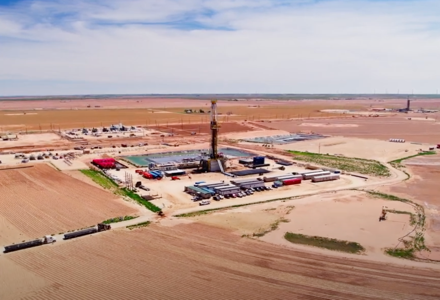
Full stacked development describes the vertical inventory, while Cube development describes how that inventory is executed at the section level.
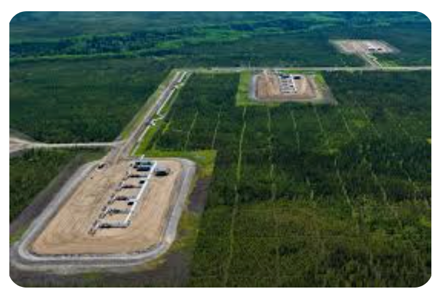
Western Canada’s heavy oil activity in 2026 is concentrated among a small group of operators executing disciplined, infrastructure-led drilling programs rather than chasing broad-based growth. Wells drilled, active rigs, and permit signals clearly separate scaled manufacturers from selectively paced operators, revealing where near-term execution and sales opportunity are actually concentrated.
Kinetik’s potential sale is being driven as much by asset quality as deal timing, with its Texas air permits revealing a tightly clustered set of compressor stations and central processing facilities in the core of the Delaware Basin. Those permitted, gas-focused facilities sit directly upstream of growing Gulf Coast demand, making Kinetik a highly attractive target for both strategic midstream buyers and infrastructure investors.
Birchcliff’s 2025 Grande Prairie Montney drilling activity closely matches management’s message of disciplined, infrastructure-led development, with multi-well pads, concentrated rig usage, and a clear focus on efficiency over volume growth. The wells drilled data shows a manufacturing-style program centered on core areas, reinforcing that the Montney is being optimized for returns, not rushed expansion.
Whitecap positioned the Montney as a long-dated, infrastructure-led growth engine focused on returns, flexibility, and capital discipline rather than volume growth. That strategy showed up clearly in 2025, with 76 wells drilled in core Montney fields using multi-well pads and a small set of high-utilization rigs, reinforcing a factory-style approach built for sustainable free cash flow.
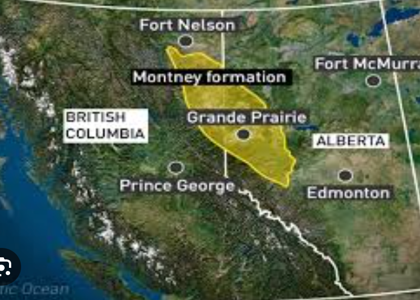
Grande Prairie’s Montney in 2026 is defined by disciplined, infrastructure-led execution rather than aggressive growth, with capital concentrated in repeatable, long-duration drilling programs. The data shows top operators using rigs to sustain cadence and permits to preserve optionality—confirming the region’s role as a manufacturing asset, not a volume chase.

Crescent Energy Operating LLC has taken another step in optimizing its Permian Basin portfolio with the completion of a new air permit for the UL Tilden 32 Gas Lift Pad in Ward County, Texas. While the permit itself is modest, it signals an important phase in the life of the wells tied to this pad: the transition from early production into long-term, managed output.
FireBird Energy II’s COYOTE UNIT project offers a clear look at how modern Permian operators execute disciplined, small-footprint development programs without sacrificing speed or efficiency. Concentrated in Borden County and anchored by standardized Spraberry targeting, the project follows a factory-style workflow that moves cleanly from permitting through drilling and into production readiness.

ONEOK, Inc. sees the Permian Basin as structurally undersupplied on gathering and processing, a view reinforced by Glasscock County’s 169 wells drilled in 2025, led by gas-heavy operators like OXY and Exxon (XTO). The surge in drilling has driven the need for incremental G&P infrastructure, now visible through new midstream permitting tied directly to rising associated gas volumes.

HERBERT F101B highlights how Ovintiv executes small, well-defined Midland Basin developments with tight drilling cadence, single-rig batch execution, and clean regulatory close-out. Rather than a factory-style program, the four-well project reflects disciplined capital deployment where drilling, facilities, and permitting are tightly aligned to complete the development efficiently.