
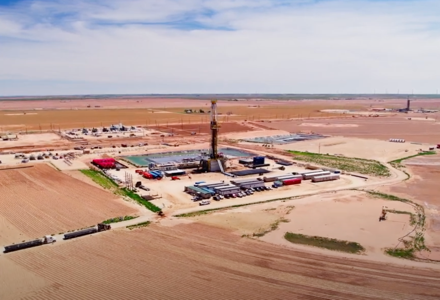
ExxonMobil’s capital investment priorities and Helmerich & Payne’s latest robotics results show how technology is supporting safer, more efficient oilfield operations. In separate presentations released in September and October 2026, ExxonMobil emphasized disciplined investment, project execution, and operational excellence, while H&P demonstrated how those priorities translate into drilling performance in the Midland Basin.

ExxonMobil outlined planned cash capital expenditures of $27–$29 billion in 2026 and $28–$32 billion annually from 2027 through 2030, focused on competitively advantaged projects with strong returns. Its strategy rests on three pillars: technology, project execution, and operations. Although the presentation did not specify regional drilling budgets or rig targets, it reinforces the importance of equipment reliability, efficient development, and technologies that improve investment returns.
H&P’s October Technology Day presentation provides a practical example through its FlexRobotics deployment with ExxonMobil. Two robotic rigs are operating in the Midland Basin, with approximately nine expected in operation by year-end 2027 following an expanded ExxonMobil order. Three robotic arms automate pipe handling, connection services, and racking-board work. H&P reports that the first deployment, Rig 618, completed 30 wells, performed more than 31,000 robotic connections, eliminated over 3,300 red-zone personnel hours, and saved 20.5 days versus planned cycle time. The second package was installed during a rig move in less than four days, with full commissioning completed within nine days.
Beyond robotics, H&P is combining remote support and equipment refurbishment to improve fleet performance. Its network of more than 200 drilling specialists provides continuous operational support, while AI has reduced event-investigation time from six hours to ten minutes. H&P also estimates approximately $100 million in avoided capital and operating costs during 2023–2026 through internal equipment rebuilding and lifecycle management.
Industry Impact
Together, the presentations suggest that OFS competitiveness increasingly depends on measurable improvements in safety, uptime, and well delivery. Robotics, controls, diagnostics, and equipment support offer potential supplier opportunities as automation expands. H&P’s approach retains the same crew while shifting repetitive tasks to machines, supporting a Safe Barrel approach through reduced personnel exposure and more consistent execution. Planned deployments and capital spending remain forward-looking.

Author: phinds