
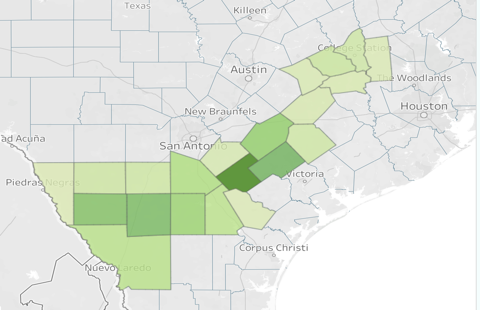
Magnolia Oil & Gas is moving toward multi-well pads in Giddings, sees room to drill longer laterals over time, and plans some Austin Chalk and Eagle Ford co-development in 2027. The WildFire acquisition gives Magnolia a larger position in a field it already knows, where it can apply the same operating practices across more wells. For oilfield service companies, the opportunity is to help Magnolia deliver that program at a predictable pace and a lower cost per well.

Multi-well pads are the first step
On its Q3 2026 earnings call, Magnolia identified the transition to multi-well pads as one source of at least $1 million per well in drilling and completion synergies built into its 2027 capital estimate. That figure also includes procurement benefits, faster drilling, lower sand costs, and completion optimization. Magnolia did not break out the savings from pads alone.
Longer laterals are a further opportunity. Management expects them to contribute additional savings over time, alongside changes to completion design. Magnolia also plans some Chalk–Eagle Ford co-development in 2027, potentially later in the year. Its company-wide drilling plan targets roughly 65% Austin Chalk and 35% Eagle Ford, with development wells on legacy WildFire acreage expected to be split about evenly between the two formations. That drilling mix gives a sense of the program’s scale, while the extent of co-development remains open.
Sand and fuel support the 2027 completion program
Magnolia already owns a sand mine that management says cuts its sand costs by roughly one-third. It also has a dual-fuel frac spread that is displacing some diesel, and it has tested field gas as a potential source of further fuel savings.
Those capabilities matter as Magnolia moves more work onto multi-well pads. Keeping a completion crew working through a pad requires dependable sand delivery, fuel supply, and equipment uptime. Magnolia’s mine gives it more control over a major input. Dual-fuel capability gives it another way to manage fuel costs as the program scales. The field-gas trial will help determine how much further it can go.
WildFire gives Magnolia room to repeat the model
WildFire’s acreage overlaps significantly with Magnolia’s existing Giddings position. Magnolia can bring its own operating procedures, equipment, and subsurface knowledge to acreage in a field where it already has experience. At the time of the call, the combined operation was running four rigs and two completion crews. Magnolia’s $900 million to $950 million 2027 capital plan carries forward that same rig and crew count.
That continuity is what makes the factory approach plausible. A steady fleet can work through a sequence of pads, apply lessons from one well to the next, and give suppliers a clearer view of upcoming work. Magnolia has already swapped some rigs and frac equipment on the acquired assets and begun rolling out its operating playbook. The Chalk on legacy WildFire acreage is still being delineated, so the pace of development will also depend on what Magnolia learns from the next set of wells.
What it means for oilfield service companies
| OFS segment | Where suppliers can add value |
|---|---|
| Drilling contractors and directional services | Demonstrate repeatable drilling times, efficient moves between wells on a pad, and the ability to maintain performance as laterals get longer. |
| Pressure pumping and fuel services | Show what dual-fuel equipment delivers in the field. Uptime, diesel displacement, and reliable gas delivery give Magnolia ways to compare bids on total completion cost. |
| Sand hauling and last-mile logistics | Magnolia’s mine gives haulers and logistics providers a clear role. Reliable dispatch, on-pad inventory, and consistent delivery from the mine can help keep the frac spread pumping. |
| Completion design and diagnostics | Help Magnolia evaluate which designs can be repeated across wells and where the Chalk and Eagle Ford need different treatment. Performance data across multiple wells can make those decisions easier. |
For OFS companies pursuing Magnolia’s 2027 work, the strongest sales case is a measurable improvement that holds up across several wells or pads. A contractor that can show fewer hours between wells, less diesel consumed per stage, or fewer sand-related delays can tie its proposal directly to the economics Magnolia is targeting.

Author: phinds