
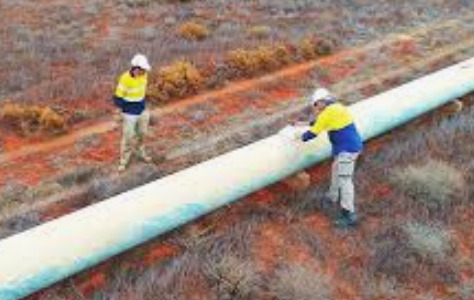
Gulf Coast Midstream Partners is advancing the Nash Storage Hub, a proposed natural gas storage and transportation development in Fort Bend County, Texas. A newly issued pipeline permit for GCMP Pipeline, LLC covers a nearby three-county corridor and may represent part of the infrastructure supporting the hub, although the permit does not explicitly identify Nash.

Storage and Pipeline Connectivity
Nash’s initial phase is planned to include two salt caverns providing approximately 23 billion cubic feet of working natural gas storage, with injection capacity of approximately 0.9 Bcf/d and withdrawal capacity of 1.5 Bcf/d. The development includes a large-diameter pipeline header and multiple bidirectional interconnections, with Phase I service targeted for April 1, 2030.
The project is intended to connect growing Permian Basin gas supply with Gulf Coast LNG, power generation, utility and industrial markets. Announced potential connections include Tennessee Gas Pipeline, NGPL, Transco, Matterhorn, Eiger, Traverse, Enterprise, Tejas and other regional systems. Storage and transportation flexibility would help customers manage changes in supply, demand and pipeline availability.
New Pipeline Permit Suggests a Possible Link
On October 15, 2026, the Railroad Commission of Texas issued T-4 Permit 10814 to GCMP Pipeline, LLC for 44.75 miles of regulated gas transmission pipeline in Brazoria, Fort Bend and Wharton counties. The permit identifies GCMP Pipeline as operator, economic operator and owner, with a gas utility classification.
The accompanying application map shows an alignment extending from near US Highway 90A in Wharton County, passing the Hungerford area and continuing east through southern Fort Bend County toward Damon in Brazoria County.
A connection to Nash is plausible but remains unconfirmed. The geographic corridor is consistent with the hub’s regional pipeline plans, and the application names Hugo Guerrero, whom Gulf Coast Midstream identifies as its chief operating officer. However, the permit and map do not name Nash or establish which facilities the pipeline will connect.
Industry Impact
For pipeline contractors, equipment suppliers and service companies, Nash represents a development to monitor for potential work involving cavern construction, compression, pipeline installation, valves, measurement and automation. The new transmission permit adds a concrete infrastructure milestone in the surrounding area, but supplier planning should distinguish the confirmed operating authorization from the unconfirmed project connection and any future construction awards.

Author: phinds