
January 26, 2026 | Oklahoma Rig Update
Oklahoma’s drilling activity remained steady last week as operators continue to prioritize capital discipline and core acreage development.
According to the latest Baker Hughes Rig Count, Oklahoma held flat at 43 active drilling rigs, unchanged from the prior week. While the national rig count declined, Oklahoma’s major plays showed no movement — a signal that operators are maintaining base-level drilling programs rather than expanding activity.
Oklahoma Rig Count by Play
The state’s drilling activity continues to be concentrated in two primary gas-weighted plays:
- Cana Woodford: 17 rigs
- Granite Wash: 16 rigs
- Ardmore Woodford: 4 rigs
- Arkoma Woodford: 2 rigs
- Mississippian: 0 rigs
Together, the Cana Woodford and Granite Wash account for more than 75% of all active rigs in Oklahoma, reinforcing their position as the state’s core development areas.
Top 5 Oklahoma Operators by Active Rig Count
Based on the latest EnerLeadPlus Oklahoma Rig Report, drilling activity is highly concentrated among a small group of operators.
Rank Operator Active Rigs 1 Mewbourne Oil Company 6 2 Validus Energy 5 3 Continental Resources 3 4 Devon Energy Corporation 2 5 Camino Natural Resources, LLC 2
What stands out:
- Mewbourne and Validus alone account for more than 25% of Oklahoma’s active rigs, highlighting operator concentration.
- Large independents like Devon and Continental continue limited, targeted drilling rather than broad program expansion.
- Private operators remain a meaningful source of steady activity across the Cana Woodford and Granite Wash.
Top 5 Oklahoma Counties by Rig Count
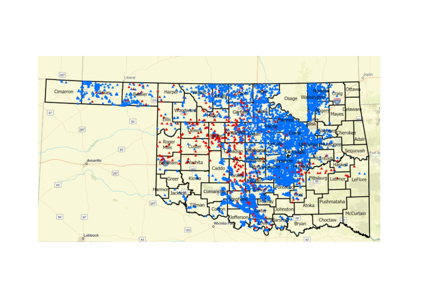
Drilling remains clustered in western and central Oklahoma counties with established infrastructure and stacked-pay potential.
Rank County Active Rigs 1 Roger Mills County 9 2 Canadian County 5 3 Grady County 4 4 Blaine County 4 5 Custer County 3
Key geographic trends:
- Roger Mills County alone represents more than 20% of Oklahoma’s active rigs, making it the most important near-term drilling hotspot in the state.
- Canadian and Grady counties continue to benefit from proximity to Cana Woodford infrastructure and service availability.
- Activity remains tightly clustered rather than widely distributed across the state.
How Oklahoma Compares Nationally
Elsewhere in the U.S., rig activity also showed limited movement:
- Permian Basin: 244 rigs (unchanged)
- Eagle Ford: 40 rigs (unchanged)
- Haynesville: 42 rigs (unchanged)
- Marcellus: 24 rigs (unchanged)
- Utica: 15 rigs (unchanged)
- D-J Niobrara: +2 rigs to reach 9
The lack of movement across nearly every major basin reinforces a broader industry theme: operators are holding rigs steady, not growing counts, even as long-term natural gas demand continues to strengthen.
What This Means for Oilfield Service Companies
Oklahoma’s rig market in early 2026 reflects a maintenance-mode drilling environment:
- Rigs are stable, but not expanding.
- Activity is concentrated among a limited number of operators.
- County-level hotspots matter more than statewide totals.
- Sales success depends on knowing exact rig locations, operators, and contractors — not headline rig counts.
In markets like Oklahoma, where growth is incremental, timing and targeting matter more than volume.
Bottom Line
Oklahoma’s rig count may be flat, but drilling activity remains highly concentrated — both geographically and by operator. For oilfield service companies, opportunity isn’t disappearing; it’s becoming more precise.
Understanding who is drilling, where rigs are working, and which counties are driving activity is now essential for winning work in a disciplined market.