
Company Overview
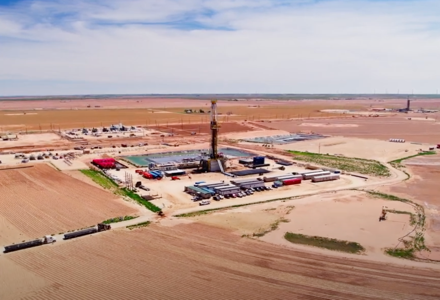
SAXUM OPCO LLC is a privately held independent oil and gas operator focused on the Midland Basin of the Permian Basin, with operations centered in Upton County, Texas. The company operates a focused portfolio of producing assets and is executing a disciplined development strategy that emphasizes efficient pad drilling, shared production infrastructure, and phased capital deployment.

Upton County Overview
Upton County is one of the Permian Basin’s established oil-producing counties, located within the core of the Midland Basin. Unlike emerging development areas where infrastructure is still being built, Upton County benefits from decades of production history, extensive pipeline networks, existing gathering systems, and experienced oilfield service support.
Because much of the acreage has already been delineated, operators in Upton County are increasingly focused on capital efficiency rather than exploration. Modern projects emphasize multi-well pad drilling, centralized production facilities, standardized well designs, and phased development programs that maximize returns while minimizing surface disturbance and infrastructure costs.
The Neal Development by SAXUM OPCO is a good example of how mature Permian assets are being developed today.
Project Persona – Neal Development
Rather than viewing permits, drilling activity, and facility construction as separate events, they can be combined into a single project timeline that illustrates how the development is being executed.
Project Overview
| Attribute | Details |
|---|---|
| Operator | SAXUM OPCO LLC |
| Project | Neal Development |
| County | Upton County, Texas |
| Play | Midland Basin, Permian Basin |
| Development Style | Phased Multi-Well Pad Development |
| Planned Wells | 8 |
| Pads Identified | 2 |
| Producing Infrastructure | Neal 4-5 Central Tank Battery |
Development Timeline
| Stage | Date | Days From Previous Stage |
|---|---|---|
| First Well Licence | May 18, 2026 | — |
| Last Well Licence | June 15, 2026 | 28 |
| First Well Activity | June 13, 2026 | 26 after first licence |
| Last Well Activity | July 7, 2026 | 24 |
| CTB Air Permit Received | July 8, 2026 | 1 |
| CTB Air Permit Issued | July 8, 2026 | Same day |
The timeline illustrates a highly coordinated execution strategy. Permitting was completed before field operations accelerated, drilling began less than one month after the initial licence, and production infrastructure permitting followed immediately after drilling concluded.
Project Execution
Phase 1 – Secure Development Inventory
The project began with regulatory approval for eight horizontal wells grouped across two drilling pads. Rather than permitting individual wells as needed, SAXUM established inventory for an entire development program, providing flexibility to execute drilling in phases.
Phase 2 – Execute the First Pad
Drilling commenced 26 days after the first licence and the first four-well pad was completed over a 24-day drilling campaign using Precision Rig 567.
Pad Wells Status Contractor PAD-001 4 Drilled Precision Rig 567 PAD-002 4 Permitted Future Assignment
This execution pattern reduced rig mobilizations and enabled continuous drilling operations from a single surface location.
Phase 3 – Transition to Production
Only one day after the final recorded drilling activity, SAXUM submitted and received approval for the Neal 4-5 Central Tank Battery (CTB) under a Texas Permit by Rule.
This timing is significant because central production facilities are typically permitted as drilling nears completion, allowing operators to transition efficiently into production. Rather than waiting weeks or months after drilling, SAXUM aligned facility development with the drilling schedule, minimizing downtime before first production.
Surface and Subsurface Execution
The Neal Development demonstrates the characteristics of a modern Permian manufacturing project.
Characteristic Observation County Upton Play Midland Basin Lease Neal Pads 2 Wells 8 Development Style Multi-well horizontal pads Production Facility Central Tank Battery Development Phasing Yes
All permits target the same development area and utilize centralized infrastructure, indicating that the project was designed as a coordinated field development rather than a collection of individual well locations.
Why This Matters in Upton County
In a mature basin like Upton County, competitive advantage comes less from discovering new reservoirs and more from executing development efficiently.
Operators today are increasingly focused on:
- Building drilling inventory before field execution.
- Drilling multiple wells from centralized pads.
- Sharing production facilities across wells.
- Reducing infrastructure costs.
- Shortening the time between drilling and first production.
- Preserving future inventory for subsequent development phases.
The Neal Development follows this model closely. The first pad has progressed from permitting through drilling and into production infrastructure, while a second fully permitted pad remains available for future execution. This phased approach allows SAXUM to manage capital deployment while maintaining a ready inventory of future drilling opportunities.
Key Project Metrics
| Metric | Value |
|---|---|
| Total Wells Permitted | 8 |
| Total Pads | 2 |
| Wells Drilled | 4 |
| Wells Awaiting Drilling | 4 |
| Well Permit Campaign | 28 days |
| Licence to First Drilling | 26 days |
| Drilling Campaign | 24 days |
| Drilling to CTB Permit | 1 day |
| Production Infrastructure | Neal 4-5 CTB |
Final Thoughts
The Neal Development highlights how independent operators are executing projects in today’s Permian Basin. Rather than expanding through large-scale exploration, SAXUM OPCO is applying a disciplined, phased development strategy that integrates permitting, pad drilling, and centralized production infrastructure into a streamlined execution model. In a mature county like Upton, where infrastructure is established and operational efficiency drives returns, this type of project sequencing reflects the industry’s continued shift toward manufacturing-style development and capital-efficient growth.


Author: phinds