
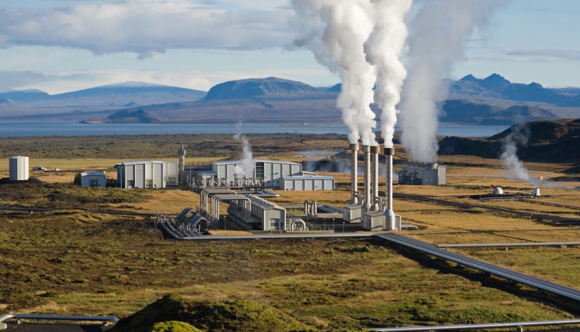
A federally funded geothermal research project in Utah is testing whether drilling and hydraulic stimulation technologies developed by the U.S. oil and gas industry can unlock geothermal energy in areas without conventional geothermal resources. The Frontier Observatory for Research in Geothermal Energy (FORGE) near Milford, Utah, has begun circulating water through engineered fractures in hot underground rock to evaluate the commercial potential of Enhanced Geothermal Systems (EGS).

The technology has significant overlap with unconventional oil and gas development. FORGE is using drilling, well construction, hydraulic stimulation and reservoir-management techniques to create pathways through hot rock, allowing injected water to capture underground heat before returning to the surface. The longer-term objective is to drill deeper and more efficiently, potentially expanding geothermal development beyond the limited areas where naturally occurring reservoirs currently make projects economic.
The project also highlights an emerging market for the North American oilfield supply chain. Fervo Energy and other geothermal developers are advancing similar technologies, creating potential demand for drilling contractors, directional drilling, drill bits, tubulars, cementing, stimulation, high-temperature downhole tools, pumps, well monitoring and reservoir engineering. Unlike wind and solar, geothermal has the potential to provide continuous electricity, increasing its strategic importance as U.S. power demand grows.
FORGE was established during the Obama administration and continues to receive federal support under the Trump administration. That continuity is notable as federal policy has become less supportive of some other renewable technologies. The immediate FORGE testing program will help determine whether engineered geothermal reservoirs can reliably circulate enough heated water to support commercial power generation.
Industry Impact
The geothermal opportunity reinforces the broader importance of the U.S. as a Safe Barrel of energy. Decades of shale development have created a domestic ecosystem of drilling expertise, equipment, infrastructure and suppliers that can now support oil and gas production while also enabling emerging subsurface energy markets. If EGS scales commercially, U.S. oilfield technology could become an important component of reliable domestic electricity generation without requiring the existing shale supply chain to develop an entirely new technical foundation.
OFS Sales Strategy
Oilfield service companies should treat geothermal as an adjacent market to unconventional drilling, not simply as a renewable-energy segment. Sales teams should identify active EGS developers and federally supported projects, track geothermal well permits and drilling programs, and map requirements against existing oilfield capabilities.
The strongest near-term targets include drilling contractors, directional drilling and MWD/LWD providers, drill-bit companies, cementing and stimulation providers, tubular suppliers, high-temperature downhole equipment manufacturers, pumping companies, well-monitoring technology and reservoir-engineering firms. Suppliers should position proven performance in deep, high-temperature and technically challenging oil and gas wells as transferable experience for geothermal development.
Two-Sentence Summary
Utah FORGE is testing whether drilling and hydraulic stimulation technologies developed by the U.S. shale industry can create commercial geothermal reservoirs in locations previously unsuitable for geothermal power. Success could open a significant adjacent market for drilling contractors and OFS suppliers while extending America’s shale technology base into reliable, domestic geothermal energy.


Author: phinds