
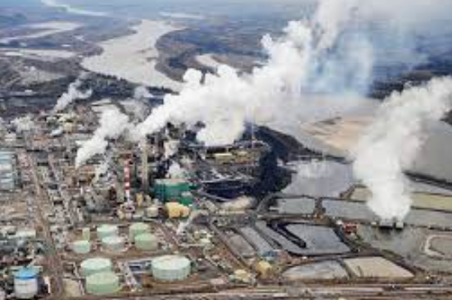
The U.S. is moving closer to what could become a major restructuring of Venezuela’s oil industry, with Chevron, Halliburton and other U.S. energy companies reportedly discussing billions of dollars of investment. The negotiations follow reports that the Trump administration is discussing an American ownership interest in more than a dozen producing Venezuelan oil fields reportedly containing roughly 90 billion barrels of proven reserves.

Chevron, currently the only major U.S. oil producer operating in Venezuela, is reportedly nearing an agreement that could expand its operations by adding two heavy-oil fields. Halliburton is reportedly discussing bringing oilfield equipment and services into the country, while SLB has gained access to Venezuelan oilfield data through an agreement involving state-owned Petróleos de Venezuela (PDVSA). Together, these developments suggest the opportunity is beginning to move beyond geopolitical discussions toward the technical and commercial groundwork required for field redevelopment.
The scale is potentially enormous. Venezuela holds approximately 300 billion barrels of proven oil reserves, much of it heavy crude, but years of underinvestment and deteriorating infrastructure have constrained production. Increasing output would require substantial spending on workovers, drilling, artificial lift, production chemicals, pumps, tubulars, pipelines, power systems, ports, upgraders, automation and field maintenance. Political risk, contract security and infrastructure condition remain significant obstacles, meaning redevelopment would likely be measured in years rather than months.
Canada and Alberta Impact
For Canada, the most important issue is the type of crude Venezuela produces. Venezuelan heavy oil can compete directly with Western Canadian Select (WCS) and other Canadian heavy barrels for complex U.S. refinery capacity, particularly along the Gulf Coast.
Canada benefited as Venezuelan and Mexican heavy-oil availability declined because many U.S. refineries were specifically designed to process heavy, higher-sulphur crude. Canadian producers helped fill that supply gap and developed an exceptionally strong position in the U.S. refining market.
A Venezuelan recovery would not eliminate that advantage. Alberta offers stable production, established infrastructure, reliable pipeline delivery, sophisticated operators and a predictable legal and commercial environment. Those attributes make Canadian crude another form of the North American “Safe Barrel.”
However, Venezuelan production does not need to replace Canadian crude to create competitive pressure. It only needs to increase the number of heavy barrels competing for incremental refinery demand.
Over time, additional Venezuelan supply could put pressure on WCS pricing and heavy-oil differentials, particularly during periods of weaker demand or constrained Canadian takeaway capacity. The risk is amplified by Canada’s continued dependence on the U.S. as its dominant crude export market.
That makes export diversification increasingly strategic. Trans Mountain Expansion (TMX) provides Canadian producers with greater access to Pacific markets, reducing—but not eliminating—the industry’s dependence on U.S. refiners. If Washington succeeds in rebuilding Venezuela as a major Western Hemisphere supplier, Canada’s ability to reach multiple markets becomes increasingly important.
Industry Impact
The emerging strategy highlights two different versions of the Safe Barrel. U.S. shale provides highly responsive domestic production backed by mature infrastructure and an extensive OFS network, while Canadian oil sands provide large, long-life reserves in a politically stable jurisdiction. Venezuela offers extraordinary resource scale and heavy crude that U.S. refiners want, but requires substantial capital, infrastructure rehabilitation and political-risk management. The U.S. appears to be pursuing all three advantages: maintain domestic production, retain secure Canadian supply and potentially bring a massive Venezuelan resource base under greater American commercial influence.
OFS Sales Strategy
For oilfield service (OFS) companies, Halliburton and SLB are important early indicators. Their involvement suggests opportunities could extend well beyond Chevron to equipment manufacturers, drilling and workover contractors, artificial-lift companies, chemical providers, automation firms, tubular suppliers and infrastructure contractors.
North American suppliers should monitor Chevron, Halliburton, SLB and their contractor networks for procurement and partnership activity. Companies already approved by these organizations may have an advantage if Venezuelan redevelopment progresses.
For Canadian OFS companies, there is also a defensive opportunity. Greater competition from Venezuelan heavy crude increases the incentive for Alberta operators to lower operating costs, reduce downtime, optimize artificial lift, improve recovery and increase production from existing assets. The competitive response is not simply more drilling—it is making Canadian heavy-oil barrels increasingly efficient and difficult to displace.
Two-Sentence Summary
The U.S. is pursuing a potentially massive expansion into Venezuela’s oil industry as Chevron, Halliburton and SLB position for increased activity across one of the world’s largest petroleum resource bases. A long-term recovery in Venezuelan heavy-oil production could create billions of dollars of OFS opportunities while increasing competition for Canadian heavy crude in the critical U.S. refining market.

Author: phinds