
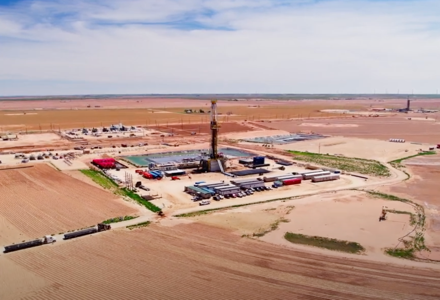
The development of unconventional resources in the Permian Basin has evolved significantly over the past decade, moving from single-zone drilling toward more integrated and capital-efficient strategies. Two commonly referenced approaches—co-development and high-density, single-section development—are often used interchangeably, but they represent fundamentally different concepts.
At a high level, co-development refers to what is being developed—specifically, the simultaneous or coordinated exploitation of multiple stacked formations within a given acreage position. In contrast, high-density, single-section development describes how and where development is executed, focusing on maximizing well density within a defined 640-acre section using a pre-planned spacing architecture.
Importantly, modern field practices show that high-density, single-section development is not limited to simultaneous, “cube-style” execution. Operators frequently implement these programs in phases over multiple years, targeting different benches or formations sequentially while adhering to an overall high-density development plan.
Understanding the distinction between these approaches—and how they are applied in practice—is critical for accurately interpreting operator strategies, forecasting activity levels, and identifying commercial opportunities across the Permian Basin.
🟦 1. Co-development (strategy)
Definition:
Developing multiple formations (stacked zones) together as part of an overall asset strategy.
Key idea:
- “Multiple formations”
Characteristics:
- Can span multiple sections
- Density can be low, moderate, or high
- Execution can be:
- Phased over years
- Partially coordinated
- Fully simultaneous
👉 Focus = WHAT is being developed (multi-formation)
🟥 2. High-Density, Single-Section Development (execution model)
Updated Definition:
Intensively developing a single 640-acre section with a high well count, based on a pre-planned dense spacing architecture, executed either simultaneously or in phases over time
🔍 Core characteristics:
- Single section focus (640 acres)
- High well density (planned upfront)
- Can target:
- Multiple formations (common)
- Single formation with multiple benches (valid)
- Execution can be:
- Simultaneous (cube-style)
- Phased (real-world common)
👉 Focus = HOW and WHERE development is executed (intensity + concentration)
🔧 Valid execution styles
1. Simultaneous high-density (cube-style)
- All zones developed together
- Maximum coordination
- Highest upfront capital
2. Phased high-density (very common in practice)
- Example:
- Year 1: Upper Spraberry
- Year 2+: Lower Spraberry
- Same section, same spacing plan
- Development executed in stages
👉 Still high-density because the full plan is dense from the start
⚖️ Side-by-Side Comparison (Final)
| Feature | Co-development | High-Density, Single-Section |
|---|---|---|
| Scope | Broad strategy | Specific execution model |
| Formations | Multiple (required) | Multiple OR single (multi-bench) |
| Geography | Multi-section or asset-wide | Single section (640 acres) |
| Well density | Variable | High (planned upfront) |
| Timing | Phased or simultaneous | Phased OR simultaneous |
| Capital profile | Flexible | Higher upfront (but can be staged) |
| Objective | Optimize across formations | Maximize recovery within a defined section |
| Planning approach | Can evolve over time | Pre-planned full-density architecture |
| Complexity | Moderate → high | Very high |
🧠 Relationship (final clarity)
- Co-development = WHAT (multi-formation by definition)
- High-density, single-section = HOW + WHERE (intensity within a section)
And:
All co-development involves multiple formations
High-density, single-section may involve one or multiple formations
🎯 Key takeaway
High-density, single-section is defined by density and section-level planning—not timing or number of formations.
It can be:
- Multi-formation (most common)
- Single-formation, multi-bench (valid)
- Simultaneous (cube-style)
- Phased over multiple years (very common in practice)
🧩 Bottom line
Co-development = multi-formation strategy
High-density, single-section = high-intensity, section-focused execution model that can be deployed flexibly over time

Author: phinds