
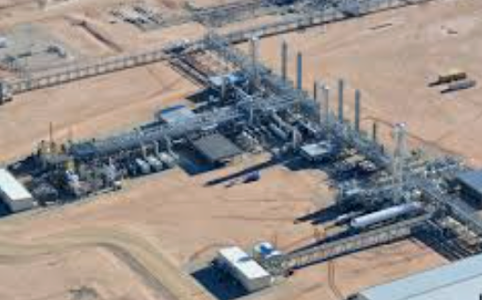
How the “factory model” is reshaping surface infrastructure in the Permian Basin
Over the past decade, the oil and gas industry has undergone a quiet but profound shift—not just in how wells are drilled, but in how production is handled at the surface.
The move toward high-density horizontal drilling, particularly in plays like the Permian Basin’s Spraberry trend, is transforming the design, size, and frequency of oil & gas facilities. What once required many small, distributed sites is now increasingly handled by fewer, larger, more complex facilities.
A recent analysis of the BRUNSON lease in West Texas provides a clear example of how this transformation is unfolding.
From Wells to Factories: The Evolution of Development
Historically, oil & gas development followed a relatively simple model:
- One or a few wells per location
- Small tank batteries
- Minimal surface equipment
- Facilities distributed across a wide area
Today, that model has been replaced by something very different:
The lease/section “factory” model
In this approach:
- Multiple wells are drilled from a single pad
- Multiple pads are developed within the same section
- Development is highly standardized and repeatable
- Production is aggregated rather than dispersed
On the BRUNSON lease, this pattern is clear:
- Multiple pads per section
- 4–5 wells per pad (standard)
- Up to 10 wells on a single pad
- Additional infill pads as development matures
This is not random drilling—it’s a manufacturing process.
What High-Density Drilling Looks Like in Practice
At the subsurface level, the BRUNSON dataset shows:
- Nearly all wells are horizontal
- Wells target the same field: Spraberry (Trend Area)
- Depths are highly consistent within each pad
This consistency is important.
It tells us the operator is not experimenting across multiple zones at once. Instead, they are executing a repeatable drilling program, targeting specific intervals with precision.
This repeatability is what enables scale—and scale is what drives change at the surface.
The Surface Shift: Fewer Facilities, Larger Footprint
As well density increases within a section, production volumes begin to concentrate. Instead of handling production at many small sites, operators can aggregate flow into centralized facilities.
The result?
Fewer facilities per well—but significantly larger facilities per location
Early Development Phase
In the early years of the BRUNSON lease:
- Lower well density
- Smaller production volumes
- Simpler equipment
Air permitting reflects this:
- Permit by Rule (PBR)
- Lower emissions threshold
- Smaller facility footprint
Typical equipment:
- Basic separators
- Small tank batteries
- Minimal vapor handling
High-Density Development Phase
Fast forward to recent activity:
- Multiple pads per section
- Higher total production per area
- Aggregated flow from many wells
Now the facility profile changes dramatically:
- Larger tank batteries
- Centralized separation
- Vapor recovery units (VRUs)
- Compression systems
- Expanded water handling
Air permits evolve accordingly:
- Transition from PBR → Standard Permit (STDPMT)
- Higher emissions thresholds
- More regulatory scrutiny
One BRUNSON example highlights this shift clearly:
- Early permit (2012): PBR for a small facility
- Recent permit (2026): STDPMT for a centralized tank battery
Why This Happens: The Physics of Scale
The driving force behind this transformation is simple:
Production density changes infrastructure economics
When wells are sparse:
- Each location needs its own facility
- Infrastructure is duplicated
- Throughput per site is low
When wells are dense:
- Production can be gathered
- Facilities can be centralized
- Equipment can be scaled
This leads to:
- Lower facility count per well
- Higher equipment intensity per facility
- Greater capital concentration at fewer sites
What About Multi-Bench Development?
There’s a common assumption that facility complexity is driven by multi-bench (stacked) development.
While that can be true in some cases, the BRUNSON data tells a different story.
- Depths are tightly clustered
- Wells are largely targeting similar intervals
- No strong evidence of broad stacked co-development
This means:
The facility evolution at BRUNSON is driven more by well density and production aggregation than by geological complexity.
In other words:
- It’s not what they’re producing
- It’s how much they’re producing—and how concentrated it is
The End Result: The “Factory Facility”
As development matures, the surface footprint begins to resemble something new:
A centralized production hub serving a section-scale drilling factory
These facilities:
- Handle production from multiple pads
- Support 10–20+ wells per section
- Require more:
- separation capacity
- storage
- vapor handling
- automation
- Operate at a much higher scale than legacy designs
This is not just an incremental change—it’s a structural shift in infrastructure design.
Why This Matters
For operators, the benefits are clear:
- Lower cost per barrel through economies of scale
- More efficient operations
- Reduced surface footprint per well
But the implications go far beyond operations.
For service companies:
- Fewer locations to target
- Larger contracts per facility
- More complex equipment packages
For regulators:
- Fewer permits—but higher-impact facilities
- Increased focus on emissions and compliance
For investors and analysts:
- Capital is concentrated
- Infrastructure becomes a key differentiator
Final Takeaway
The BRUNSON lease provides a compelling example of a broader industry trend:
High-density drilling is not just changing how wells are drilled—it’s redefining how production facilities are designed, scaled, and deployed.
As operators move toward lease/section factory models, the surface evolves accordingly:
- From many small facilities → to fewer, larger ones
- From simple equipment → to complex, integrated systems
- From distributed infrastructure → to centralized hubs
This is the new reality of unconventional development—and it’s only accelerating.

Author: phinds