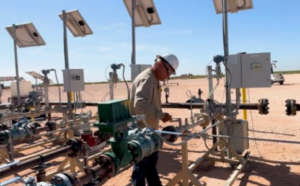
A Production Foreman in the oil and gas industry is a key supervisory role responsible for overseeing and coordinating daily production operations within a designated area or field. Their role is critical in ensuring that production targets are met efficiently, safely, and in compliance with established procedures and standards.
Oil & Gas Production Foreman Contact Report Summary
1. Total Record Count
Total contacts: 1,148
The report is heavily focused on production operations leadership, particularly field-level personnel responsible for day-to-day well production and operating performance.
2. Record Count by Role
| Role | Record Count | % of Total |
|---|---|---|
| Foreman | 748 | 65.2% |
| Supervisor | 205 | 17.9% |
| Manager | 193 | 16.8% |
| Superintendent | 2 | 0.2% |
| Total | 1,148 | 100.0% |
The database is particularly strong at the Production Foreman level, which represents nearly two-thirds of all contacts.
3. Top 10 Companies / Accounts
| Rank | Company / Account | Record Count |
|---|---|---|
| 1 | Devon Energy Corporation | 86 |
| 2 | EOG Resources, Inc. | 54 |
| 3 | Exxon (XTO) | 52 |
| 4 | Expand Energy | 45 |
| 5 | Continental Resources | 45 |
| 6 | ConocoPhillips Company | 44 |
| 7 | Diamondback Energy, Inc. | 36 |
| 8 | APA Corporation | 34 |
| 9 | Chevron U.S.A. Inc. | 33 |
| 10 | Hilcorp Energy Company | 28 |
The top 10 named operators account for 457 contacts, or approximately 39.8% of the entire database.
Devon Energy is the largest account presence, with 86 production-related contacts.
There are also 85 records without an Account Name, representing about 7.4% of the database.
4. Top 10 Cities / Locations
| Rank | City / Location | Record Count |
|---|---|---|
| 1 | Houston | 107 |
| 2 | Oklahoma City | 82 |
| 3 | Midland | 81 |
| 4 | Midland-Odessa Area | 37 |
| 5 | United States* | 33 |
| 6 | Hobbs | 19 |
| 7 | Carlsbad | 17 |
| 8 | Artesia | 16 |
| 9 | Spring | 15 |
| 10 | Greater Houston | 11 |
*“United States” appears to have been entered as a city/location for some contacts and should ideally be cleaned before geographic targeting.
There are also 23 records with no City populated.
The geographic pattern is very clear: Houston, Midland/Odessa and southeastern New Mexico dominate, giving the contact file particularly strong coverage of the Permian Basin and major operator corporate/operations centers.
5. Status by Count
| Status | Record Count | % of Total |
|---|---|---|
| Unchanged | 984 | 85.7% |
| Update | 137 | 11.9% |
| New | 27 | 2.4% |
| Total | 1,148 | 100.0% |
Most contacts are established records, while 164 contacts—14.3% of the database—are either new or recently updated.
For prospecting, the 27 New and 137 Update records are useful candidates for immediate review because changes in title, employer or responsibilities can create new selling opportunities.
6. Operator Classification Breakdown
| Operator Classification | Record Count | % of Total |
|---|---|---|
| Steady State | 858 | 74.7% |
| Dormant / Legacy | 135 | 11.8% |
| Next Tier | 70 | 6.1% |
| Missing / Unclassified | 85 | 7.4% |
| Total | 1,148 | 100.0% |
Among contacts associated with a classified operator, the database is overwhelmingly weighted toward Steady State operators.
Sales interpretation
Steady State — 858 contacts
This should be the core production-sales segment. These operators have established producing assets and typically represent recurring demand for:
- Artificial lift
- Production chemicals
- Workovers
- Well servicing
- Automation and SCADA
- Pumps and compression
- Water management
- Maintenance and field services
- Production optimization
Next Tier — 70 contacts
This is a smaller but potentially high-value prospecting segment. These operators may be growing, increasing drilling activity or moving into a more active development phase. They are useful accounts for identifying new budget creation and emerging supplier opportunities.
Dormant / Legacy — 135 contacts
These accounts may have limited new drilling activity but can still be relevant for a Maintenance Plus strategy, particularly where operators maintain substantial legacy producing-well inventories. Production optimization, workovers, artificial lift and maintenance may be more relevant than drilling-related services.
The 85 unclassified records should be reviewed because adding an Operator Classification would materially improve segmentation.
7. Executive Summary
The report contains 1,148 oil and gas production contacts, with a very strong concentration in operational decision-makers. Foremen represent 748 contacts, or 65.2% of the database, followed by 205 Supervisors and 193 Managers. This makes the list particularly suited to OFS companies selling products and services directly into field operations.
The strongest operator coverage is concentrated among major U.S. producers. Devon Energy leads with 86 contacts, followed by EOG Resources, Exxon/XTO, Expand Energy, Continental Resources and ConocoPhillips. The top 10 operators alone represent approximately 40% of the entire contact database, allowing account-based campaigns to reach substantial numbers of operational stakeholders within a relatively small number of companies.
Geographically, the file is heavily concentrated around Houston, Oklahoma City and the Permian Basin. Houston has 107 contacts, Oklahoma City 82 and Midland 81. Adding Midland-Odessa, Hobbs, Carlsbad and Artesia further reinforces the database’s strength in the Permian Basin production market.
The Operator Classification data also supports a targeted sales approach. 858 contacts belong to Steady State operators, making the database particularly relevant for companies selling into existing producing assets rather than depending exclusively on new drilling activity. Another 70 contacts belong to Next Tier operators, which can be isolated for growth-oriented prospecting.
From a lead-generation perspective, I would prioritize the database using a combination of:
Operator Classification → Account → Geography → Role → Contact Status.
For example, a highly actionable campaign could target:
Steady State Operators → Permian Basin → Production Foremen & Supervisors → New/Updated Contacts.
That produces a much more focused prospecting list than treating all 1,148 contacts equally.
8. Business Function Represented — Production
The primary business function represented in this report is Production Operations.
Production teams are responsible for keeping producing wells and associated facilities operating safely, reliably and economically after drilling and completions have finished. Their objective is to maximize production, minimize downtime and control operating costs across the existing well inventory.
Production Foremen and Supervisors are particularly valuable OFS contacts because they are close to day-to-day field operations. They commonly influence or identify requirements involving artificial lift, workovers, chemicals, pumps, compression, automation, maintenance, well servicing and production optimization.
Production Managers generally operate at a broader level, overseeing multiple fields, areas or production teams and influencing operating budgets, vendor strategy and performance improvement programs.
For an OFS sales organization, this makes the report especially valuable for a Maintenance Plus / existing-well strategy: finding the people responsible for keeping wells online, reducing downtime, slowing declines and generating incremental production from producing assets.
Additional Oil & Gas Personas