
Exxon is evaluating Orinoco heavy-oil fields as U.S. investment in Venezuela expands, opening major long-term opportunities for energy suppliers.
Exxon Eyes Return to Venezuela’s 50-Billion-Barrel Oil Opportunity
Exxon is evaluating Orinoco heavy-oil fields as U.S. investment in Venezuela expands, opening major long-term opportunities for energy suppliers.
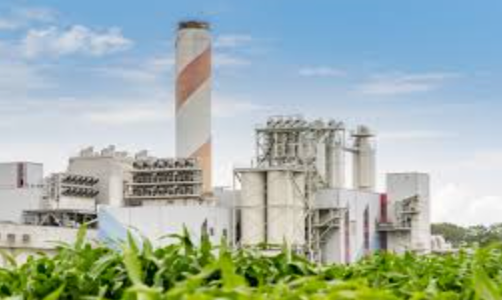
Texas regulators have approved ExxonMobil’s Rose CCS project, authorizing approximately 53 million metric tons of carbon dioxide storage through three wells in Jefferson County. The decision advances a proposed Gulf Coast network valued at more than $5 billion and creates potential opportunities across pipeline, compression, injection-well and monitoring services.
XTO Energy’s Neal Lease in Upton County is a full-section factory development featuring nine horizontal wells across two pads, with coordinated permitting and development within the same section. Two distinct projected-depth tiers—8,479 ft and 10,381 ft—appear on both pads, providing a strong indication of stacked reservoir co-development designed to efficiently develop multiple subsurface intervals from shared surface infrastructure.
ExxonMobil’s Permian production surpassed a record 1.8 million barrels of oil equivalent per day, supported by longer laterals and technologies designed to increase recovery while reducing well and capital requirements. XTO’s 2026 data includes 559 Permian permits—409 in the Midland Basin and 150 in the Delaware Basin—demonstrating a substantial inventory for continued development.
ExxonMobil has built one of the largest upstream portfolios in North America through the acquisitions of XTO Energy, Denbury, Pioneer Natural Resources, and several legacy Permian operators. Supported by this expanded asset base, the company has drilled approximately 7,535 Permian wells since 2016, reinforcing its position as one of the basin’s premier steady-state operators.
ExxonMobil is reportedly evaluating a potential acquisition of Woodside Energy to expand its LNG business and strengthen its position in key Asian markets, reflecting growing confidence in long-term global natural gas demand. For U.S. shale, the move would support future drilling activity by increasing LNG export capacity, creating stronger demand for natural gas from the Permian, Haynesville, and Appalachian basins while benefiting producers, midstream companies, and oilfield service providers.
Exxon Mobil shareholders approved the company’s move to redomicile to Texas, ending its 144-year incorporation history tied to New Jersey and Standard Oil. The company cited Texas’ strong support for the oil and gas industry, favorable legal environment, and growing operational presence in the state.
Exxon has permitted a Midland Basin manufacturing-style horizontal development program for block 36T2N Section 30 focused on repeatable Spraberry shale exploitation using centralized multi-well pads, standardized drilling geometries, uniform depth targeting, and batch operational execution to maximize drilling efficiency and long-term capital productivity.
Exxon subsidiary Pioneer Natural Resources is advancing a multi-well horizontal drilling program in Glasscock County, Texas, highlighting the continued rise of fast-cycle manufacturing-style development across the Permian Basin. The HOELSCHER project combines centralized pad drilling, same-day air permit approvals, and standardized infrastructure deployment to accelerate drilling and production timelines in the Spraberry Trend Area.
ExxonMobil is driving Permian production growth by improving well performance rather than increasing drilling activity, targeting a doubling of output to 2.5 million bpd by 2030. A key driver is advanced lightweight proppant, delivering up to 20% higher recovery per well and enabling significant efficiency gains across its Midland- and Delaware-focused operations.