
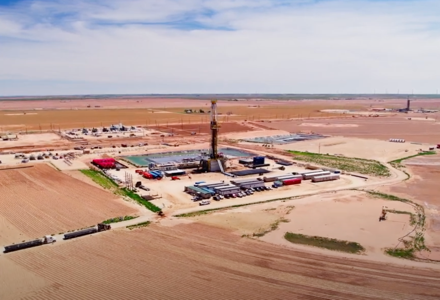
The Q1 2026 earnings call from Patterson-UTI (PTEN) offered a clear signal: the oilfield services industry is undergoing a structural shift. It’s no longer just about activity levels—it’s about equipment quality, efficiency, and technology differentiation.
Two themes stood out:
- The rise of high-spec drilling rigs
- The rapid transition toward electric / natural gas-powered frac fleets (Emerald technology)
Together, these trends are redefining competitive advantage across the sector.
High-Spec Rigs: Built for a New Era of Shale
As U.S. shale evolves, so do the wells. Operators are drilling:
- Deeper formations
- Longer lateral wells
- More complex, high-intensity designs
This isn’t incremental—it’s a fundamental change in how wells are engineered.
Patterson-UTI emphasized that these wells require more capable rigs, particularly those with:
- Higher load-bearing capacity
- Advanced pipe handling systems
- Enhanced automation and digital integration
Critically, not all rigs can meet these requirements.
The company noted that the supply of top-tier rigs capable of handling these increasingly complex wells remains limited.
Why This Matters: Scarcity Drives Pricing Power
The implication is straightforward: high-spec rigs are scarce, and demand is growing.
That dynamic creates:
- Stronger pricing power
- Higher utilization rates
- Opportunity for market share gains
Patterson-UTI believes its investments in upgrading rigs and building in-house engineering expertise position it to capture outsized value as activity increases.
Even more importantly, as rigs become more technical, the barrier to entry rises—favoring established players with capital and expertise.
Electric (Natural Gas-Powered) Fleets: The Emerald Strategy
On the completions side, Patterson-UTI is making an equally decisive move: transitioning its fleet toward natural gas-powered (electric-style) frac systems, branded as the Emerald fleet.
These systems are:
- Powered entirely by natural gas (or dual-fuel in some cases)
- More efficient than legacy diesel fleets
- Better aligned with operator cost and emissions goals
The company is actively directing capital toward expanding this fleet.
Patterson-UTI expects more than 15% of its active horsepower to be fully natural gas-powered by year-end, with ~90% at least partially powered by natural gas.
A Tight Market with Premium Pricing
Demand for these modern fleets is already strong.
Management noted:
- Their natural gas-powered equipment is essentially sold out
- The broader industry is approaching a tight capacity environment
- New equipment is often contracted before deployment
This tightness is beginning to translate into pricing:
- Early signs of frac price increases (~10%)
- Expectations for continued pricing improvement through 2026 and into 2027
Importantly, Patterson-UTI is prioritizing pricing recovery over capacity growth—a notable shift from past cycles.
Why They’re Not Bringing Back Old Equipment
Despite having idle (“cold stacked”) frac capacity, the company is deliberately avoiding reactivation of older fleets.
Why?
- These are primarily diesel-powered assets
- Reactivation requires significant capital (~$10M per fleet)
- Long-term returns are uncertain
Instead, the focus is clear:
Invest in newer, higher-return technologies rather than chase short-term volume.
A Bifurcated Industry is Emerging
Both trends—high-spec rigs and electric fleets—point to the same conclusion:
The oilfield services market is splitting into two tiers:
- High-quality, technology-driven providers
- Legacy operators with aging equipment
This “bifurcation” is already visible:
- Top-tier fleets are fully utilized
- Lower-tier equipment struggles to compete on efficiency and economics
Patterson-UTI believes this dynamic will lead to:
- More stable pricing
- Higher returns on capital
- Greater industry discipline
The Bigger Picture: A Structural Shift, Not Just a Cycle
What makes this moment different from past upcycles is the focus on capital discipline and technology.
Instead of flooding the market with supply, companies are:
- Prioritizing returns over growth
- Investing in premium equipment
- Leveraging digital and AI capabilities
At the same time, macro conditions are improving:
- Higher oil prices driven by geopolitical risks
- Growing LNG demand supporting natural gas activity
- Increasing need for U.S. shale production
Final Thoughts
Patterson-UTI’s message is clear:
The next phase of the oilfield services industry will be defined not by how much equipment you have—but by how good it is.
- High-spec rigs are becoming essential for modern drilling
- Natural gas-powered fleets are setting the new standard in completions
- Technology and efficiency are replacing scale as the primary differentiator
For companies positioned on the right side of this shift, the payoff could be significant.

Author: phinds