
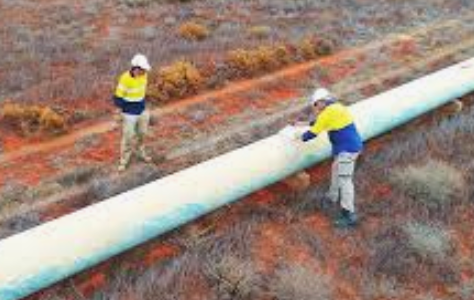
Canada’s Trans Mountain pipeline is set to run near full capacity in April, marking a major milestone less than a year after its $34 billion expansion came online.
The 890,000 barrel-per-day system, which connects Alberta’s oil sands to British Columbia’s west coast, is now operating in the high-90% utilization range. This is a sharp increase from last summer, when the pipeline was only about 84% full and long-term forecasts suggested it wouldn’t reach capacity until 2027 or later.
The rapid ramp-up is being driven by shifting global dynamics. Supply disruptions in the Middle East have increased demand for Canadian crude, particularly from Asian buyers like China. With direct access to Pacific markets, Trans Mountain is now playing a critical role in diversifying Canada’s oil exports beyond the United States.
Looking ahead, further growth is already being considered. Trans Mountain is evaluating optimization projects—including drag-reducing agents and additional pumping capacity—that could add up to 300,000 bpd by 2028. Meanwhile, Alberta is exploring the possibility of a new one-million-barrel-per-day pipeline to the northwest coast, though no private developer has committed to the project.
As Canadian oil sands production continues to rise, the near-full utilization of Trans Mountain highlights a familiar challenge: even newly expanded infrastructure can quickly become constrained in a tightening global energy market.

Author: phinds