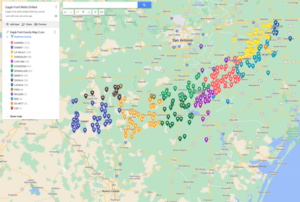
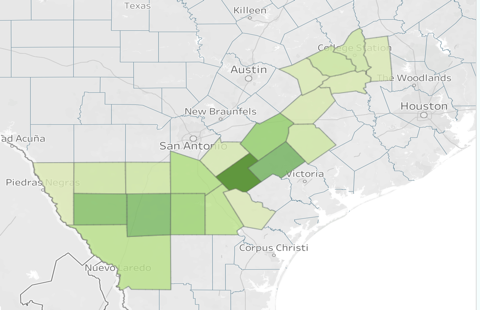
The Eagle Ford Operator Intelligence Report contains 163 operator accounts ranked by permit activity, representing 65 active drilling rigs, 508 wells drilled in 2026, and 664 new well permits issued during the last 12 months. The report helps oilfield service companies prioritize operators based on drilling activity, permit inventory, and development scale, providing a targeted account list for sales, business development, and account-based marketing initiatives.
Purchase Complete Company List – Only $10.00
Eagle Ford Operator Intelligence Report Snapshot (Q2 2026)
| Metric | Value |
|---|---|
| Total Operator Accounts | 163 |
| Active Rig Count | 65 rigs |
| Accounts Operating Rigs | 33 operators |
| Wells Drilled (2026 YTD) | 508 wells |
| Accounts with Wells Drilled in 2026 | 49 operators |
| New Well Permits (Last 12 Months) | 664 permits |
| Accounts with New Well Permits | 70 operators |
| New Well Permits (Last 60 Days) | 179 permits |
| Accounts with New Well Permits (Last 60 Days) | 35 operators |
Executive Summary
The Eagle Ford Operator Intelligence Report contains 163 operator accounts ranked by permit activity over the current and previous two years. Collectively, these operators are running 65 active drilling rigs, have drilled 508 wells in 2026, and have filed 664 new well permits during the last 12 months.
The report identifies:
- 33 operators currently running rigs
- 49 operators that have drilled wells in 2026
- 70 operators with new well permits in the past 12 months
- 35 operators with permit activity in the last 60 days
This combination of permitting, drilling, and rig activity provides a highly targeted account list for oilfield service sales, business development, account-based marketing, and market intelligence initiatives across the Eagle Ford Shale.
Unlike traditional company databases, the report combines operator account information with drilling and permit intelligence, allowing users to prioritize accounts based on current activity, future development potential, and overall operational scale. While many users focus on active drilling programs, the report also helps identify operators with significant producing asset bases, facility infrastructure, and long-term field operations that may require production, maintenance, environmental, automation, and optimization services.
Key Data Included
| Category | Description |
| Account Name | Operator company name |
| Rig Count | Current active rig count |
| Wells Drilled 2026 | YTD wells drilled |
| Wells Drilled 2025 | Previous year wells drilled |
| Permits Last 12 Months | Recent permitting activity |
| Permits Last 60 Days | Near-term drilling indicator |
| Permits CY + PY-1 + PY-2 | Total permit activity over 3 years (ranking metric) |
| Operator Classification | Steady State, Next Tier, or Dormant / Legacy |
| Ticker Symbol | Public company identifier |
| Website | Corporate website |
| Website Contact | Contact page |
| Company Email | General corporate email |
| LinkedIn Company Page | Corporate LinkedIn profile |
| Address | Street, City, State, Postal Code |
| Phone | Main company phone number |
| Email Pattern | Common employee email format |
| EnerLead ID | Internal reference ID |
Top Operators by Permit Activity
| Rank | Operator | Total Permits (CY + PY-1 + PY-2) |
| 1 | ConocoPhillips Company | 727 |
| 2 | EOG Resources, Inc. | 463 |
| 3 | Crescent Energy Inc (Vital) | 285 |
| 4 | BPX | 257 |
| 5 | Devon Energy Corporation | 171 |
| 6 | Magnolia Oil & Gas Operating LLC | 151 |
| 7 | Caturus (Kimmeridge Energy) | 140 |
| 8 | Warwick Energy Group | 127 |
| 9 | Verdun Oil Company | 118 |
| 10 | SM Energy Company (Civitas) | 113 |
Category Glossary
The OGL Operator Classification framework helps sales and marketing teams quickly segment oil & gas operators based on drilling activity, permit activity, and rig deployment within a specific play or region. These categories provide a simple way to prioritize accounts, identify active development programs, and align outreach efforts with operators that match specific products, services, and market opportunities.
Steady State Operator
Definition:
An operator that consistently drills within a play or region and maintains active development programs supported by rig activity, wells drilled, and permit inventory. These companies typically continue investing across commodity cycles and represent the most stable source of future drilling and infrastructure activity.
Business Use:
Identifies operators with sustained capital programs and predictable service demand, helping sales and marketing teams prioritize strategic accounts for drilling, completions, production, facility construction, and long-term account development.
Next Tier Operator
Definition:
An operator with measurable drilling activity or permit activity, but at a lower level than a Steady State Operator. These companies may be executing development, infill, or asset optimization programs and can move into higher activity categories as drilling programs expand.
Business Use:
Identifies active operators that represent current sales opportunities and emerging growth accounts, helping business development teams prioritize companies with ongoing field activity and near-term service requirements.
Dormant / Legacy Operator
Definition:
An operator with historical permit activity but limited or no recent drilling activity, active rigs, or current development activity within the designated reporting period. These operators may hold producing assets, existing infrastructure, or undeveloped inventory despite reduced drilling activity.
Business Use:
Identifies operators that may be less active from a drilling perspective but remain potential targets for production optimization, maintenance, environmental, facility, integrity, automation, and asset management solutions while providing long-term market visibility and account monitoring.
Account List Glossary – Field Definitions & Business Use
Account Name
Definition:
The standardized legal or operating company name associated with the well permit or drilling activity.
Business Use:
Primary operator identifier used for reporting, segmentation, ICP alignment, and sales targeting across permits, drilling, and rig activity.
Rig Count
Definition:
Count of drilling rigs that spud wells for the geographic region, based on spud activity in the last 30 days.
Business Use:
Measures active drilling intensity and real-time execution. High values indicate operators currently deploying capital and crews.
Wells Drilled 2026
Definition:
The number of wells an operator physically drilled during calendar year 2026, based on recorded Activity Dates.
Business Use:
Tracks current-year drilling execution and near-term operational cadence for forward-looking sales prioritization.
Wells Drilled 2025
Definition:
The number of wells an operator physically drilled during calendar year 2025, based on recorded Activity Dates.
Business Use:
Measures executed drilling activity and operational momentum during 2025, providing historical context for repeatable programs.
Permits Last 12 Months
Definition:
The number of well permits issued to an operator within the rolling last 12 months that have not yet been drilled, identified by a valid Licence Date and a blank Activity Date.
Business Use:
Represents active but unexecuted drilling inventory, signaling near-term development backlog and medium-horizon sales opportunity.
Permits Last 60 Days
Definition:
The number of well permits issued to an operator within the last 60 days that have not yet been drilled, identified by a recent Licence Date and a blank Activity Date.
Business Use:
High-intent leading indicator of imminent drilling activity, ideal for short-cycle sales outreach and campaign prioritization.
Permits CY + PY-1 + PY-2
Definition:
The total number of well permits issued to an operator across the current calendar year and the two prior calendar years.
Business Use:
Identifies operators with sustained development programs, multi-year capital commitment, and long-term drilling intent.
Ticker Symbol
Definition:
Public market ticker symbol, when applicable.
Business Use:
Identifies public operators for investor-sensitive messaging, earnings-cycle timing, and differentiated sales strategy.
Website
Definition:
Official corporate website URL.
Business Use:
Primary source for company positioning, asset focus, and outbound research.
Website Contact
Definition:
Direct URL to the company’s contact or inquiry page.
Business Use:
Supports inbound and outbound prospecting, partnership inquiries, and business development outreach.
Company Email
Definition:
Corporate email address published on the company website.
Business Use:
Used for initial outreach, domain validation, and email pattern inference.
LinkedIn Company Page
Definition:
URL to the operator’s official LinkedIn company page.
Business Use:
Enables account research, org mapping, sales navigation, and LinkedIn-based campaign execution.
City, State/Province, Postal Code
Definition:
Corporate headquarters or primary office location.
Business Use:
Supports geographic segmentation, territory alignment, and regional campaign targeting.
Phone
Definition:
Primary corporate phone number.
Business Use:
Direct contact channel and account validation reference.
_______________________________________________________________________
Additional Marketing Lists