
The Drilling Engineering List is a compiled directory of Drilling Engineers that work in the US, one of the most prolific oil and gas-producing regions in the world. The list enables companies to execute targeted sales/marketing campaigns efforts to promote their products and services to relevant oil and gas professionals.
Includes – Company, contact name, email, phone, title, location and more…..
- Pricing is a limited time special offer
Oil & Gas Drilling Contact Report Summary
1. Total Record Count
The report contains 1,141 drilling-related contacts across 84 operator accounts and approximately 178 identified city/location values.
2. Record Count by Role
| Role | Record Count | % of Total |
|---|---|---|
| Drilling Engineer | 993 | 87.0% |
| Drilling Advisor | 31 | 2.7% |
| Drilling Supervisor | 30 | 2.6% |
| Drilling Consultant | 24 | 2.1% |
| Drilling Manager | 22 | 1.9% |
| Drilling Specialist | 16 | 1.4% |
| Drilling Intern | 11 | 1.0% |
| Drilling Team Lead | 8 | 0.7% |
| Drilling Technician | 3 | 0.3% |
| Drilling Director | 2 | 0.2% |
| Drilling Superintendent | 1 | 0.1% |
Drilling Engineers represent approximately 87% of the contact database, making engineering the dominant functional group in the report.
3. Top 10 Companies / Accounts by Record Count
| Rank | Operator / Account | Records |
|---|---|---|
| 1 | Chevron U.S.A. Inc. | 176 |
| 2 | OXY USA Inc. | 162 |
| 3 | ConocoPhillips Company | 107 |
| 4 | BPX | 107 |
| 5 | ExxonMobil Corporation | 82 |
| 6 | EOG Resources, Inc. | 72 |
| 7 | Shell USA | 48 |
| 8 | APA Corporation | 33 |
| 9 | Devon Energy Corporation | 25 |
| 10 | Mewbourne Oil Company | 19 |
The contact database is strongly concentrated among major U.S. operators. Chevron, OXY, ConocoPhillips and BPX account for 552 contacts, or approximately 48% of all records.
4. Top 10 Cities / Locations by Record Count
| Rank | City / Location | Records |
|---|---|---|
| 1 | Houston | 299 |
| 2 | Midland | 118 |
| 3 | Greater Houston | 107 |
| 4 | United States | 43 |
| 5 | Oklahoma City | 38 |
| 6 | Spring | 28 |
| 7 | Anchorage | 26 |
| 8 | Midland-Odessa Area | 25 |
| 9 | Dallas | 22 |
| 10 | Denver | 19 |
The database has two major geographic concentrations: Houston as the primary corporate and technical center and Midland/Midland-Odessa as the primary Permian Basin operating center.
Houston and Greater Houston account for 406 contacts, while Midland and Midland-Odessa account for another 143 contacts.
The United States location associated with 43 contacts is a broad geographic designation rather than a city and may represent an opportunity for additional contact enrichment.
5. Status by Count
| Status | Records | % of Total |
|---|---|---|
| Unchanged | 803 | 70.4% |
| Update | 310 | 27.2% |
| New | 28 | 2.5% |
Approximately 30% of the contact database has been created or modified within the most recent 30-day period.
The 310 Updated contacts are particularly useful for sales intelligence because recent profile changes can indicate changes in title, employer, responsibilities or other contact information that may create a reason for outreach.
6. Executive Summary
The report contains 1,141 contacts focused on the drilling organizations of U.S. oil & gas operators, with Drilling Engineers representing approximately 87% of all records.
The database is concentrated among large, active operators including Chevron, OXY, ConocoPhillips, BPX, ExxonMobil and EOG Resources. This provides meaningful contact depth within individual accounts and allows OFS sales teams to pursue an account-based selling strategy rather than relying on a single contact at each operator.
Geographically, the strongest concentrations are Houston and the Permian Basin, particularly Midland. Houston represents corporate, engineering and technical decision-making, while Midland provides access to personnel closer to field execution and Permian drilling programs.
For sales and lead generation, the strongest value comes from combining:
Operator Classification + Role + Job Title + Status + Geography
For example:
Steady State + Drilling Engineer + Sr/Lead/Manager + New or Updated
This creates a more focused list of contacts associated with active drilling programs and higher levels of technical or organizational influence.
7. OGL Operator Classification Methodology
The OGL Operator Classification Methodology groups oil & gas operator accounts based on drilling behavior, including rig activity, wells drilled and recent permit activity.
A well permit with a status of New represents a well that has been approved but has not yet been spud or drilled. Once drilling begins, the permit status changes to reflect that activity.
The objective of the classification methodology is to help sales teams distinguish between operators with continuous drilling programs, intermittent activity and historical or dormant development activity.
Operator Classification Breakdown
| Operator Classification | Records | % of Total |
|---|---|---|
| Steady State | 1,005 | 88.1% |
| Dormant / Legacy | 95 | 8.3% |
| Next Tier | 41 | 3.6% |
Steady State
Definition: Operators that continuously drill within a play or geographic area regardless of commodity-price fluctuations. These operators typically generate the greatest recurring opportunities for companies supporting new drilling and associated facility infrastructure.
Criteria:
- The account has a value in the
Rig Countfield. Wells Drilled 2026is equal to or greater than the number of months year-to-date.
Sales implication: Steady State operators should generally represent the highest-priority drilling accounts because their continuous development programs create recurring demand for drilling contractors, equipment, technology, consumables and field services.
Next Tier
Definition: Operators that have demonstrated drilling activity within the designated period but are not drilling at the same frequency or consistency as Steady State operators. Activity may include new development wells or infill drilling.
Criteria:
- The account may have a value in
Rig Count, butWells Drilled 2026is less than the number of months year-to-date.
OR
- The account may have no active rig count, but
Wells Drilled 2026is equal to or greater than 1.
Sales implication: Next Tier accounts are important growth and monitoring opportunities. New well permits, additional rigs, asset acquisitions or increasing drilling activity can signal that an operator is moving toward a larger development program.
Dormant / Legacy
Definition: Operators that have received approved well permits during the current year or previous two years but have not demonstrated current-year drilling activity.
Criteria:
Rig Countis less than 1.Wells Drilled 2026is less than 1.
Sales implication: Dormant / Legacy accounts normally represent a lower immediate priority for new drilling services. However, new permits, rig additions, acquisitions or other development signals can quickly move these accounts back into an active sales opportunity.
Why the Classification Matters
The OGL classification system allows sales teams to prioritize operators based on actual drilling behavior rather than company size alone.
- Steady State: Core recurring drilling market
- Next Tier: Emerging or intermittent drilling opportunity
- Dormant / Legacy: Monitor for reactivation
This provides a practical framework for determining who to call now, who to develop and who to monitor.
8. Business Function Represented in the Report
The report represents the drilling function within upstream oil & gas operators.
Drilling organizations are responsible for planning, engineering and executing the construction of oil and gas wells. Depending on company structure, these teams may be responsible for:
- Well design and drilling programs
- Rig and contractor coordination
- Directional drilling
- Drilling fluids
- Bits and bottom-hole assemblies
- Casing and cementing
- Well-control planning
- Drilling optimization
- Cost control
- Non-productive-time reduction
- Drilling performance and reliability
These contacts are therefore highly relevant to suppliers involved in the well-construction value chain, including drilling contractors, directional drilling, MWD/LWD, drilling fluids, drill bits, downhole tools, tubulars, cementing, rental equipment, automation, software and drilling-performance technologies.
9. Role of a Drilling Engineer Within a U.S. Oil & Gas Operator
A Drilling Engineer is responsible for designing, planning, optimizing and supporting the safe and economical construction of oil and gas wells.
The Drilling Engineer translates geological and reservoir-development objectives into an executable drilling program and works closely with drilling contractors, field operations and service companies.
Typical responsibilities include:
- Preparing well designs and drilling programs
- Selecting drilling technologies and systems
- Developing drilling cost estimates
- Evaluating drilling performance
- Coordinating service providers
- Reducing non-productive time
- Improving drilling efficiency
- Managing technical risks
- Evaluating new technologies
- Supporting field execution
Senior, Lead and Staff Drilling Engineers can also have significant influence over technical specifications, product trials, service-provider recommendations and technology adoption, even when final commercial approval resides with management or procurement.
10. How to Sell to a Drilling Engineer
Drilling Engineers generally respond more effectively to a technical and operational value proposition than to a broad corporate sales message.
The conversation should focus on measurable drilling outcomes such as:
- Reduce non-productive time
- Increase rate of penetration
- Reduce drilling days
- Lower cost per foot
- Improve tool reliability
- Reduce unnecessary trips
- Improve directional accuracy
- Improve wellbore quality
- Reduce operational risk
- Simplify field execution
A useful sales framework is:
Operational Problem → Technical Solution → Measurable Impact → Field Evidence
For example:
“We helped a comparable Permian drilling program reduce drilling time by improving tool reliability and eliminating unnecessary trips.”
Salespeople should avoid beginning with a generic company introduction. Instead, use information about the operator’s basin, drilling activity, rigs, recent permits and likely technical challenges to make the outreach relevant.
Recommended Targeting Strategy
For this contact database, prioritize contacts using the following sequence:
1. Steady State Operators
Target operators with continuous drilling programs first.
2. Next Tier Operators Showing Increasing Activity
Look for new permits, additional wells or new rig activity.
3. Senior Technical Contacts
Prioritize Sr, Lead, Staff, Manager, Supervisor, Superintendent, Director and VP-level personnel.
4. New and Updated Contacts
Recent contact changes provide a natural reason to research the person and determine whether their responsibilities have changed.
5. Match the Sales Message to the Operator’s Current Drilling Program
Use drilling activity, basin and operator classification to position the product or service around an identifiable operational need.
The objective is to move from simply providing a contact list to identifying the right operator, the right drilling contact and the right reason to engage now.
OGL Drilling Contact Database Summary
The OGL Drilling database contains 4,032 records across 264 unique account names and 14 drilling-related roles, with Drilling Engineers and Drilling Consultants making up the majority of contacts. Houston and Midland dominate the geographic distribution, indicating a strong concentration of upstream drilling and completions activity within the Permian Basin and major U.S. oil & gas hubs.
Overall Record Counts
| Metric | Count |
|---|---|
| Total Records | 4,032 |
| Unique Account Names | 264 |
| Unique Roles | 14 |
Role Breakdown
| Role | Count |
|---|---|
| Drilling Engineer | 1,213 |
| Drilling Consultant | 889 |
| Other | 763 |
| Drilling Supervisor | 308 |
| Drilling Superintendent | 273 |
| Completions Engineer | 187 |
| Drilling Manager | 120 |
| Operations Engineer | 92 |
| Wellsite Supervisor | 55 |
| Drilling & Completions Manager | 46 |
| VP Drilling | 33 |
| Drilling Foreman | 28 |
| Drilling Coordinator | 19 |
| Rig Manager | 6 |
Location Summary
Top Locations by Record Count
| LinkedIn Location | Record Count | Unique Accounts | Unique Roles |
|---|---|---|---|
| Houston, Texas, United States | 552 | 71 | 14 |
| Midland, Texas, United States | 286 | 56 | 13 |
| Greater Houston | 210 | 53 | 12 |
| United States | 180 | 70 | 12 |
| Oklahoma City, Oklahoma, United States | 87 | 22 | 11 |
| Midland-Odessa Area | 81 | 32 | 10 |
| Spring, Texas, United States | 66 | 27 | 11 |
| Dallas, Texas, United States | 64 | 30 | 8 |
| Dallas-Fort Worth Metroplex | 62 | 28 | 10 |
| Denver, Colorado, United States | 49 | 25 | 9 |
| Anchorage, Alaska, United States | 44 | 9 | 7 |
| Oklahoma City Metropolitan Area | 42 | 20 | 8 |
| Katy, Texas, United States | 39 | 18 | 8 |
| Edmond, Oklahoma, United States | 34 | 14 | 10 |
| Fort Worth, Texas, United States | 29 | 15 | 7 |
Geographic Summary & Insights
Major Geographic Concentrations
- Houston dominates the database with over 550 records and 71 unique companies, making it the strongest concentration of drilling-related contacts.
- Midland / Permian Basin markets are heavily represented:
- Midland
- Midland-Odessa Area
- Greater Houston
- Dallas/Fort Worth
- Oklahoma City is another strong hub with both city and metro-area records totaling over 129 contacts.
Industry Focus
- The database is highly concentrated around:
- Drilling Engineers
- Drilling Consultants
- Drilling Supervisors
- Superintendents
- These roles account for the majority of the database and align strongly with upstream drilling operations and field execution.
Market Coverage
The contact list has strong representation across:
- Permian Basin
- Eagle Ford / South Texas
- Denver-Julesburg Basin
- Alaska
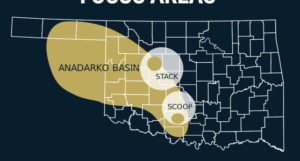
- Oklahoma STACK/SCOOP regions
Data Quality Notes
Standardizing metro-area naming conventions would improve segmentation and reporting accuracy.
Some records use broad geographic tags such as:
“United States”
“Greater Houston”
“Dallas-Fort Worth Metroplex”
Oil & Gas Drilling Engineer Overview
The role of a drilling engineer in an oil and gas company is to design, plan, and execute drilling operations for the exploration and production of oil and gas wells. They play a crucial role in ensuring safe, efficient, and cost-effective drilling processes. Here are the key responsibilities of a drilling engineer:
Skills: Offshore Drilling, Drilling Engineering, Directional Drilling, Drilling Fluids, Petroleum Engineering, Chemical Engineering, Process Engineering, Deepwater, Huet, Bosiet, Offshore Oil, Managed Pressure Drilling, MPD, HPHT, Horizontal Directional Drilling
Roles
- Well Design and Planning: The drilling engineer is responsible for designing the wellbore and planning the drilling process. They consider various factors such as geological data, reservoir characteristics, drilling objectives, and regulatory requirements to determine the optimal well design, casing program, drilling fluids, and drilling techniques. They also evaluate different drilling methods and technologies to improve efficiency and reduce costs.
- Drilling Program Development: The drilling engineer develops drilling programs that outline the step-by-step procedures and specifications for the drilling operations. They define the drilling parameters, equipment requirements, and safety protocols to be followed during drilling. They collaborate with other teams and stakeholders to ensure alignment with project goals and objectives.
- Equipment and Material Selection: The drilling engineer selects the appropriate drilling equipment, tools, and materials required for the drilling operations. They evaluate different suppliers, assess equipment capabilities, and consider cost-efficiency while ensuring compliance with industry standards and regulations. They coordinate with procurement and logistics teams to ensure timely availability of equipment and materials.
- Operational Support: During drilling operations, the drilling engineer provides technical support and guidance to the drilling rig crew. They monitor the drilling progress, analyze real-time data, and make necessary adjustments to drilling parameters to optimize efficiency and mitigate risks. They collaborate with the rig personnel to troubleshoot issues, address challenges, and ensure smooth drilling operations.
- Risk Assessment and Mitigation: The drilling engineer conducts risk assessments to identify potential drilling hazards and develop mitigation strategies. They analyze geological formations, evaluate wellbore stability, and assess drilling risks such as blowouts, stuck pipe incidents, or well control issues. They work with the drilling team to implement safety measures, contingency plans, and emergency response procedures.
- Performance Evaluation and Optimization: The drilling engineer evaluates the performance of drilling operations by analyzing drilling data, cost data, and operational metrics. They identify areas for improvement, recommend process enhancements, and implement best practices to optimize drilling efficiency, reduce costs, and enhance overall performance.
- Regulatory Compliance: The drilling engineer ensures compliance with regulatory requirements, environmental regulations, and safety standards throughout the drilling operations. They work closely with regulatory agencies, environmental specialists, and HSE (Health, Safety, and Environment) professionals to ensure adherence to legal and environmental obligations.
- Documentation and Reporting: The drilling engineer maintains accurate records and documentation related to drilling activities, including drilling reports, well data, and technical specifications. They prepare reports on drilling performance, cost analysis, and operational updates for management and stakeholders.
Account List