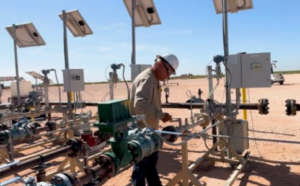
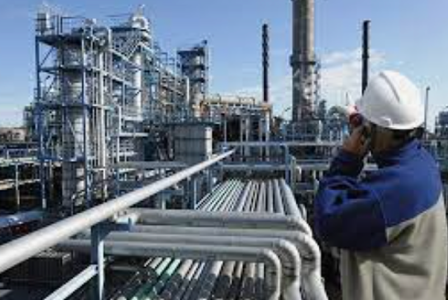
Overall, the Facilities Engineer plays a critical role in ensuring the safe, efficient, and cost-effective construction and operation of oil and gas facilities. Do you provide services to Oil & Gas Operators related to new facility construction and looking to grow your sales? Buy the list now to get you started.
Facility Engineer Contact Lists
Includes – Company, contact name, email, phone, title, location and more…..
Oil & Gas Contact Report Summary
1. Total Record Count
637 contacts across 41 companies/accounts.
2. Record Count by Role
| Role | Record Count | % of Total |
|---|---|---|
| Engineer | 637 | 100.0% |
The report is exclusively focused on engineering personnel, particularly facility and project engineering professionals.
3. Top 10 Companies/Accounts
| Rank | Company/Account | Record Count | % of Total |
|---|---|---|---|
| 1 | Canadian Natural Resources Limited (CNRL) | 178 | 27.9% |
| 2 | Cenovus Energy Inc. | 114 | 17.9% |
| 3 | Suncor Energy Inc. | 93 | 14.6% |
| 4 | Imperial Oil | 50 | 7.8% |
| 5 | Strathcona Resources, Ltd. | 29 | 4.6% |
| 6 | Whitecap Resources Inc. | 19 | 3.0% |
| 7 | Enbridge Inc. | 17 | 2.7% |
| 8 | Chevron Canada Resources | 13 | 2.0% |
| 9 | Tourmaline Oil Corp. | 12 | 1.9% |
| 10 | ARC Resources Ltd. (Shell) | 10 | 1.6% |
The top three companies—CNRL, Cenovus and Suncor—represent 385 contacts, or 60.4% of the report. The top 10 account for 535 contacts, or 84.0%.
4. Top 10 Cities
| Rank | City/Location Value | Record Count | % of Total |
|---|---|---|---|
| 1 | Calgary | 338 | 53.1% |
| 2 | Canada | 93 | 14.6% |
| 3 | Greater Calgary Metropolitan Area | 39 | 6.1% |
| 4 | Edmonton | 24 | 3.8% |
| 5 | Fort McMurray | 19 | 3.0% |
| 6 | Lloydminster | 17 | 2.7% |
| 7 | Alberta | 7 | 1.1% |
| 8 | St John?Äôs | 7 | 1.1% |
| 9 | St Johnâs | 4 | 0.6% |
| 10 | Greater Aberdeen Area | 4 | 0.6% |
The table reflects the workbook values exactly. Some records contain countries, provinces or metropolitan areas rather than cities. The two corrupted St. John’s values also appear to represent the same location and should be standardized.
Calgary and Greater Calgary Metropolitan Area together contain 377 contacts, or 59.2% of the report.
5. Status by Count
| Status | Record Count | % of Total |
|---|---|---|
| Update | 426 | 66.9% |
| Unchanged | 194 | 30.5% |
| New | 17 | 2.7% |
| Total | 637 | 100.0% |
6. Type Summary
The workbook does not contain a field specifically named Type. The closest equivalent is Operator Classification:
| Operator Classification | Record Count | % of Total |
|---|---|---|
| Steady State | 574 | 90.1% |
| Next Tier | 44 | 6.9% |
| Dormant / Legacy | 19 | 3.0% |
| Total | 637 | 100.0% |
The report is overwhelmingly concentrated on Steady State operators—companies with established operations, ongoing capital programs and large producing asset bases. These accounts are typically strong prospects for recurring facility maintenance, optimization, replacement equipment and brownfield projects.
Executive Summary
- The report contains a highly focused group of 637 Canadian facility and project engineering contacts.
- Engineering represents 100% of the assigned roles. The most common titles include Project Engineer, Facilities Engineer, Senior Facilities Engineer and Senior Project Engineer.
- CNRL is the largest account with 178 contacts, followed by Cenovus with 114 and Suncor with 93.
- The contact base is highly concentrated: the top three companies represent 60.4% of all records.
- Calgary is the primary geographic centre. Calgary and the Greater Calgary area account for approximately 59.2% of the database.
- The Status results show an actively maintained list: 426 contacts have been updated and another 17 are new.
- 90.1% of contacts work for Steady State operators, making the report particularly useful for targeting companies with continuing facility, production and infrastructure requirements.
- The strongest sales approach is account-based outreach organized around the leading operators. Vendors should tailor messaging to facility reliability, debottlenecking, emissions reduction, process optimization, brownfield modifications and operating-cost reduction.
- The file would benefit from location normalization, particularly records using “Canada” or “Alberta” as a city and the inconsistent encoding of St. John’s.
Business Function: Facility Engineering
Facility engineering converts production and project requirements into safe, reliable and economically viable surface infrastructure. Within a Canadian oil and gas operator, facility engineers commonly support batteries, processing plants, pipelines, compression, separation, storage, water-handling systems and emissions-control equipment.
These professionals help design new facilities, modify existing assets, resolve operating constraints and manage equipment selection, technical specifications, construction support and commissioning. They are important technical influencers—and sometimes direct decision-makers—for engineering services, fabricated equipment, instrumentation, automation, valves, compression, processing technology, environmental systems and maintenance solutions.
Oil & Gas Facilities Engineer Overview
The responsibilities of an oil and gas Facilities Engineer can vary depending on the specific job and company, but some of the typical responsibilities may include:
Skills: Facility Engineering, Facility Design, CO2, Project Management, Construction Cost Control, Project Estimation, Project Bidding, Construction Management, Consulting, Operations Management, Troubleshooting, Energy, Field Development
Roles:
- Designing and developing oil and gas facilities, including production platforms, pipelines, and processing plants.
- Evaluating and improving the performance of existing facilities to optimize production and minimize costs.
- Ensuring that facilities comply with safety, health, and environmental regulations.
- Overseeing construction and installation of new facilities or upgrades to existing facilities.
- Conducting inspections and audits to identify potential safety or environmental hazards.
- Managing budgets and timelines for facility projects.
- Providing technical expertise and support to other departments, such as drilling or production.
- Collaborating with other engineers, project managers, and contractors to ensure successful project completion.
- Developing and implementing maintenance plans to ensure facilities are operating efficiently and effectively.
- Conducting risk assessments and developing contingency plans for emergencies or unplanned events.
- Capital Facilities Engineer responsible for design packages and project management on projects to support new production via new facility builds and upgrades of Central Tank Batteries, Salt Water Disposals, Fresh Water Ponds, and Pipelines.
- Responsible for design of new production facilities and upgrades to existing facilities that comply with COM, GLO, and LDAR requirements.
- Manage all phases of new and existing facilities projects including FEED, economic evaluation, standards compliance, HAZID/ HAZOP, QA/QC, permitting, contractor selection.
Contact Lits